The most consequential foreign policy achievement of the first Trump Administration was engaging China in strategic competition. It admitted that the era of America’s unipolar movement was over. In its place is an emerging multipolar world where great powers compete for wealth, influence, security, and prestige under uncertainty, anarchy, and possible armed conflicts.
The Trump Administration’s 2017 National Security Strategy (NSS) did away with the post-Cold War legacy of engagement, enlargement, and cooperation with all states worldwide. Instead, it recognized that China and Russia are challenging and ending the period of America’s unrivaled military, diplomatic, and economic preponderance. The Trump Administration’s 2017 NSS was followed by the Department of Defense’s (DoD’s) 2018 National Defense Strategy (2018 NDS), which geared American strategic thinking into a possible armed conflict with China and Russia in the light of the Great Power Competition. The US is currently engaging China and Russia in political, economic, strategic, and military competition.
The incoming second Trump Administration will likely continue what it started in 2017. This is premised on several indications: Donald Trump’s threat to impose very high tariffs on Chinese goods, his appointment of China hawks to key national security and diplomatic positions, the American public’s general distrust and hostility toward China, and the bipartisan animosity against Beijing in the US Congress. Analysts and pundits also believe this, given his peace overtures to Russian President Vladimir Putin. Trump will focus on China’s policy without any distraction from other regional conflicts such as those in Syria and Ukraine.
THE TRUMP ADMINISTRATION AND THE REVIVAL OF THE QUADThe Trump Administration accepted the stark realities that America’s unipolar moment is over and that it faces multi-faceted challenges from China and Russia. Nevertheless, it recognized America’s comparative advantage vis-à-vis its two competitors: its experience and skill in forging and managing multilateral defense and security alliances and partnerships. Despite President Trump’s unilateralist mantra “Make America Great Again,” his administration quickly and skillfully utilized this advantage. It moved to deepen historical multilateral security alliances such as the North Atlantic Treaty Organization (NATO), expand existing bilateral alliances to multilateral networks, extend security partnerships as more tightly coupled alliances, and forge new security partnerships. The most significant among these new security partnerships was the Trump administration’s revival of the Quadrilateral Security Dialogue (QUAD) with Australia, India, and Japan.
The QUAD was initially formed in 2007 as the four countries’ tentative response to the growing security uncertainty generated by China’s emergence as a regional power. Unfortunately, Australia and India were reluctant to institutionalize the QUAD because of their diplomatic and economic relations with China. The QUAD’s diplomatic momentum as a regional security organization was lost.
In 2017, the US, under President Trump, and Japan, under the late Prime Minister Shinzo Abe, revived the QUAD. Its revival stemmed from the Trump Administration’s concerns over China’s assertive and aggressive behavior in the South and East China Seas. It accepted the reality that there was an unfolding power transition in the Indo-Pacific region with the US capability to act as the regional off-shore strategic balancer being diminished in the face of China’s emergence as a competing center of power that is actively seeking to unravel the region’s balance of power and normative order. The Trump Administration considered the QUAD a useful security forum to constrain Chinese revisionist behavior and agenda as it incorporated its Indo-Pacific strategy (The Free and Open Indo-Pacific) with Japan.
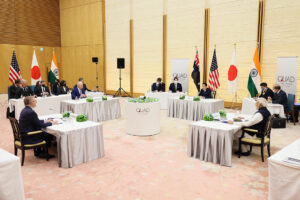
During the Trump Administration, the QUAD became more institutionalized as the four member-states regularized their senior and ministerial meetings. They also established working groups on relevant international issues such as the climate crisis, the COVID-19 pandemic, emerging and critical technologies, and infrastructure development. Unfortunately, diverging strategic interests remained despite shared security interests. Consequently, they engaged in a waiting game to determine when their strategic interests would converge. This caused QUAD meetings to remain ad-hoc as they failed to produce joint declarations. The member-states had difficulty generating and accepting an agenda for traditional military cooperation that could have transformed the QUAD from a security forum to a formal multilateral alliance.
AGENDA FOR THE 2ND TRUMP ADMINISTRATIONThe Biden Administration continued the Trump Administration’s efforts to engage China in a strategic competition. In March 2021, it held the first QUAD summit online. This resulted from the common concern about China’s vaccine diplomacy in Southeast Asia and renewed assertiveness in the South China Sea. After the summit, the leaders of the member-states met regularly.
The second Trump Administration will likely continue its predecessor’s efforts to strengthen the QUAD to balance the scale of China’s strategic challenge in the Indo-Pacific region. This will entail pursuing the following policies relative to the QUAD, namely: 1.) continuing the regular summit meetings among the member-states; 2.) focusing the forum’s efforts on regional order building by establishing institutional rules and norms for emerging issues and challenges such as digital connectivity, cybersecurity, maritime domain awareness, and infrastructure development; 3.) offering to Southeast Asian countries choices to counter China’s efforts to dominate the regional agenda in the development of transparent, high standard infrastructure, and an open, accessible, and secure technological ecosystem; and, 4.) assuring the Association of Southeast Asian Nations (ASEAN) that it recognizes its centrality in regional security affairs and that its members’ Free and Open Indo-Pacific (FOIP) strategies converge with the ASEAN Outlook on the Indo-Pacific (AOIP).
Dr. Renato Cruz De Castro is a trustee, convenor, and non-resident fellow of the think tank Stratbase ADR Institute. He is also a distinguished full professor at the Department of International Studies at De La Salle University-Manila.