Maybe you noticed this over the weekend: Filling a gas tank is a touch cheaper.
Indeed it is. GasBuddy.com puts the national average price at about $3.944 a gallon on Aug. 9. That’s down 3.6% since the end of July and down 12.2% since Memorial Day.
AAA Fuel Prices said its Aug. 9 national price was $4.021 a gallon, down 2.1% from a year ago and off 11% since Memorial Day.
Why gas prices slipped back
It sounds nice except for this reality: The price of gas in the U.S. is still around 40% higher than it was on Feb. 27, before the U.S. and Israel launched their first attacks on Iran.
And the noise coming out of the Middle East is lousy, with fears attacks could ratchet up again despite reports of growing U.S. munitions shortages.
The basic reason for the recent decline is the Donald Trump Administration has held back missile, drone and bomb attacks against Iran in hopes of obtaining a longer term cease fire and a commitment to reopen the Strait of Hormuz, which links the Persian Gulf to the Indian Ocean.
But it is also August, and the summer driving season is starting to wind down in the United States. Family vacations are starting to end as focus switches to families’ getting children ready for school.
Gas demand in the United States and in other countries in the northern hemisphere typically declines in the fall and winter.
As the shooting stopped at the very end of July and President Trump announced the “perimeters of a deal have been agreed to,” oil prices slumped quickly, and there was speculation gasoline pump prices would drop well below $4 fairly quickly.
Stocks soared, with the Standard & Poor’s 500 Index and the Dow Jones Industrial Average hitting new highs.
What’s ahead for oil and gas prices
Pump prices are grudgingly declining and may fall Aug. 10. “May fall” is the operative phrase. “Certainty” is not a word one uses around the war in the Persian Gulf, especially now.
Here’s why.
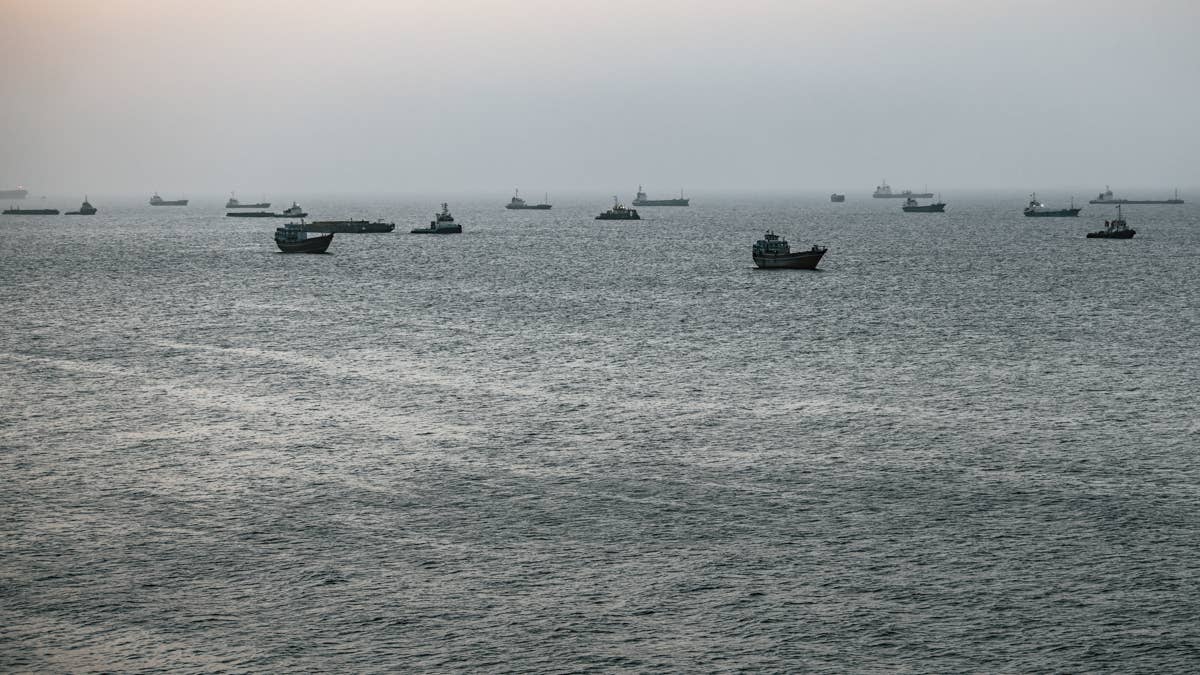
Iranian officials said on Aug. 9 that Iran and Oman are discussing how to manage the Strait, through which 20% of the world’s crude flowed before U.S.-Israeli-Iranian war erupted on Feb. 28. Iran’s coastline is the north side of the strait. Oman territory is on the south side, and the nation frequently acts as a regional mediator.
But Iran also wants the Trump administration to pay, both in cash and a humiliating standdown.
Elke Scholiers / Getty Images
The stiff Iranian demands
The Iranian demands, according to a statement from the Islamic Revolutionary Guard Corps, include:
- Permanently end the war. (So far, the U.S. says no.)
- Lift its naval blockade. (So far, the U.S. says no.)
- Withdraw its forces. (So far, the U.S. says no.)
- End all sanctions. (So far, the U.S. says no.)
- Free Iran’s frozen assets. (So far, the United States says no.)
- Pay war reparations. (So far, the U.S. says no.)
- End threats and insults. (So far, the U.S. says no.)
- Stop military action against Iran’s militia allies around the region. (So far, the U.S. says no.)
These demands are why the recent optimism has faded and oil markets remain on edge.
Adding to the complexity: Israeli Prime Minister Benjamin Netanyahu said on Aug. 9 that his country rejects the latest US-backed peace plan for Gaza.
Israel is demanding the full disarmament of Hamas before any Israeli forces withdraw.
More Oil & Gas:
- Iran de-escalation just hit energy stocks
- Drivers lose control over gas price squeeze
- Respect the Rally, Question the Sustainability
What’s ahead this week
Meanwhile, Iran is still sending drones to attack ships in the Persian gulf. U.S. oil reserves keep dwindling and are now at a 43-year low.
And heat waves plague the United States, Canada, and much of Western Europe.
Brent crude, the global benchmark, was up 1.3% to $84.66 per 42-gallon barrel in early trading on Aug. 9. Light sweet crude was up 1.5% to $79.35 a barrel.
Futures trading in the Dow and the S&P 500 was lower as well.
So, motorists may be stuck with gas prices at current levels for a week or more.
Related: The war driving up gas prices isn’t the one you think