Warren Buffett spent 60 years building one of the greatest investing records in history, not by chasing whatever was popular, but by finding businesses he never wanted to sell.
He said it himself in his 1988 shareholder letter, the year he first bought Coca-Cola: “Our favorite holding period is forever.”
That line was not just about one stock. It was a philosophy that shaped every major decision Berkshire Hathaway made under his leadership.
Three companies sit at the core of that philosophy today. Apple, Coca-Cola, and Alphabet each reflect something different about what Buffett means when he talks about compounders. Each one has earned its place in the portfolio through a different kind of durable advantage, and each one keeps widening that advantage as time passes.
Apple stock and the ecosystem that traps customers in a good way
Apple is Berkshire’s largest holding, accounting for roughly 22% of the portfolio as of the first quarter of 2026. Buffett first bought the stock in 2016, which was unusual for him, given his historical reluctance to invest in technology companies. He has since called it one of the best businesses he has ever seen.
Ask most iPhone users why they won’t switch to Android, and the answer isn’t really about the phone. It’s about everything else. Three years of photos in iCloud. Apps they paid for. A watch that only fully works with an iPhone. Apple Music. Apple Pay habits. At some point, the cost of leaving gets high enough that most people stop thinking about it. That’s when Apple starts making real money, through services that cost almost nothing to deliver and carry margins hardware could never touch.
More Warren Buffett:
- Warren Buffett reveals he broke his own investing pattern
- Warren Buffett has a blunt take on today’s market
- Warren Buffett pulls no punches on stock market for 2026
Apple’s installed base now exceeds 2.5 billion active devices globally. That is the foundation on which every new product and service launch sits. The company does not need to win new customers to grow. It needs to keep selling more to the ones it already has, and its customers tend to be among the more affluent and brand-loyal in the consumer market.
The risks are real, though. Apple still generates a significant portion of its revenue from iPhone hardware, which makes it vulnerable to cyclical slowdowns in consumer spending.
Related: Apple’s next iPhone battle just got more complicated
Regulatory scrutiny over App Store practices is intensifying in Europe and the United States. And the company needs to prove that the AI features being built into its devices will justify continued hardware upgrade cycles.
Coca-Cola stock and what 38 years of never selling actually produces
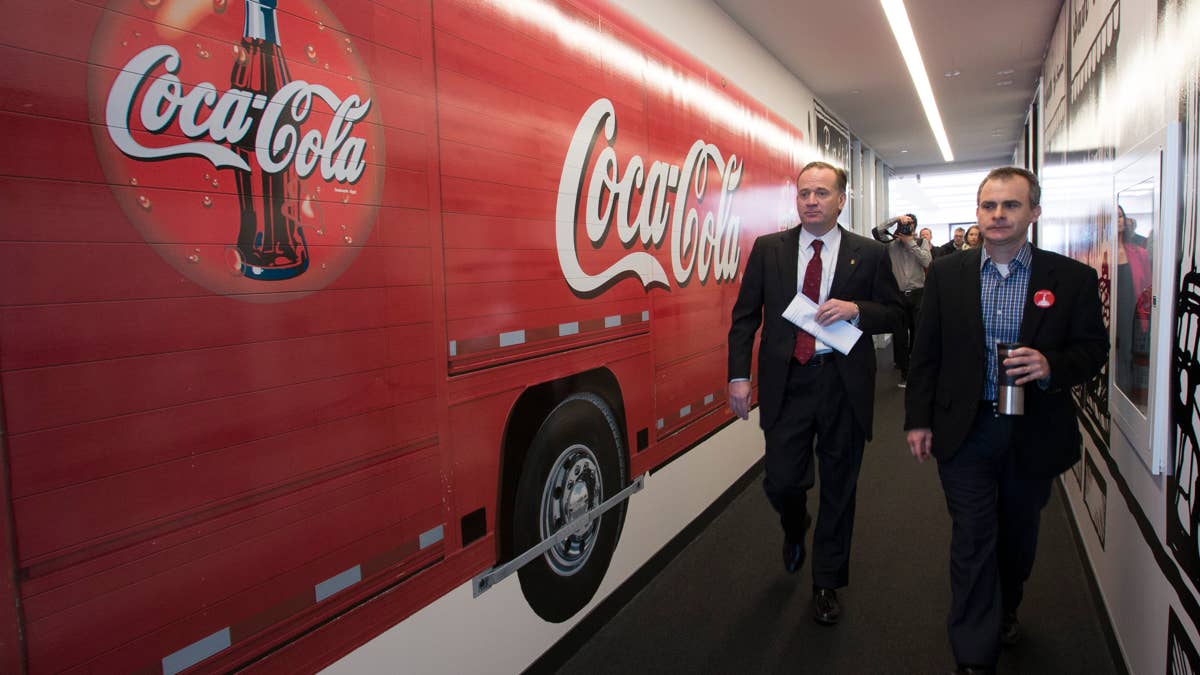
Buffett bought Coca-Cola in 1988 and has never sold a share. That decision has produced one of the most remarkable compounding outcomes in investing history.
Berkshire completed its purchase of 400 million shares by 1994, spending roughly $1.3 billion in total. Today, those shares generate approximately $848 million in annual dividends, and the effective yield on Berkshire’s original cost basis is now roughly 65%, according to The Motley Fool.
Related: Dividend King Coca-Cola is suddenly acting like a growth stock
A separate calculation using the full $4.1 billion total cost puts the yield on cost closer to 20%, but either way, the math illustrates what holding a great dividend compounder for 38 years actually produces.
What makes Coca-Cola worth holding for that long is a combination of brand and business model. The brand is one of the most recognized on the planet. The business model is quietly brilliant. Coca-Cola sells syrup and concentrate to independent bottling partners who handle manufacturing, logistics, and much of the capital expenditure. That keeps Coca-Cola’s own capital requirements light while the cash keeps flowing.
The company has also quietly had a strong year. Critics who said soda was a dying category have had to reckon with what actually happened.
Zero Sugar grew 13% across every geographic segment in Q1 2026. Organic revenue was up 10%. EPS up 18%. The stock has climbed roughly 25% this year, comfortably ahead of the S&P 500, as investors looking for something steady started rotating out of AI names, according to FinanceBuzz.
The risks are more gradual than sudden. Health consciousness is a long-term headwind for sugary beverages, even as zero-sugar products offset some of that pressure. Currency fluctuations affect a company doing business in nearly every country on earth. And consumer tastes can shift in ways that are hard to anticipate, as the rise of energy drinks and hydration products has shown.
Bernard/Getty Images
Alphabet stock and why Berkshire’s Greg Abel made it a top five holding
Alphabet is the newest of the three. Berkshire invested $10 billion in the company, and it has since become one of Berkshire’s top five holdings. Much of the addition happened under new CEO Greg Abel, who has shown more comfort with complex technology platforms than Buffett historically displayed, as long as those platforms exhibit the same wide-moat characteristics Buffett always prized.
Start with Search. When something happens anywhere in the world, billions of people type it into Google. That behavior is so deeply ingrained it barely registers as a choice anymore. Chrome and Android make it even stickier. Google is the default on most of the world’s devices before a user ever opens a browser. That kind of distribution is almost impossible to replicate, and it has been generating advertising revenue through recessions, pandemics, and rate cycles without missing a beat.
Related: Google’s Pixel 11 leak exposes a brutal AI paradox
Five years ago, Alphabet was essentially a search and advertising business with a cloud unit that hadn’t proven itself yet.
That’s not what it is anymore. Google Cloud is now a real enterprise competitor to AWS and Azure, winning AI and computing contracts from companies that were Microsoft-only customers not long ago.
Alphabet also builds its own chips, Tensor Processing Units designed specifically for AI workloads. Most AI companies have to rent computing power from someone else. Alphabet builds its own. That’s a different kind of business.
The risks are concentrated around regulation. Antitrust cases targeting Google Search and the advertising business have been working through courts in the United States and Europe for years. Generative AI is also raising a genuine question about whether traditional search traffic could eventually decline as users get answers directly from AI assistants rather than clicking through to websites.
What makes a Buffett compounder and why these three qualify
Buffett’s checklist hasn’t really changed in 60 years. Can the business earn high returns without needing to constantly reinvest enormous amounts of capital? Does it have pricing power? Will it still be around and stronger in ten years?
He also needs to actually understand how it makes money, which is why he spent decades avoiding tech. Apple got through because it looked more like a consumer brand than a software company. Alphabet got through because Search is about as simple a business model as you’ll find at that scale.
Apple, Coca-Cola, and Alphabet each qualify in different ways. Apple compounds through its ecosystem and services flywheel. Coca-Cola compounds through its brand and capital-light concentrate model. Alphabet compounds through search, advertising, cloud, and AI.
Their methods are different, but the outcome is the same: each business generates more cash than it needs to maintain its competitive position, and each one uses that surplus to grow.
None of that means buying at any price. Even the best compounders can underperform for extended periods if purchased when valuations are stretched.
The “hold forever” philosophy works when applied to businesses worth that patience in the first place. What Buffett’s track record with these three stocks really demonstrates is not that you should never sell. It is that if you find the right business and pay a reasonable price, the most productive decision is usually to do nothing.
Related: Warren Buffett has a stark message for stock market investors