Southwest Airlines just posted one of its strongest quarters in years. Revenue hit a record, margins expanded, and earnings per share nearly doubled from a year ago.
But there’s a catch. Jet fuel is getting more expensive, and it’s eating into the airline’s bottom line faster than expected.
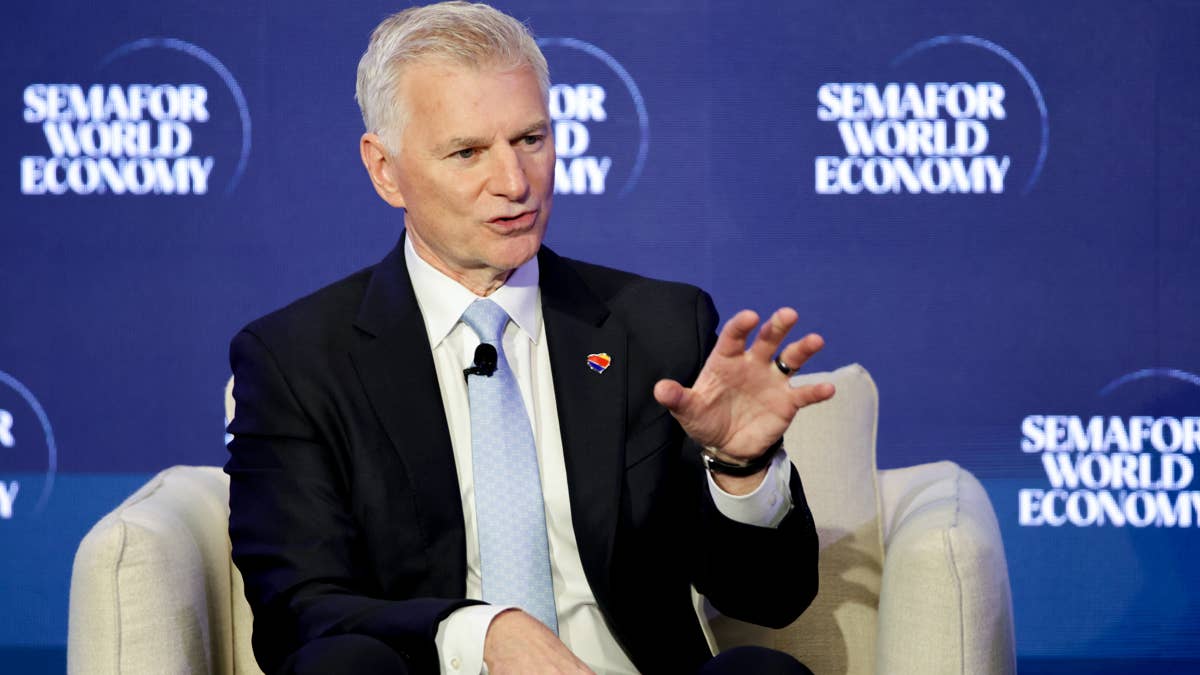
Southwest (LUV) CEO Bob Jordan and his team walked investors through the numbers on the company’s second quarter 2026 earnings call, held July 23.
The message was mixed but honest: Demand is strong, the business is changing for the better, and fuel prices are still a real problem heading into the rest of the year.
Southwest slashes full-year profit guidance
Southwest now expects full-year 2026 adjusted earnings per share of $3.25 to $4.25. That’s a meaningful cut from its earlier guidance of at least $4.
The reason comes down to one thing: fuel.
Chief Financial Officer Tom Doxey said the company is looking at an estimated year-to-date fuel headwind of about $1.33 per share.
Jet fuel averaged $3.92 per gallon during the second quarter, and that pushed fuel expense up by nearly $900 million compared to the same period last year.
Even with that pressure, Jordan tried to frame the new range as a win, not a setback.
“Even with an estimated year-to-date fuel headwind of approximately $1.33 per share, Southwest remains positioned to generate earnings that are broadly in line with our guidance at the beginning of the year.”
In other words, the airline still expects to land close to where it originally promised investors, just with fuel eating a much bigger slice of the pie than planned.
Fuel costs are a headwind for LUV stock
Fuel is one of the biggest expenses any airline carries, right alongside labor. When prices spike, it doesn’t take long to show up in profit numbers, since airlines can’t always raise ticket prices fast enough to keep pace.
Doxey explained that Southwest doesn’t guide fuel prices directly. Instead, the company gives investors a snapshot based on the forward market on a specific day, in this case July 17, and lets people estimate from there.
Related: Morgan Stanley resets Southwest Airlines stock price target
The airline’s fuel procurement team has been working to soften the blow. Southwest gets roughly half its fuel from the Gulf Coast, and during the quarter, when West Coast prices spiked, the team shifted lower-priced Gulf Coast fuel out west to cut costs.
“I love that our team did that,” Doxey said, crediting the strategy for helping keep Southwest’s fuel costs below some competitors’ during the quarter.
Strong demand is helping offset the pain
Even with fuel costs rising, Southwest’s revenue engine is running hot.
- Adjusted unit revenue jumped 20.1% year over year in the second quarter, an all-time quarterly record for the company.
- Managed business revenue, which covers corporate travel, grew 30% year over year.
- And the airline’s loyalty program hit close to 100 million members, with new sign-ups up 35% from a year earlier.
Jordan pointed to this as proof that Southwest’s product overhaul, including assigned seating, extra legroom options, and bag fees introduced over the past year, is working and not just a temporary bump.
More Airlines:
- Airline shuts down, all flights grounded after accident
- Another global airline cuts US flights due to low demand
- Another low-cost airline files for Chapter 11 bankruptcy
“There is no deceleration in the strength and the demand, no deceleration in the strength in the revenues and the fares,” Jordan said, addressing concerns that momentum might be fading.
He added that the company is seeing strength “across all sectors, all geographies,” which he called the broadest demand environment he’s seen in his career at the airline.
What this means for the rest of 2026
Southwest is guiding to third-quarter unit revenue growth of 17.5% to 19.5%. The number looks lower than it did in the second quarter, not because demand is slowing, but mainly because the airline is now comparing against the higher revenue base created by last year’s bag-fee rollout.
On the cost side, the airline expects third-quarter costs per available seat mile, excluding fuel, to rise 3.5% to 4% year over year, with capacity remaining flat or down slightly.
Southwest also reported liquidity of $5.3 billion, well above its target of about $4.5 billion, and generated close to $2 billion in operating cash flow during the first half of the year, despite the higher fuel bill.
The bigger picture is that Southwest’s turnaround story is real. Revenue diversification, loyalty growth, and cost discipline are all showing up in the results.
Still, fuel prices remain the wildcard that could keep shaping how much of that progress actually reaches shareholders by year-end.
Related: Southwest Airlines leaves rivals flat-footed as bankrupt carrier folds