Every high-end NvidiaAI chip that ships this year comes bundled with someone else’s manufacturing bet.
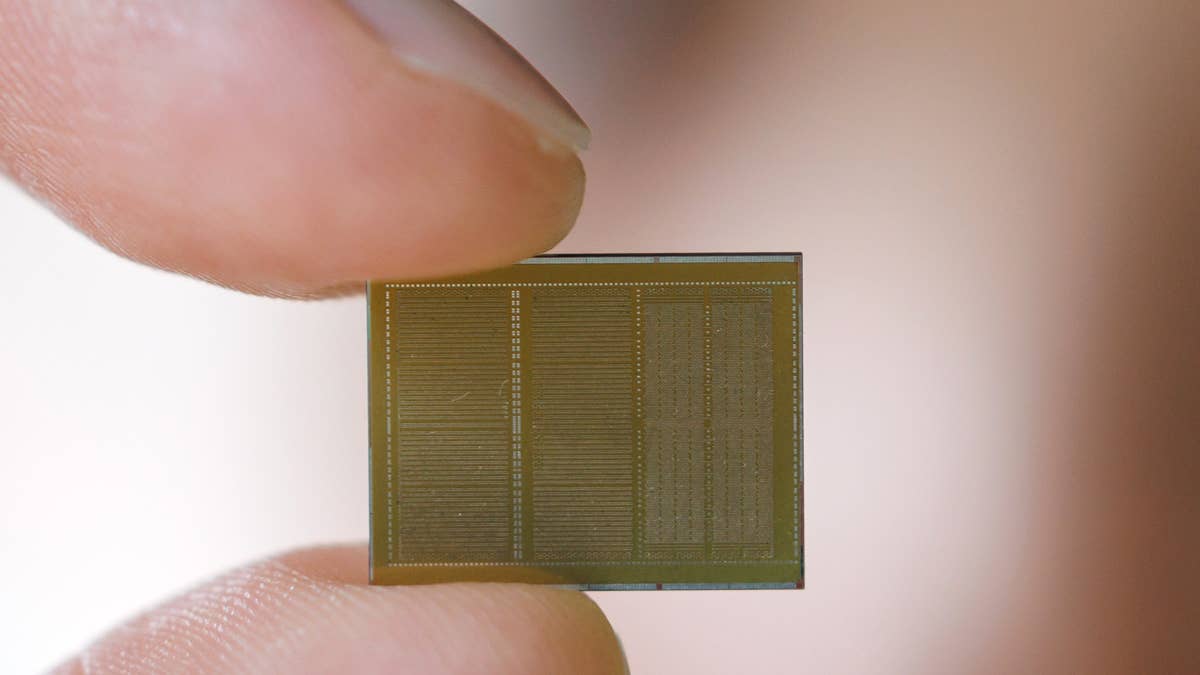
The stacked memory wrapped around each processor, the component that lets a GPU actually move data fast enough to be useful, comes almost entirely from one supplier.
SK Hynix Inc. (SKHY) is that supplier, and on Friday it committed $38 billion to keep it that way through 2031.
The company’s board approved roughly $54.3 trillion won, about $38.3 billion, split across two domestic sites, according to a Reuters report.
Most of the money, $35.2 trillion won, goes toward a second DRAM fab in Yongin. The remaining $19.1 trillion won funds a new NAND plant in Cheongju.
That split matters. DRAM, especially the high-bandwidth memory variant used to feed AI accelerators, is where SK Hynix has built its dominance and its relationship with Nvidia.
NAND is the steadier, lower-margin business that keeps revenue diversified when the AI cycle wobbles.
A $38 billion bet on capacity nobody can use yet
Construction on the Yongin plant, called Y2, starts in July 2027. Its first cleanroom will not open until June 2029, according to the company statement.
The Cheongju plant moves faster but still isn’t fast. Ground breaks in February 2027, with the first cleanroom targeted for December 2028, the same statement said.
In an industry where demand forecasts shift quarterly, SK Hynix just bet $38 billion on where that demand sits three years out.
This is the same logic Nvidia forces onto its own supply chain. Long lead times mean chipmakers commit capital years before they know if the demand they are chasing is durable or a bubble waiting to correct.
The stock has been more volatile than the story it’s built on
SK Hynix reported record second-quarter revenue of 79.3 trillion won in July, up 257% year over year, with a 76% operating margin, according to a CNBC report.
Shares still fell 9.6% that day because results missed elevated analyst expectations. The company put it bluntly in a statement: “In the AI era, technological competitiveness alone is not enough,” per Korea Herald.
The swings kept coming. Shares jumped almost 8% earlier in the week that ends on August 8. Speculation about a shareholder return announcement then sank double digits on August 6 amid a broader tech selloff tied to Middle East tensions, unrelated to SK Hynix’s own fundamentals.
By the morning of August 7 in Seoul, the stock traded around 1.43 million won, down from a previous close near 1.5 million, according to Investing.com data.
That volatility is the real subtext of the Augst 7 announcement. A company committing five years of capital needs investors to trust a multi-year thesis, even when the daily chart argues otherwise.
Shareholder payouts could stabilize investor sentiment
SK Hynix used the same disclosure to say it is “actively reviewing” additional shareholder return measures and expects to finalize details in the third quarter, according to the Reuters report.
That is not a new promise. The company flagged a return framework back in April, tied to a goal of holding $100 trillion won in net cash.
Investors did not get specifics on the July earnings call, and shares fell nearly 10% that day partly because of it.
More SK Hynix:
- SK hynix, Sandisk race to fix AI’s next chip bottleneck
- SK Hynix denies Intel Ohio fab deal, but the market didn’t care
- SK Hynix is testing the limits of Wall Street’s ETF boom
A quiet period tied to SK Hynix’s July ADR listing on Nasdaq expired August 4, clearing the way for the company to finally spell out buybacks or dividend changes, according to a Bloomberg report.
For a stock priced for perfection, the capital return plan may do more to steady sentiment than another factory ever could.
The bigger story is memory’s shift from cyclical to strategic
Memory chips have historically been the most boom-bust corner of semiconductors, prone to oversupply the moment every producer expands at once.
SK Hynix’s bet assumes this cycle is different, that AI infrastructure spending is structural rather than a temporary spike Nvidia’s customers will eventually pull back from.
The company isn’t expanding in a vacuum. Samsung and Micron are racing to close the gap in high-bandwidth memory, but SK Hynix still held roughly a 53% share of that market last year, according to Counterpoint Research data cited by Data Center Dynamics.
Fortune reported in February that TrendForce expects HBM to consume 23% of total DRAM wafer output in 2026, up from 19% in 2025, meaning the industry is permanently reallocating capacity away from ordinary memory chips.
By putting $38 billion into high-bandwidth memory instead of traditional DRAM, SK Hynix isn’t just riding a wave.
It’s hitching its future directly to Nvidia’s AI hardware rather than playing it safe with broader diversification. That is an all-in bet with very little fallback room if AI demand ever cools off.
If that reallocation holds, SK Hynix locks in years of advantage as the primary HBM supplier feeding the world’s dominant AI chipmaker.
If it doesn’t, the company will have spent $38 billion building capacity for a boom that already peaked. Either way, the bet is now made, and the next five years will show whether SK Hynix understood the cycle better than the market currently believes it does.
Related: Samsung’s new memory chip could make Nvidia’s AI chips faster