Applied Digital is not an AI story that needs the AI trade to keep working. That is the part the market keeps getting wrong. At $28.95 a share on 11 August 2026, Applied Digital (Nasdaq: APLD) carries a market capitalisation of roughly $8.44bn against approximately $36bn of contracted base-term lease revenue the company disclosed alongside its fiscal fourth-quarter results on 27 July 2026. That is 4.3 times the entire equity value of the business, already signed, with an investment-grade hyperscaler on the other side of the paper. The bull case here is not a bet on AI demand. It is a bet that a landlord collects rent it has already contracted. The bear case is not that demand disappears — it is that Applied Digital runs out of balance sheet before the rent starts arriving.
The insight competing coverage keeps missing: Applied Digital is being valued like an operator when it has restructured itself into a landlord. Management guided to a roughly $1bn net operating income run rate about a year from now. Apply the capitalisation rates that listed data-centre landlords actually trade at — 5% to 6% for long-duration, investment-grade-tenanted assets — and $1bn of NOI implies an enterprise value between $16.7bn and $20bn. The company’s equity is worth $8.44bn today. Even at a punitive 8% cap rate, appropriate for single-tenant concentration risk, you get $12.5bn. The market is not pricing Applied Digital as a stabilised infrastructure owner at any reasonable cap rate. It is pricing the risk that the assets never stabilise at all. Everything in this analysis turns on which of those two framings is right, and the answer is decided by financing, not by AI enthusiasm.
Key facts: Applied Digital (APLD) at a glance
- Share price: $28.95, against a previous close of $29.06 — Nasdaq, 11 August 2026
- Market capitalisation: approximately $8.44bn on roughly 290m shares — Nasdaq, 11 August 2026
- Contracted base-term lease revenue: approximately $36bn across 1.41 GW of critical IT load at five campuses — Applied Digital FQ4 FY2026 results, 27 July 2026
- Fiscal Q4 revenue: $258.7m, up 407% year on year, of which $208.2m services and $50.6m data-centre rental — Applied Digital, 27 July 2026
- Full-year FY2026 revenue: $611.3m, up 167%, with adjusted net income of $36.1m — Applied Digital, 27 July 2026
- Recent lease concentration: three leases with the same high investment-grade hyperscaler covering 810 MW and approximately $20bn of contracted revenue — Applied Digital FQ4 FY2026 earnings call
- 52-week range: $13.16 to $50.73, with a 12-month closing low of $13.89 and high of $49.65 — Nasdaq daily closes
- Analyst consensus target: $75.00 over one year — Nasdaq, 11 August 2026
What is actually happening at Applied Digital, and why the model changed
Applied Digital spent its early life as a hosting business for bitcoin miners, which is why so much of the sell-side commentary still frames it against crypto infrastructure. That framing is now three business models out of date. The company’s fiscal 2026 revenue of $611.3m was up 167% year on year, but the composition matters more than the growth rate: $50.6m of the fiscal fourth quarter’s $258.7m came from data-centre rental, and that is the line that carries the $36bn of contracted future revenue behind it.
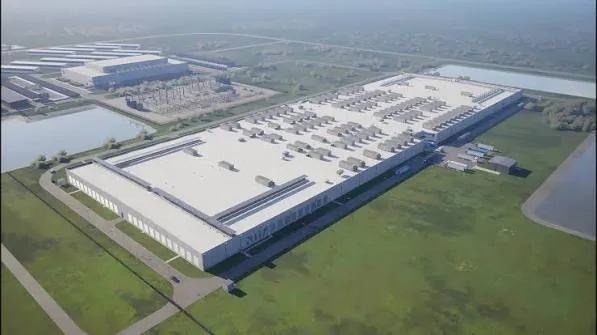
The mechanism is straightforward once you stop thinking about it as a technology company. Applied Digital builds a campus, signs a long-duration lease with a creditworthy tenant, and collects rent for the base term. It is closer to a build-to-suit industrial REIT than to a cloud provider. The company delivered 100 MW at its Polaris Forge 1 campus on time and on budget, and now reports 1.41 GW of contracted critical IT load across five campuses, with a further 1.7 GW being marketed across multiple states.
Scale of that kind arrives with a specific hazard attached, and it is worth naming plainly: three of the recent leases — 810 MW and roughly $20bn of contracted revenue — are with the same high investment-grade hyperscaler. That is more than half the total backlog resting on one counterparty. Investment-grade credit makes the rent highly likely to be paid. It does not make the concentration disappear, and it is the single largest structural risk in the equity.
Chairman and chief executive Wes Cummins framed the shift directly on the fiscal fourth-quarter earnings call: “Nearly three years ago, we made a deliberate decision to build a company that scales, not just a company that builds data centers.” Read against the numbers, that is not a slogan. A company that builds data centres books construction revenue. A company that scales books contracted rent and finances the build against it — which is exactly what the $36bn figure represents, and exactly why the financing question dominates everything else.
How the market and the peer group have responded
The reaction has been volatile rather than directional, and the chart tells that story better than any narrative. Applied Digital closed as high as $49.65 in May 2026, fell to the low $20s by mid-summer, and has been rebounding into August. Neither move tracked a change in the contracted backlog, which only grew across the period. What moved was the market’s confidence in the funding path.
Peers have faced the identical re-rating. CoreWeave has been through the same bull-versus-bear compression, and the read-across is instructive because CoreWeave is the operator archetype — it owns the GPU risk — while Applied Digital increasingly does not. Nuclear and power-adjacent names carrying AI-datacentre demand, including Oklo and NuScale, have traded on the same impulse. When the market decides AI capex is durable, all of them re-rate together; when it doubts the financing, all of them de-rate together, regardless of contract quality.
There is a further signal worth noting. Leveraged short products now exist specifically for this cohort — Tradr launched 2x short leveraged ETFs on APLD alongside IREN, LCID and NBIS. Issuers only build inverse products where they expect sustained two-way volatility and retail demand to express a bearish view. The existence of the instrument is itself evidence that the bear case has an organised constituency, which tends to amplify drawdowns beyond what fundamentals justify.
Against that, the sell-side has not blinked: consensus sits at a $75.00 one-year target, roughly 159% above the current $28.95. That is an unusually wide gap between where analysts model the business and where the market clears it. Gaps that wide usually resolve through one of two routes — the analysts cut, or the financing lands and the equity re-rates hard.
The valuation maths, and where $68 and $16 come from
Start with the landlord framing, because it is the only one that reconciles the backlog with the share price. Management’s guide to a roughly $1bn NOI run rate within about a year is the pivotal number. Listed data-centre landlords with investment-grade tenants and long base terms have historically been capitalised in the 5% to 6% range. At 6%, $1bn of NOI supports approximately $16.7bn of enterprise value. At 5%, it supports $20bn. Against roughly 290m shares and today’s $8.44bn equity value, that is the entire bull thesis in one line — and it does not require a single new lease to be signed.
The $68 bull case assumes the campuses stabilise, the $1bn NOI run rate is achieved broadly on schedule, and the market capitalises it at a discounted 7% to 8% rather than the 5% to 6% peers command — a haircut for tenant concentration and for the company’s short history as a landlord. That lands enterprise value near $13bn to $14bn, and with the additional 1.7 GW pipeline carrying option value, an equity value around $19bn to $20bn is defensible. That is approximately $68 per share, deliberately set below the $75.00 sell-side consensus because consensus does not appear to be discounting the financing risk at all.
The $16 bear case is not a demand story. It is a capital-structure story. Applied Digital produced adjusted net income of $36.1m on $611.3m of full-year revenue — a thin 5.9% margin — while committing to multi-gigawatt construction. A build-to-suit landlord at this stage funds construction with debt, equity, or both, and both channels reprice violently when rates or risk appetite move. If financing costs rise materially, or one anchor lease slips its delivery schedule and triggers a renegotiation, the equity absorbs the gap. At $16, the market would be valuing the business at roughly $4.6bn — around 4.6 times the promised NOI run rate — which is what a stressed developer with concentrated counterparty exposure trades at. It sits below the summer low near $23 and above the 52-week low of $13.16.
| Factor | Supports the $68 bull case | Supports the $16 bear case |
|---|---|---|
| Backlog | $36bn contracted, 4.3x market cap | Backlog is revenue, not cash; delivery risk sits with APLD |
| Tenant quality | High investment-grade hyperscaler | 810 MW and ~$20bn concentrated in one counterparty |
| Profitability | $1bn NOI run rate guided within ~a year | FY2026 adjusted net income only $36.1m |
| Execution record | 100 MW at Polaris Forge 1 delivered on time and budget | 1.41 GW contracted is an order of magnitude larger |
| Financing | Contracted rent is financeable collateral | Capex-heavy build exposed to rate and risk-appetite shifts |
The structural tension: landlords are financed, operators are funded
The regulatory and structural pressure on this business does not come from a securities regulator. It comes from the capital markets and the power grid, and both are tightening at once.
Every gigawatt Applied Digital contracts must be energised. Interconnection queues in the United States now run for years in several of the markets where hyperscale capacity is being sited, and utilities have grown noticeably more cautious about approving loads of this magnitude without firm generation behind them. A signed lease with no power is a liability, not an asset. This is precisely why power-adjacent equities trade in sympathy with the datacentre names — the market has correctly identified electricity, not silicon, as the binding constraint.
The second pressure is disclosure. “Contracted base-term lease revenue” is not a GAAP measure. It is a management-defined figure describing the sum of payments expected across base terms that may run 10 to 15 years or longer. It is genuinely informative, and it is also not comparable between companies, not risk-adjusted, and not discounted to present value. A $36bn headline collected over 15 years is worth dramatically less than $36bn today. Investors treating backlog figures as though they were cash on the balance sheet are making a category error that the disclosure format quietly encourages.
That tension — real contracts, non-standard disclosure, and a grid that may not energise on schedule — is the reason this equity trades at four times volatility while its backlog only grows. The contracts are not in doubt. The timing is.
What happens next: three predictions
First, the financing announcement is the catalyst, not the next lease. Applied Digital has demonstrated it can sign hyperscalers; the market has stopped rewarding that. The next durable re-rating will follow a large, clearly-priced construction financing or a joint-venture capital partner that funds the 1.41 GW without heavy equity dilution. Expect that to be the single largest one-day move in the stock over the next two quarters.
Second, tenant concentration will force disclosure. With roughly $20bn of the $36bn backlog attributable to one hyperscaler, pressure will build — from analysts first, then from the audit and disclosure process — to name the counterparty or quantify the concentration more precisely. When that happens, the equity re-rates in whichever direction the disclosure points, and it will not be a small move.
Third, the landlord-versus-operator spread will widen. Applied Digital carries lease risk; GPU operators such as IREN, which we frame with an $84 bull case and a $22 bear case, carry depreciation risk on hardware with an uncertain useful life. Those are different businesses that the market is still pricing as one theme. As the AI infrastructure trade matures, expect the landlord model to earn a valuation premium over the operator model — and expect that divergence to become visible within the next twelve months.
For investors, the practical test is narrow. Applied Digital does not need more demand. It needs capital at a price that does not destroy the equity, and it needs the grid to deliver power on schedule. Those two variables decide whether this is a $68 stock or a $16 stock, and almost nothing else does.
Frequently asked questions
What is the APLD stock prediction for 2026?
This analysis sets a $68 bull case and a $16 bear case against a share price of $28.95 on 11 August 2026. The bull case assumes the guided $1bn NOI run rate is achieved and capitalised at a 7% to 8% rate. The bear case assumes financing costs rise or an anchor lease slips, forcing dilution. Sell-side consensus sits higher, at $75.00.
Why does Applied Digital have a $36bn backlog but only an $8.4bn market cap?
Because backlog is contracted revenue collected across base terms of a decade or more, not cash in hand. It is undiscounted, non-GAAP, and dependent on Applied Digital delivering the capacity. The market is discounting execution and financing risk, not doubting the contracts themselves.
Is Applied Digital still a bitcoin mining company?
No. It began as a hosting provider for miners, but fiscal 2026 revenue of $611.3m was driven by AI infrastructure, with $50.6m of fiscal Q4 revenue from data-centre rental carrying the long-duration lease backlog behind it. The business now resembles a build-to-suit data-centre landlord.
What is the biggest risk to the APLD bull case?
Counterparty concentration combined with financing. Three leases with a single high investment-grade hyperscaler account for roughly 810 MW and $20bn of the backlog, and the multi-gigawatt build must be financed before the rent arrives. A funding shock or a delivery slip on those leases is the fastest route to the bear case.
How does Applied Digital differ from GPU cloud operators?
Applied Digital increasingly leases space and power to tenants who supply their own compute, so its risk is lease and construction risk. GPU operators buy and run the hardware, taking depreciation risk on assets with a contested useful life. The two models are frequently priced as one AI theme despite carrying different exposures.
This article is analysis, not investment advice. Prices cited are as of 11 August 2026 and will move. The $68 and $16 figures are scenario levels used to frame risk, not price forecasts.