AST SpaceMobile has spent four years being valued on a single question: can it raise enough money to finish the constellation? As of last month, that question is answered. After a $1.15 billion convertible offering, management reported pro forma cash and liquidity of over $3.7 billion — against a remaining build that, on the company’s own cost figures, comes to roughly $1.7 billion.
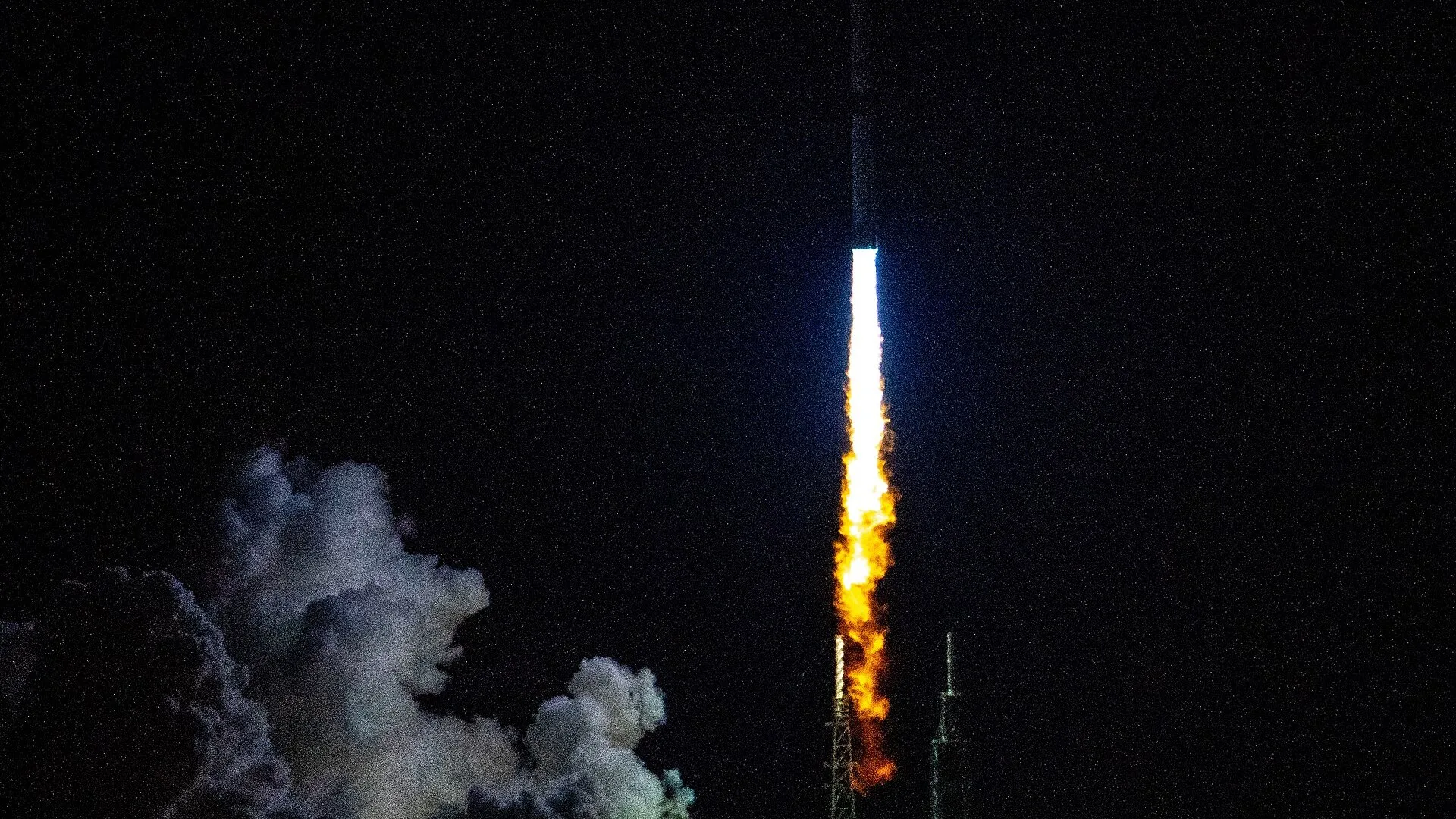
Which means the thing that actually decides ASTS from here is not the balance sheet. It is rockets. And the company just proved the point in the most expensive way available: BlueBird 7 was placed into too low an orbit by Blue Origin’s New Glenn upper stage, could not sustain operations, and will be de-orbited. AST booked a $125.9 million loss on involuntary conversion for it. The company says the cost is expected to be recovered under its insurance policy — the money comes back, the schedule does not. That asymmetry is the entire investment case now.
With ASTS at $71.14 (17 August 2026 close), this piece sets out a $138 bull case and a $46 bear case, built on the constellation arithmetic rather than on a revenue multiple that is meaningless while commercial service has not started.
Quick Take: the numbers that matter
- Spot: $71.14, 46.5% below the 28 May closing high of $133.09 and 92.7% above the September 2025 low — StockAnalysis
- Market cap: ~$27.7bn on 389.2m shares; beta 2.74; realised volatility 114.6% over the last 90 sessions
- Q2 2026 revenue: $31.5m; net loss $230.9m, of which $125.9m was the BlueBird 7 write-off — AST SpaceMobile 10-Q, 10 Aug 2026
- Pro forma liquidity: $3.7bn, including $1.15bn of convertible notes at a 1.625% coupon, 2034 maturity, $149.20 effective conversion price, under 2% effective dilution
- Constellation: 13 spacecraft in orbit; BlueBirds 14–16 ready to ship; 17–46 in production; production running at six satellites a month
- Cost per satellite: $21–23m including direct materials and launch
- Backlog: $1.3bn contracted; FY2026 revenue guidance held at $150–200m; 60 mobile network operator partners covering 3bn+ subscribers
- Street: consensus rating “Hold”, average target $78.48 — just 10% above spot
The constellation is now funded. That is the actual news.
Do the arithmetic the company hands you, because almost nobody has published it.
Management put the cost of a BlueBird at $21–23 million including launch. There are 13 in orbit. Chairman and CEO Abel Avellan said the balance sheet, “further bolstered with last month’s convertible debt offering, positions us not only to complete the full build-out and launch of a constellation of over 100 BlueBird satellites” but also to pursue further growth (Q2 2026 earnings call).
| Constellation arithmetic | Figure |
|---|---|
| Satellites in orbit (Aug 2026) | 13 |
| Near-term deployment target | ~45 by early 2027 |
| Cost per satellite, incl. launch | $21–23m |
| Cost to reach ~45 in orbit (32 more) | ~$700m |
| Cost to build out to ~90 (77 more) | ~$1.7bn |
| Pro forma liquidity | $3.7bn |
| Japan J-LEO preliminary award (non-dilutive) | ~$1bn |
AST holds roughly 2.2 times the cash required to finish the constellation, before counting the approximately $1 billion preliminary award under Japan’s J-LEO initiative, which management characterised as non-dilutive government capital.
Compare that with where this company was a year ago, when every quarter carried an equity raise and the market treated dilution as a certainty. The $1.15 billion convertible is the clearest evidence of the change. CFO and Chief Legal Officer Andy Johnson noted the notes carry the company’s “lowest coupon ever at 1.625%, providing cost-efficient capital with effective dilution of less than 2%.” A capped call pushes the effective conversion price to $149.20 — more than double the current share price.
Set that against our July analysis of ASTS, written when the convertible strike had fallen from $116.30 to $79.57 in five months and dilution looked like the dominant risk. In one financing, AST replaced a near-the-money conversion overhang with one struck 110% above spot. The stock is 46% below its May high anyway.
Money is insurable. Launch slots are not.
Here is the part the funding story does not solve. AST manufactures six satellites a month in Midland, Texas, where it is adding 400,000 square feet to reach roughly 900,000 square feet of production footprint. At that rate the remaining 77 satellites take about 13 months to build. Getting them to orbit is somebody else’s business.
AST has multi-launch agreements with Blue Origin, SpaceX and ISRO, and expects an orbital launch every one to two months on average. The BlueBird 7 failure shows what that dependency costs. AST built the satellite, insured it, and lost it to a third party’s upper stage. Insurance restores roughly $126 million of capital. It does not restore the launch slot, the manufacturing sequence, or the months of service revenue that satellite would have carried — and with commercial service gated on reaching about 45 satellites in orbit, every slipped launch pushes the revenue start date directly.
The strategic knot is sharper still. After the New Glenn loss, AST moved its next three BlueBirds onto a SpaceX Falcon 9. SpaceX is simultaneously the launch provider AST leans on and the competitor trying to beat it, via Starlink’s direct-to-cell service. There is no clean way to hedge that: the more AST depends on Falcon 9 cadence, the more its deployment timetable sits inside a rival’s manifest. Our reporting on how SpaceX’s listing dragged every other space stock down before they decoupled covers how tightly this sector is priced off one company.
This is the genuine difference between ASTS and the AI-infrastructure names investors keep comparing it with. When Alphabet commits $195–205bn to data-centre capex, the binding constraint is capital and power, both of which respond to money. AST’s constraint is a finite global supply of heavy-lift launches, and money does not create rockets on demand. Rocket Lab is the closest listed comparison for that dynamic, and we cover its own launch-cadence economics in our Rocket Lab bull and bear analysis.
What the Q2 numbers actually said
Revenue was $31.5 million, from commercial gateway deliveries and US government service milestones, against a full-year guide of $150–200 million that management left untouched. Adjusted operating expenses rose to $119.1 million from $91.2 million. Capital expenditure was $610.0 million in the quarter, reflecting payments on launch contracts and satellite materials — roughly nineteen times revenue.
The headline net loss of $230.9 million looks alarming until it is decomposed. The BlueBird 7 charge accounted for $125.9 million, or 54.5% of it, and is expected to be recovered through insurance. We covered the split when the numbers landed, in ASTS Q2: big miss, but mostly a satellite charge and in our post-results breakdown of the wider loss, the $1.3bn backlog and untouched guidance.
The two numbers that matter more than the loss are these. The backlog reached $1.3 billion against full-year revenue guidance of $150–200 million — between six and nine years of contracted work at the current run rate. And the technology took a real step: the proprietary ASIC is in full production, which Avellan said is “designed to support up to 10 gigahertz of processing bandwidth per satellite, which is nearly 10x improvement from our in-orbit Block 1 BlueBird satellite.”
Commercial traction is showing up in places that are hard to fake. AST’s UK direct-to-cell plans will use Vodafone spectrum. AT&T’s public-safety network now lists the service as “FirstNet Satellite”. US government contract awards of $100 million represent funded near-term value across 2026 and 2027. Sixty MNO partners cover more than three billion subscribers, AST controls 100 MHz of US spectrum access, and around 50 gateways are in progress across 20 markets.
The date that decides everything: commercial service
President Scott Wisniewski was direct about the sequence on the earnings call. Operators “want the service now”, AST is pushing beta out to demonstrate scaled capability, and it can “start rolling out commercial service with as little as 45 satellites in orbit”. On revenue recognition: “generally speaking, revenue recognition should begin for commercial service when commercial service begins… when that happens next year, that will start being recognised.”
Read that carefully, because it reframes the 2026 numbers entirely. None of this year’s $150–200 million is subscriber revenue. It is gateways, engineering services and government milestones. The business investors are actually underwriting — cellular broadband sold through 60 carriers to three billion reachable subscribers — has not begun and does not begin until roughly 45 satellites are up, targeted for early 2027.
So ASTS is not a revenue-multiple story in any meaningful sense. At ~$27.7 billion of market value on $150–200 million of 2026 revenue, the stock trades near 158 times sales, and that figure tells you nothing except that the market is pricing an event that has not happened. The relevant question is binary and dated: does AST have about 45 working satellites in orbit in the first half of 2027, or does it not?
The $138 bull case
Target: $138 — a 94% gain from $71.14.
The bull case is a retest and modest breach of the 28 May closing high of $133.09, and it needs one thing above all: launches on schedule into commercial service in 2027.
At $138, AST is worth about $53.7 billion. That is a large number against nothing but a backlog today — and a defensible one if the constellation lights up. Sixty carrier partnerships covering three billion subscribers, at even low single-digit penetration and modest ARPU shared with the carrier, supports multi-billion-dollar revenue by the end of the decade, on infrastructure that is already funded and largely already paid for. The operating leverage of a satellite network is extreme once it is built: the marginal cost of another subscriber on an existing constellation is close to zero.
The path: reach roughly 45 satellites by early 2027 without a launch failure, convert beta into commercial service with at least two large carriers, and begin recognising subscriber revenue during 2027. Confirmation of the ~$1 billion J-LEO award in Japan would remove any residual funding question. Note that the Street is nowhere near this — the consensus is “Hold” at $78.48, which means a bull outcome is genuinely unpriced rather than crowded.
The $46 bear case
Target: $46 — a 35% decline from $71.14.
The bear case is no longer insolvency, and anyone still arguing it is has not read the post-convertible balance sheet. It is delay.
At $46 the market capitalisation is about $17.9 billion — still an enormous number for a company with $150–200 million of non-subscriber revenue, which is the honest framing: even the bear case here is an expensive stock, because there is no earnings floor to fall back on. It sits above the September 2025 low of $36.91, which is appropriate given the balance sheet is materially stronger than it was then.
The trigger is the launch manifest. If a second vehicle failure or a slipped manifest pushes 45 satellites from early 2027 into late 2027 or 2028, the revenue-recognition date moves with it, the cash burn continues at roughly $600–700 million a quarter against a finite $3.7 billion, and the funded-constellation argument weakens with every quarter of delay. Starlink direct-to-cell taking carrier deals in the interim would compound it. And with realised volatility at 114.6% and a beta of 2.74, this stock does not need a thesis break to fall 35% — the March-to-May round trip from $80 to $133 and back to $65 happened without any change in fundamentals at all.
Scenario table
| Scenario | Price | vs spot $71.14 | Market cap | Requires |
|---|---|---|---|---|
| Bull | $138 | +94% | ~$53.7bn | ~45 satellites by early 2027; commercial service live; subscriber revenue recognised in 2027 |
| Street | $78.48 | +10% | ~$30.5bn | Consensus rating “Hold” — the sell-side is neutral, not bullish |
| Bear | $46 | −35% | ~$17.9bn | Launch slippage pushes service into 2028; burn continues; Starlink takes carrier deals |
What happens next
First, count satellites, not dollars. AST needs to go from 13 in orbit to about 45 in roughly two quarters. That is 32 spacecraft, and at three per launch it implies a launch roughly every three weeks — well above the “every one to two months” cadence management guides to. Either the cadence accelerates sharply or the early-2027 target slips. This single metric is worth more than any earnings release between now and then, and it is publicly observable every time a rocket flies.
Second, watch whether the insurance recovery actually books. The company expects to recover BlueBird 7’s cost. Confirmation in a future filing would validate the claim that satellite losses are a timing problem rather than a capital problem — which is the load-bearing assumption in the entire bull case. If the recovery is disputed or partial, the economics of every future launch failure get worse.
Third, treat the FY2026 revenue guide as a distraction. Whether AST lands at $150 million or $200 million tells you almost nothing, because none of it is the business being valued. The number that matters is the first quarter in which AST reports subscriber revenue from commercial SpaceMobile service. On management’s own guidance that is some time in 2027.
The honest summary is that AST SpaceMobile has converted a financing risk into an execution risk. That is progress — financing risk kills companies, execution risk merely delays them — but the market has not repriced for it, and the sell-side’s “Hold” at $78.48 suggests it is waiting for satellites rather than spreadsheets. So is everyone else. For a company whose fate now rests on other people’s rockets, that is the correct thing to wait for.
Frequently asked questions
What is the ASTS stock prediction for 2026?
Our scenarios put ASTS at $138 in the bull case and $46 in the bear case from a spot price of $71.14 on 17 August 2026. The Street consensus is a “Hold” rating with an average target of $78.48, only 10% above spot. The wide range reflects 114.6% realised volatility and a binary outcome that depends on launch cadence.
Does AST SpaceMobile have enough money to finish its constellation?
On the company’s own figures, yes. Management reported pro forma cash and liquidity of over $3.7 billion after a $1.15 billion convertible offering, against a cost of $21–23 million per satellite. With 13 already in orbit, completing a roughly 90-satellite constellation costs about $1.7 billion — around 45% of available liquidity, before an approximately $1 billion preliminary non-dilutive award under Japan’s J-LEO initiative.
What happened to the BlueBird 7 satellite?
Blue Origin’s New Glenn upper stage placed BlueBird 7 into an orbit too low to sustain operations. The satellite separated and powered on but will be de-orbited. AST booked a $125.9 million loss on involuntary conversion in Q2 2026 and said the cost is expected to be recovered under its insurance policy. AST subsequently moved its next three BlueBirds onto a SpaceX Falcon 9.
When will AST SpaceMobile start earning subscriber revenue?
Management says commercial service can begin with as few as 45 satellites in orbit, targeted for early 2027, and that revenue recognition begins when commercial service begins — described on the Q2 call as happening “next year”. The FY2026 guidance of $150–200 million comes from gateway deliveries, engineering services and government contracts, not subscribers.
Is Starlink a threat to AST SpaceMobile?
Yes, and an unusual one, because SpaceX is both AST’s competitor through Starlink direct-to-cell and one of its launch providers. AST moved satellites onto Falcon 9 after the New Glenn failure. The technical distinction AST relies on is aperture size — roughly 20,000 square feet of combined aperture across its 13 spacecraft — which supports broadband speeds rather than messaging, with 98.9 Mbps demonstrated on Block 1 hardware.
Why is ASTS down so much from its high?
ASTS closed at $133.09 on 28 May 2026 and trades at $71.14, a 46.5% decline. The fall reflects the BlueBird 7 loss, a Q2 revenue and earnings miss, and the general repricing of space stocks around SpaceX’s listing. It is not a funding story — the balance sheet strengthened over the same period.
This article is for information purposes and does not constitute investment advice. Price data as of the 17 August 2026 close. Financial and operational figures are drawn from AST SpaceMobile’s SEC filings and its Q2 2026 earnings call.