Every industrial supply chain has a part almost nobody notices, until it becomes the reason nothing else can ship.
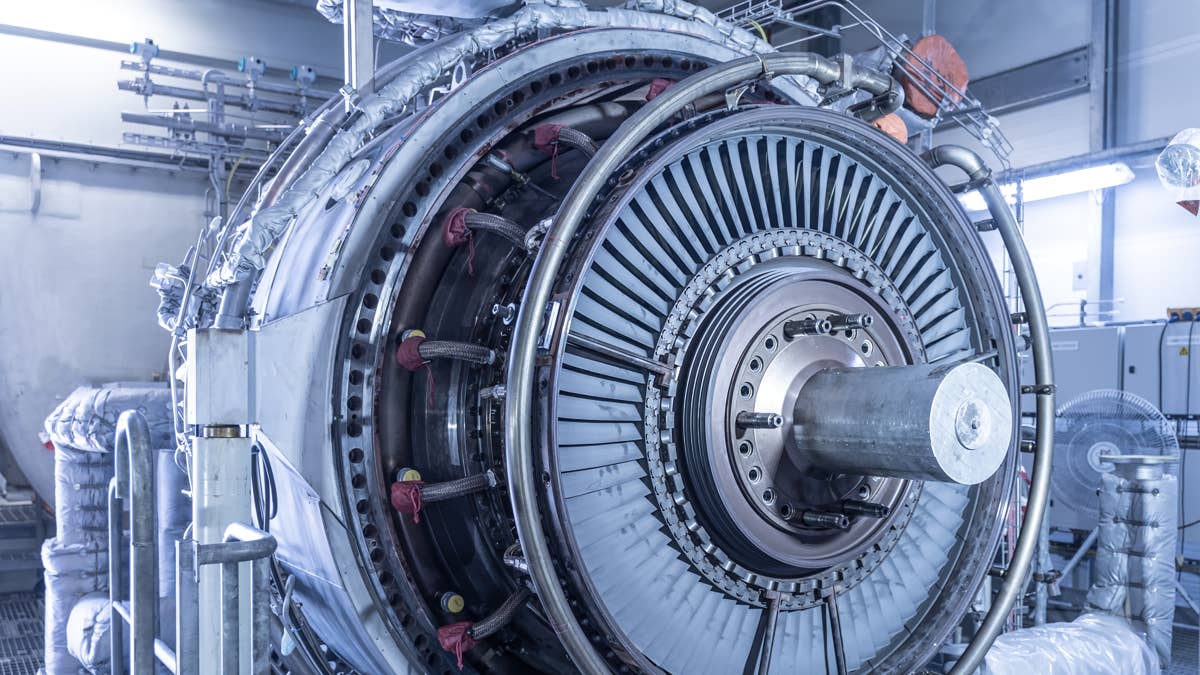
For the natural-gas turbines racing to power artificial intelligence data centers, that part is the blade sitting inside the hottest section of the machine.
On Monday, Aug. 31, investors got a blunt reminder of how much that single part matters. Shares of Howmet Aerospace Inc. (HWM), one of the few companies on Earth that knows how to cast those blades, tumbled more than 8% after Elon Musk said SpaceX plans to make its own, according to CNBC.
The stock move looked like a simple competitive threat: a customer becoming a rival.
Wall Street’s read, delivered within hours, was almost the opposite, and it centers on a shortage most investors have never had reason to track or even know about.
What Musk actually said about the turbine-blade bottleneck
Musk posted on X (the former Twitter) on Aug. 29, saying that Space Exploration Technologies Corp. (SPCX) and Tesla are each racing to build 100 gigawatts of annual solar capacity. Natural gas will still be needed to fill the gap for years, he added.
He then named the real constraint. Casting the blades and vanes inside gas turbines is what slows new production, Musk wrote, and bringing that work in-house at SpaceX could get turbines online up to 18 months at sooner, a change he called a “profound game-changer.”
Related: Elon Musk drops stunning SpaceX forecast
SpaceX is building that capability at a foundry in Bastrop, Texas, tied to a planned 20-gigawatt power project for AI data centers, according to Seeking Alpha.
The location matters because it signals SpaceX wants full control over one of the industry’s tightest chokepoints, not just a cheaper supplier. Elon says, Elon does.
How Howmet and SpaceX stock moved apart
Howmet fell as much as 7.7% to a two-month low during the session, Seeking Alpha noted, before closing down more than 8%, according to CNBC.
The stock had closed at $264.85 the prior Friday, Aug. 28, and it carries a market capitalization near $97 billion. On Aug. 31, shares gapped down to open at $248.25.
Space Exploration Technologies Corp. shares moved the other way. Options traders were positioning for further upside in SPCX the same day Howmet sold off.
The divergence signals investors initially read this as a wealth transfer from one company to another, rather than a shared response to industry-wide scarcity.
That matters for anyone holding Howmet. The company makes precision-cast metal components for jet engines and industrial gas turbines, and its gas-turbine segment has become one of its fastest-growing businesses, with revenue climbing 39% in the first quarter after a 25% gain for all of 2025.
Wall Street calls the sell-off a buying opportunity
Bernstein analyst Douglas Harned pushed back on the panic within hours. He wrote that he sees “little risk to Howmet from the SpaceX announcement” and framed the news as a positive signal instead, according to Seeking Alpha.
Bloomberg Intelligence reached a similar conclusion. Analyst Omid Vaziri said SpaceX’s plan validates turbine scarcity rather than threatens established suppliers.
SpaceX:
- Morgan Stanley doubles down on SpaceX stock for investors
- SpaceX analyst plots path to bold $100 billion claim
- JPMorgan resets SpaceX price target after earnings
Incumbents such as Siemens Energy AG and GE Vernova Inc. are already expanding their own casting capacity to meet the same shortage, Investing.com confirmed.
Harned’s argument centers on scarcity, not sentiment. Turbine-blade demand is outpacing global casting capacity, and that imbalance is why a well-funded buyer like SpaceX would rather build its own supply than wait in line.
Bernstein said Howmet’s supply agreements with major turbine makers extend into 2030. The firm also flagged six additional capacity expansions expected before year-end, which could lift blade capacity by as much as 38% from early 2025 levels.
Bernstein raised its price target on Howmet to $328 from $248 and kept its Outperform rating, treating the Aug. 31 decline as an entry point rather than a warning sign.
Citi Research joined the pushback, placing Howmet on a 30-day upside catalyst watch with a $329 price target, according to Seeking Alpha.
The bank noted that SpaceX entering the casting space demonstrates extreme market demand and tight supply constraints, forecasting earnings to reach $8.08 per share by 2028.
AI’s power race has a hidden chokepoint
The Howmet story is really a supply story, and it extends well beyond one stock.
Only four companies worldwide cast the nickel-superalloy blades and vanes that survive inside a turbine’s hottest section, and all four are currently running at capacity, Benzinga reported.
Howmet is one of only two in that group that trade publicly.
Precision Castparts sits inside Berkshire Hathaway, and newly listed Doncasters is the other. The other rivals remain private, according to Benzinga.
That means the Aug. 31 sell-off doubled as a rare moment when investors could actually price the entire bottleneck.
That scarcity is colliding with an unprecedented wave of demand. Microsoft signed a 20-year agreement with Chevron in June for a 2.67-gigawatt gas-fired power project in West Texas.
It is one of several hyperscaler deals now competing for the same turbine backlog, according to Bloomberg.
SpaceX’s foundry does not eliminate that scarcity. It just proves how far a well-capitalized company will go to jump the line.
Investors should watch whether other AI builders follow the same path, because the next chokepoint story may not involve Howmet at all.