
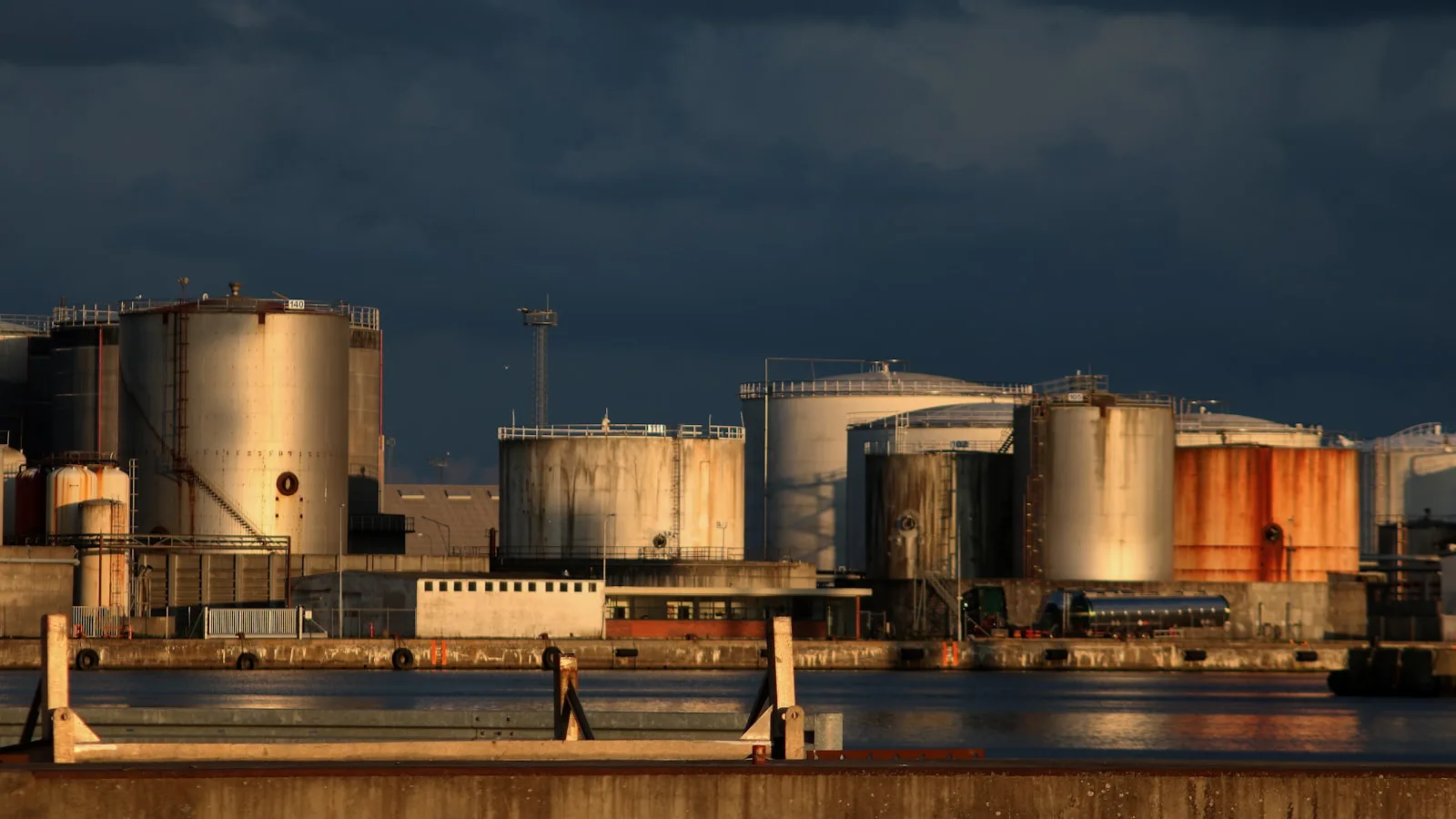
The crude oil price has climbed about 22% this month, with West Texas Intermediate (WTI) near $104 after easing slightly on the day and Brent above $107, a supply-driven surge that has quietly become the reason a Federal Reserve rate hike is on the table at all. Markets put the odds of a quarter-point increase at Wednesday’s FOMC meeting at 92.7%, according to the CME FedWatch Tool, and the case for tightening rests less on hot demand than on an energy shock that is feeding straight into inflation. The commodity that usually gets blamed on consumers is doing the work this time, and it is doing it because a pipeline in Saudi Arabia is not moving oil.
Saudi Arabia’s East-West pipeline, a 7-million-barrel-per-day artery that carries crude across the kingdom to the Red Sea and bypasses the Strait of Hormuz, has been offline since a drone attack on September 10, as CNBC reported. That line represents about 4% of global oil supply, and its loss lands on a market already stretched by months of conflict around Hormuz. The result is a price move that reads on every inflation gauge the Fed is watching this week.
WTI crude oil has risen about 22% this month, trading near $104 after the Saudi East-West pipeline shutdown. Source: OilPrice.com.Where the WTI Price Sits and What Moved It
WTI settled at $101.39 on Monday and traded near $104 on Tuesday, while Brent, the international benchmark, settled at $105.68 and pushed toward $108, per Bloomberg data. WTI is up about 22% on the month and roughly 45% this year, a run that has pushed the US dollar index to 99.57, its highest since September 3. The move is a straight supply story: the pipeline outage removed a key escape route for Saudi barrels at the same time Iran-backed Houthi forces tightened their grip on the Red Sea, seizing the port of Mocha and putting a second chokepoint in play at the southern end of the route.
The physical strain is now reaching customers, which is what separates this from a speculative spike. Saudi Aramco has begun cancelling or putting at risk crude cargoes bound for European refiners, with one market source telling Argus that every Saudi shipment scheduled for the final ten days of September could be affected and that Yanbu held roughly five days of crude inventory, as OilPrice reported.
US diesel has topped $6 a gallon for the first time on record, and Chevron chief executive Mike Wirth said the buffers that had cushioned prices since the war began, including strategic-reserve releases, are now exhausted, with the risks still to the upside. The tanker attacks and the drone strike that shut the pipeline have stopped being separate incidents and started compounding into a single supply crunch.
How the Crude Oil Price Transmits Into Core Inflation
Energy prices move through inflation data in two waves, and both are now in motion. The first is direct: gasoline, diesel and heating costs are line items in the Consumer Price Index, and August CPI already rose 0.4% on the month and 3.4% over the year with energy named among the drivers, as detailed in the BLS release and covered when the print pushed the 30-year Treasury yield to a 19-year high. With crude another 22% higher this month, the September and October prints are being written in real time.
The second wave is the one that constrains the Fed. Higher fuel costs raise the price of moving and making almost everything, so an energy shock bleeds into core inflation, the measure that strips out food and energy but cannot escape their downstream effects. Bloomberg noted that international oil prices have climbed about 80% this year, the inflation pressure that has already pushed the 10-year Treasury yield above 5%, and the Fed’s own preferred gauge, the PCE price index, sat at 3.7% in July, per the Federal Reserve’s data. A central bank cannot cut into that without appearing to ignore the very inflation its mandate targets.
Investor Takeaway
The hike case is supply-driven, not demand-driven: with crude up about 22% on the month, the inflation pressure the Fed is responding to comes from an energy shock rather than an overheating economy, which is a harder problem for rate policy to solve.
Why the Brent and WTI Spike Constrains the Fed This Week
The timing leaves the Fed with little room, and the market has priced that. A rate cut into a 22% oil spike would read as dismissing inflation, while holding steady would look complacent with fuel at multi-year highs, so a hike has become the path of least resistance, which is why FedWatch sits near 93%. A CNBC survey of economists found respondents now see two hikes ahead rather than one, as CNBC reported, a shift driven almost entirely by the energy-led inflation outlook rather than by growth or employment data.
CME FedWatch prices a 92.7% chance of a rate hike at the September 16 FOMC meeting. Source: CME FedWatch Tool.The bind is structural. The Fed is being asked to tighten against inflation it cannot source, since no interest-rate level restarts a bombed pipeline or reopens a contested strait. That is the uncomfortable position an energy shock creates: the central bank must be seen to act on rising prices even when the lever it holds does not reach the cause.
What Would Unwind the Crude Oil Price Shock
The fastest relief runs through the pipeline itself. Estimates for restoring the East-West line range from days to as long as eight weeks, and a quick repair with Yanbu loadings resumed would take the sharpest premium out of the crude oil price, as analysts told Reuters. A de-escalation around Hormuz and the Red Sea would do the same over a longer horizon, though talks have stalled, with Oman having postponed the regional meeting meant to ease tensions.
The alternative path is worse, with Goldman Sachs warning that a prolonged shutdown combined with restricted Hormuz flows raises the probability of Brent moving above $120, as reported by EnergyNow, which would deepen exactly the inflation problem the Fed is now confronting. Whether this week’s hike is the first of a short series or a one-off depends less on the Fed’s own read of the economy than on whether the barrels start moving again.
Investor Takeaway
The pipeline repair is the key variable: with restoration estimates ranging from days to eight weeks, the speed of that fix, not the Fed, determines whether the energy-inflation pressure fades or builds.