BMW has delivered another unwelcome surprise. On November 3, the German carmaker issued its second profit warning of the year, saying the core profit margin at its cars business is now seen between minus 0.5% and plus 0.5% in 2026, which means the unit could post an operating loss.
That compares with the 1% to 3% margin it expected in June, itself a cut from its outlook at the start of the year, Reuters reported.
The timing made it sting even more. The warning landed the night before BMW’s third-quarter report, which showed net profit falling about 15% to 1.44 billion euros as revenue slipped nearly 6% to 30.45 billion euros. For a brand built on premium pricing, it is a stark reversal.
BMW’s restructuring costs pile up
Job cuts are a big part of the problem. BMW said its redundancy program is moving faster than expected, which will mean bigger-than-planned severance payments in the final quarter of the year. Costs tied to a production ramp-up are adding to the strain.
The company is leaning into that speed rather than slowing down. “The company intends to leverage the momentum generated by its workforce restructuring program to expand its organizational and process realignment more quickly,” BMW said, adding that “the reduction in management functions will be implemented faster than announced.”
Also read: Rivian car buyers are driving a Wall Street rethink on the stock
Investors have already been punished once this year. After BMW’s June warning, its shares fell 13% in a matter of days, and UBS estimated the cut wiped about 2 billion euros off profits, warning it would be “premature” to buy the dip, Forbes reported. Rivals Mercedes and Volkswagen slid too on worries about their own China exposure.
This warning follows an earlier one in June. Back then, BMW cut its automotive margin guidance to 1% to 3% from 4% to 6%, and warned that group profit before tax would drop significantly. Chairman Milan Nedeljkovic said, “We will adapt our current structures and processes to the drastic downturn in market conditions.”
China keeps dragging on German carmakers
China remains the sore spot. BMW’s deliveries in the China region fell 24.8% in the third quarter, dragging global deliveries down 6.3%, even as sales in Europe and the U.S. edged higher. Over the first nine months, total deliveries fell 4.9%, according to BMW Group.
Local rivals are doing much of the damage. Domestic brands such as BYD, Xiaomi and NIO are offering comparable technology at lower prices, putting pressure on BMW in what was once one of its most profitable markets. The China Passenger Car Association cut its market forecast again in June.
BYD shows how fast the landscape has shifted. The company is now the world’s largest EV maker, sold 1 million vehicles outside China last year and is targeting 1.5 million in 2026. Its European sales jumped 270% in 2025, according to TheStreet.
For BMW, the pattern is painfully familiar. Chinese EV makers such as BYD, NIO, Xiaomi, Xpeng and Geely’s Zeekr continue to push into luxury segments that German brands once owned, squeezing margins across the market.
Mercedes-Benz and other rivals are cutting too
BMW is far from alone. Mercedes-Benz cut its 2026 outlook in late October, lowering its core car margin guidance to 2% to 3% from 3% to 5%, after its China deliveries fell another 29% in the first nine months of the year. It now expects core profit to match last year’s 5.8 billion euros, making it the third major German carmaker to trim its 2026 outlook.
The pressure on Mercedes has been building for months. Its China sales dropped about 30% in the second quarter, hurt by local rivals such as BYD, a property crisis that has weakened demand for luxury cars and shrinking spending power among wealthy buyers. Mercedes plans to push “100% China-fit products,” including more long-wheelbase versions.
Volkswagen is going even further. Its supervisory board approved 50,000 more job cuts in September, lifting its workforce reduction target to about 100,000 positions by 2030, roughly 15% of global staff. The overhaul, called “Future Plan 2030,” also aims to halve the model lineup and reach a 9% operating margin by 2030, according to TheStreet.
More Automotive:
- ‘Too late’ for Europe, Ford CEO warns as Chinese cars eye U.S.
- Trump’s latest gift to automakers has major consequences
- Rivian sends safety message to thousands of drivers
Investors see no quick fix. Mercedes CEO Ola Kaellenius has urged German workers to put in unpaid extra hours while expanding in Hungary, where he says costs are about 70% lower. “Structural challenges show no sign of abating,” said Ingo Speich of shareholder Deka Investment, warning that more cost-cutting and new products are needed across the industry, AFP reported.
Neue Klasse offers some hope
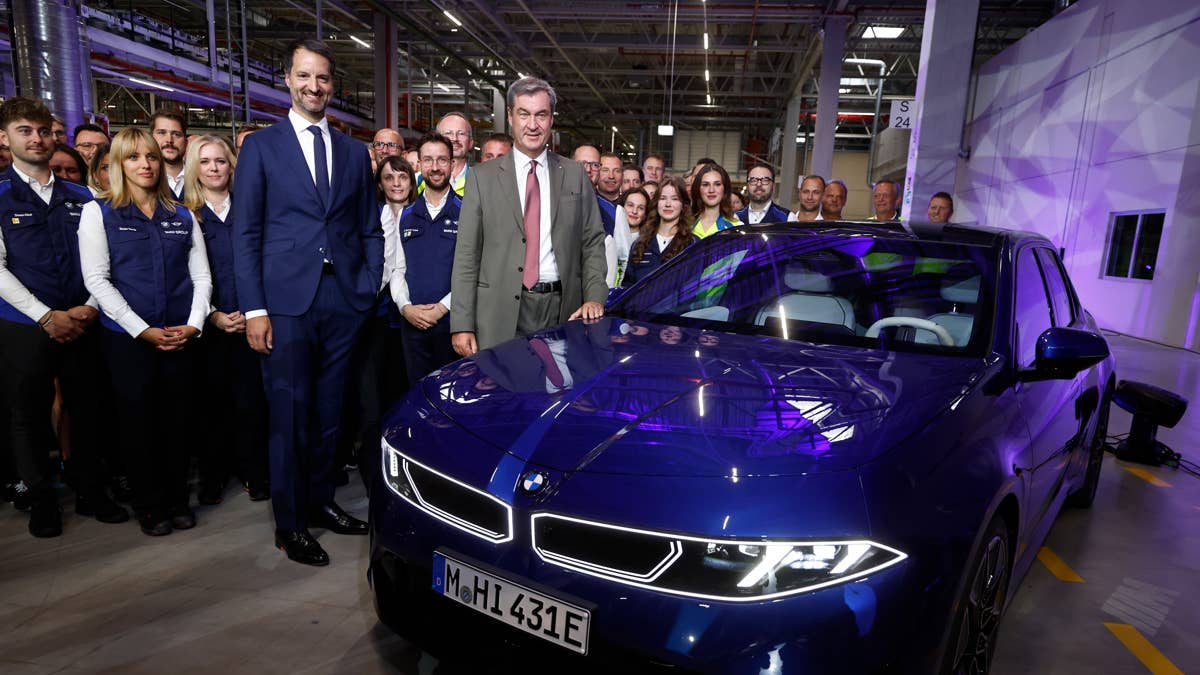
There is a bright spot. Strong demand for new models built on BMW’s Neue Klasse platform means the company will take on costs to add extra shifts, even though car and motorbike deliveries are now expected to fall more steeply this year. BMW delivered 2.46 million vehicles across its BMW, Mini and Rolls-Royce brands last year.
Early signs are encouraging. The new iX3 drew more than 100,000 orders in Europe in its first year, and BMW’s global battery-electric deliveries rose 7.2% in the third quarter. A Chinese version of the iX3 is set to roll out in China in November.
The latest results show how much work remains. The automotive division’s margin on sales shrank to 3.4% from 5.2% a year earlier, and about 20% of the 551,000 cars BMW delivered in the quarter were fully electric. Whether the new models can carry BMW through this reset is now the big question.