Fundstrat Head of Technical Strategy Mark Newton has been tracking the markets for over 25 years. His career includes stints on the buy side and sell side, and time on the CBOE as a floor trader. His experience and role at Fundstrat have made him a trusted influencer, whose market commentary carries weight.
On Nov. 24, Newton joined Caroline Woods for a wide-ranging interview with TheStreet, in which he offered updated thoughts on what’s next for stocks, including hard-hit technology stocks like Nvidia and Anthropic.
“I like being long tech between now and next spring,” said Newton. “The adoption rate is still only about 1% for AI among major companies.”
Stock volatility surges amid tech tumble
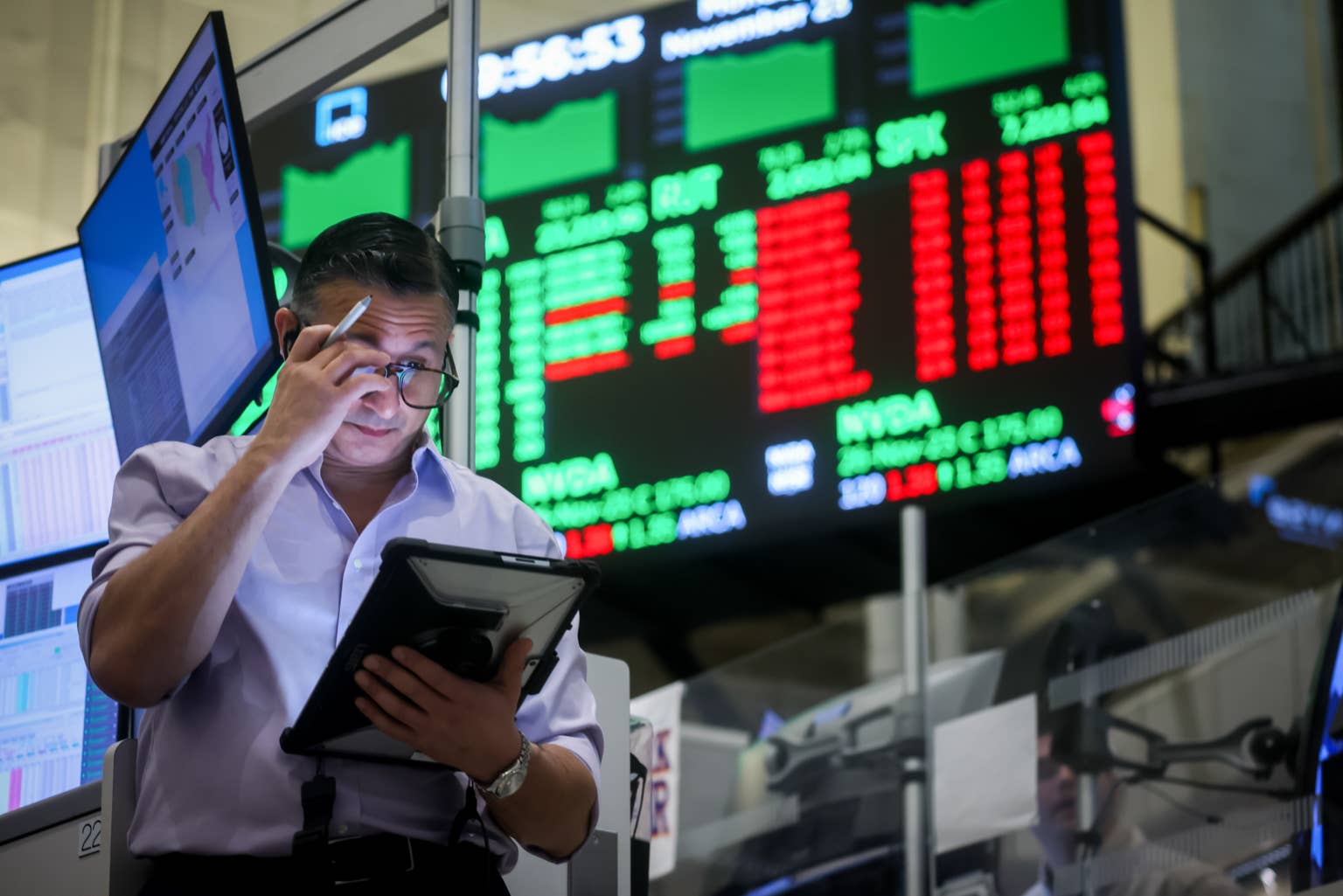
The S&P 500 and Nasdaq entered correction territory last week, largely driven by sharp declines in technology stocks, including Nvidia, the largest holding in each index.
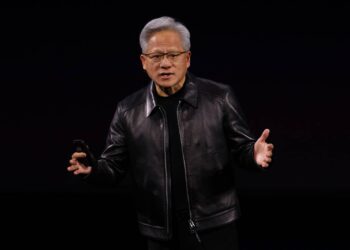
Nvidia (NVDA) shares fell sharply amid fallout over the disclosure of CEO Jensen Huang’s extramarital affair with a potential Chinese spy. Huang has served as AI’s biggest cheerleader, and his connections throughout the industry have helped drive billions of dollars in deals with major players, including neocloud providers Coreweave and Nebius.
Also read: Morgan Stanley’s Mike Wilson just made another gutsy forecast
The potential for government repercussions stemming from investigations into whether Nvidia graphics processing units, or GPUs, used to accelerate AI were illegally sold to Chinese companies, and uncertainty over whether Huang could still effectively run Nvidia, led to his resignation, prompting widespread concern among investors.
That decision has since been reversed, with President Trump assuring Nvidia’s board that Huang could return to his role as CEO without repercussions. Still, concerns about the industry’s ability to maintain its breakneck spending pace linger, and volatility across technology stocks remains high.
On Friday, November 20, the tech-heavy Nasdaq collapsed 5.3%, one of its biggest single-day drops, led by Nvidia, which fell 14%, and, more broadly, semiconductors, which are highly reliant on AI compute demand. The State Street SPDR S&P Semiconductor ETF (XSD) is down 31.9% from its October high.
Tech stocks regained some ground on Monday, November 23, when news of Huang’s reinstatement broke. But they slid on Tuesday as investors continue to wrestle with questions regarding how much exposure they want to the basket.
The volatility index, which measures S&P 500 futures activity, surged to 36 last Friday, an extreme reading coincident with market bounces, and remains elevated at 26.36.
Newton shares sectors and stocks to buy
The sell-off has sent shares of some stocks down 50% or more, and the 10%+ decline in the S&P 500 is concerning. Still, declines are common in mid-term election years, which have historically been the weakest performers in the four-year Presidential Election cycle.
Typically, that mid-term weakness sets the stage for better returns in the third year of the cycle, which is the best year for returns, according to the Stock Trader’s Almanac.
More Wall Street:
- Arista Networks stock gets fresh backing from Jim Cramer and Wall Street
- Oracle stock sinks as Wall Street confronts a $20 billion AI problem
- Wall Street just got a candid look at who is winning the AI race
Perhaps one of the best analogs is 2018, given that President Trump was similarly in the White House and lost seats in Congress while the Fed was raising rates, as it is now.
The Nasdaq fell sharply into December before finding its footing and then rising 35% in 2019.
Newton thinks we could similarly be setting up for gains through early 2027, and that investors can buy not only Nvidia and Anthropic (ANT) but also energy stocks on dips.
When Woods asked about Nvidia specifically, Newton didn’t hedge his bet.
I think it’s worth being long in Nvidia between now and next January, February,” said Newton. “I think that it’s not going to get back down under $125.”
He admits that technicians have little to work with on Anthropic, given it only recently began trading, so there are only a few days of price action to analyze. Still, Newton is a believer in the business, and thinks Anthropic is worth a flyer.
“I think it’s personally attractive in the mid-$70s,” said Newton. “The company is going to make, you know, $100 billion next year. So it’s certainly something that you dip your toe in and buy a small amount and hold it for a few years.”
Outside of tech, Newton likes healthcare stocks but acknowledges they could face some headwinds in January. Instead, he appears to think that, for new money, energy could be the better bet.
“Energy typically does quite well the first part of the year,” said Newton. “I think energy will probably be an overweight for me as I prepare my annual [forecast].”
Newton’s forecast follows others this week
On Nov. 22, I discussed why veteran technical analyst Helene Meisler believed we were oversold. The Daily Sentiment Index reached 9 on the S&P 500 and Nasdaq on Nov. 20, while the put/call ratio surged above 1.20 and the volatility index, or VIX, hit 36, extremes often coincident with bottoms.
On Nov. 23, I also highlighted comments from Morgan Stanley’s chief strategist Mike Wilson, who had correctly predicted a retreat to 7,100 and now believes the worst is behind us, clearing the way for a strong 2027.
“Our sentiment indicator reached −1.6 and the VIX hit 36, matching December 2018, with hedge fund positioning similarly washed out. While the S&P broke below our 7,100–7,300 range, we view this as an overshoot of fair value and remain constructive into 2027,” wrote Wilson.
Longtime analyst Ed Yardeni believes the correction won’t evolve into a bear market, saying this week that the S&P 500 could reach 8,500 in 2027. Goldman Sachs and Morgan Stanley target 8,700 in 2027.
While those forecasts offer reasons for optimism, investors should remember that nobody rings a bell at market bottoms. It can take time for bases to build, and some stocks may never recover to their past historical highs.