
On June 14, Microsoft CEO Satya Nadella published a 1,200-word essay on X titled “A frontier without an ecosystem is not stable.” It got 28 million views. The essay drew a direct line between AI concentration and globalization and argued that the AI industry is heading toward the same kind of structural damage that offshoring inflicted on industrial economies.
Nadella is not alone in raising the concern. Across venture capital, crypto infrastructure, and AI research, a similar argument is getting louder: the compute and distribution infrastructure powering AI is concentrating in ways that could shape who benefits from the technology for a generation.
Why AI infrastructure concentration is the bottleneck investors keep underweighting
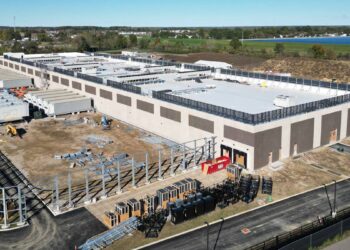
Microsoft, Google, Amazon, and Meta plan to spend approaching $700 billion on capital expenditure in 2026, most of it directed at AI infrastructure, CNBC reported. A startup looking to build competing infrastructure is working with a budget that makes the comparison unrealistic. The practical option is to rent access from one of those four companies and build on top of their stack.
Sentient Foundation responded to that dynamic by launching a $42 million grant and investment program for open-source AGI builders, one of the largest programs of its kind. The initiative funds developers, researchers, and startups building AI outside the closed ecosystems of the largest technology companies. The Foundation’s framing: while some companies are building AI to be the next oil, it wants intelligence to be air.
More AI:
- Goldman Sachs has blunt message for AI stock investors
- Microsoft CEO sends a blunt warning on AI and the tech ecosystem
- The next AI infrastructure race has nothing to do with chips
Sachi Kamiya, Director of Venture and Growth at Sentient Foundation, described what the concentration risk actually looks like for builders.
“We think concentration is a real concern, but the risk is dependency. If every startup depends on the same few companies for the core AI stack, the market becomes less open even if innovation is still happening,” Kamiya told TheStreet.
A startup can build a useful AI product on rented infrastructure. Its pricing, data access, and customer relationships can still be controlled by the hyperscaler sitting beneath it.
What Satya Nadella said about AI concentration and intelligence
Nadella’s June 14 essay went beyond calling for openness. He compared the risk of AI concentration to the first wave of globalization. GDP numbers improved during offshoring, he wrote. The jobs and industrial ecosystems that left did not come back. He said AI value concentration could produce the same pattern. He also described the mechanism: AI models absorb company expertise and commoditize it, turning a firm’s proprietary capabilities into standardized services accessible to its competitors.
“If all the value is accrued by only a few models, the political economy will simply not tolerate it. There is no societal permission for an AI future that hollows out entire industries,” he wrote.
His prescription was an ecosystem rather than a model race. Nadella argued that companies should build learning loops that encode their institutional knowledge into AI systems that improve with use, what he called “token capital” compounding alongside human capital. A company running that loop can switch out a commodity model without losing its proprietary advantage. VentureBeat noted that Nadella’s essay arrives at a moment when Microsoft itself is grappling with the dynamics he warns about, including sharply rising compute costs and internal debate over AI pricing models.
Fanjoy/Getty Images
Why compute is the harder problem to solve than the model race
AI models are genuinely competitive. New ones release constantly. Gaps between labs close within months. Token costs have fallen significantly as supply grows. The compute layer that runs those models is a different situation entirely.
Leo Fan, founder of Cysic, said the public debate has been aimed at the wrong layer.
“The chokepoint is physical. The risk was never five model companies. It’s a compute layer only five balance sheets can afford to build,” Fan told TheStreet.
One company supplies approximately 75% of the specialized hardware used to train AI at scale. One foundry manufactures approximately 90% of the leading-edge chips the entire industry depends on. Getting compute infrastructure built requires land, power, cooling, and hardware procurement on timelines measured in years. Capital and physics set the barrier, not engineering skill.
Fan also said access without verifiability solves little. “Broad access means nothing if it’s permissioned by the people collecting the tolls. And the blocker is technical, not political,” he added.
What AI compute concentration looks like in 2026:
- One company supplies approximately 75% of the specialized hardware used to train and run AI systems at scale, according to industry estimates
- One foundry manufactures approximately 90% of the world’s leading-edge chips, making it the de facto production facility for the entire AI buildout
- Microsoft, Google, Amazon, and Meta are collectively expected to spend approaching $700 billion on capital expenditure in 2026, most of it directed at AI infrastructure, according to CNBC
- Global AI infrastructure spending is forecast to reach $401 billion in 2026 as part of a broader $2.5 trillion AI spending cycle, Investing.com reported, citing Gartner projections
- The compute required to run agentic AI has increased approximately 1,000% compared to generative AI, according to Nvidia CEO Jensen Huang, meaning the infrastructure demands of the next AI wave are larger still
Where investors think durable AI value actually lands
The concentration debate feeds into an investment question that does not have a settled answer: which layer of the AI stack holds value longest?
Wish Wu, co-founder and CEO of Pharos, said model and infrastructure advantages look durable today but may not hold as the market matures.
“Model capabilities will continue to improve, and infrastructure will remain critical, but those advantages may become less differentiated over time. The companies that deeply integrate AI into real workflows and user behavior are likely to build more durable positions,” Wu said.
In past technology cycles, companies that owned user relationships captured more durable value than those that owned the underlying infrastructure. Social media and search settled that way. Mobile software settled that way.
Wu said the more urgent concern is whether the access problem gets solved at the application layer.
“I don’t think concentration itself is necessarily the problem. The risk is if access to intelligence becomes too restricted and limits innovation at the application layer,” he added.
AI agents are adding a new dimension to this. As agents hold balances, execute payments, and coordinate autonomously, they will need financial and coordination infrastructure that does not yet exist and that nobody currently controls. Wu described it as one of the most significant underdeveloped opportunities in AI, and one that carries large consequences depending on who builds it and how open they keep it.
Related: Microsoft’s CEO sends the AI industry a strong warning