In 2014, Elon Musk stood in front of an audience and said building AI was like “summoning the demon.” In 2018 at SXSW, he said AI was “far more dangerous than nukes.”
In March 2025, he put the odds of killer robots annihilating humanity at somewhere between 10% and 20%. Those are the quotes people remember. They paint a picture of a man who has spent years warning the world about what could go wrong.
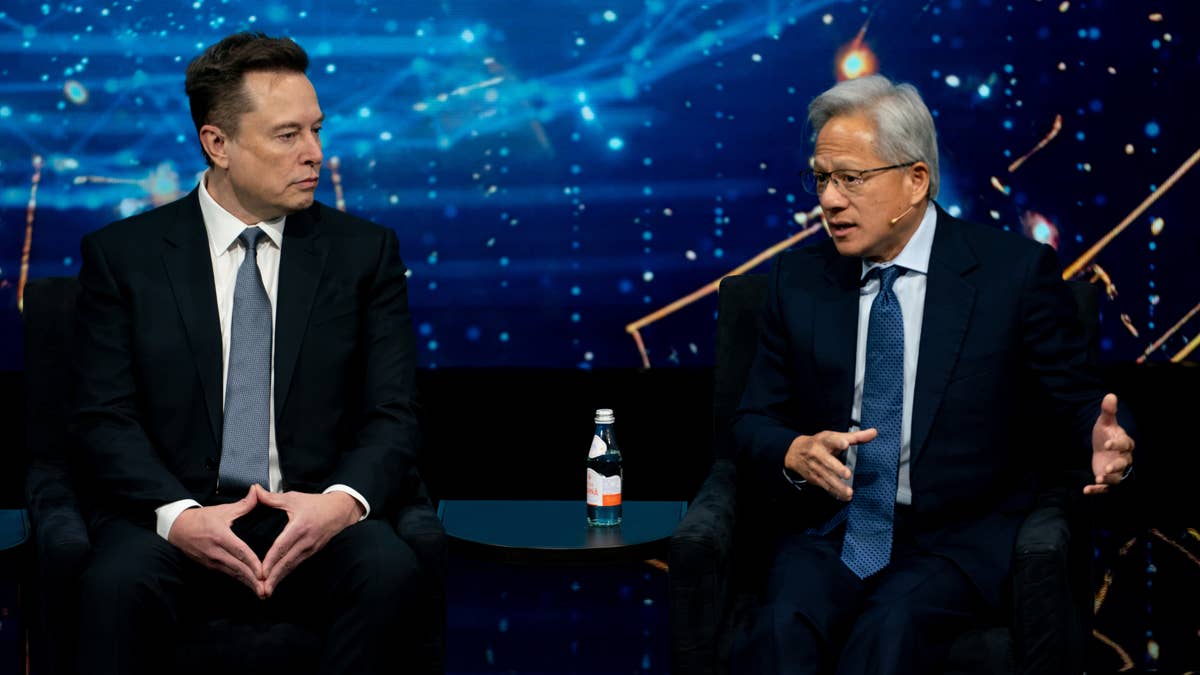
Then in July 2026, sitting across from The Economist’s editor-in-chief Zanny Minton Beddoes in what was his first extended interview since SpaceX‘s blockbuster IPO, Musk said something that complicates that picture considerably. He said he’s made peace with pressing ahead anyway. And he explained why.
What Elon Musk told The Economist about AI risks and abundance
“My sort of philosophical conclusion is to look on the bright side,” Musk told The Economist.
“I can’t see any way to really stop this incredible momentum of AI and robots,” he said. “At times I sort of think, well, perhaps even if there was a stop button, we probably shouldn’t press it, because the most likely outcome is incredible abundance for all.”
He also said humans will “no longer be in charge of the world in 10 years.” He said it matter-of-factly, not as a warning, but as a prediction he’s made peace with.
He’s not saying the risk is gone. He was explicit that the probability of things going catastrophically wrong is “not zero.” But his argument is that the upside, a world where AI creates abundance for everyone, is the more likely outcome. And he’s decided that’s enough to keep going.
He also put a timeline on what he sees coming. AI may exceed the sum of all human intelligence “in about five years,” he said, leading to what he called “an age of amazing abundance where anyone can have anything they can think of.” The only scenario he sees derailing that is something like “global thermonuclear war.”
Related: Mark Zuckerberg backs Elon Musk Silicon Valley decision
The interview also had a sharper moment. When Beddoes told him “people loathe you,” Musk didn’t flinch. “I don’t care,” he said. “The fact that a quarter billion people follow me means a lot more people like me than don’t. And I think a lot more people hate you and the media than you realize.” It was the kind of exchange that reminded viewers why Musk doesn’t sit for many interviews.
Why Musk’s position on AI has shifted from warning to acceptance
The shift is worth sitting with. Musk has been one of the most prominent voices warning about AI risk for more than a decade. He co-founded OpenAI in 2015 specifically because he believed that if powerful AI was coming, it was better to have safety-conscious people at the frontier than to leave it entirely to those who weren’t thinking about the risks. He left OpenAI’s board in 2018 citing disagreements over direction.
Since then he’s built xAI, launched Grok, and poured money into AI compute infrastructure. He’s watched the technology accelerate past forecasts he thought were aggressive. His 10-20% annihilation estimate from March 2025 is still there. He didn’t walk it back. What shifted is what he does with that number. If the bad outcome is 10-20% likely, then the good outcome is 80-90% likely. And he’s decided that’s enough to keep going full speed.
That’s not a retraction of his earlier warnings. It’s more of a reckoning with the fact that the train has left the station, and his conclusion is that passengers are better off on it than standing on the platform hoping it stops.
Musk’s AI abundance prediction and what it means in practice
Musk has been making versions of the abundance argument more explicitly in 2026. In January, he said saving for retirement would be “irrelevant” in a world of abundant AI and robotics. Earlier this month, he predicted that AI and robots would make work optional and fund what he called “universal high income,” a concept he’s described as a world where scarcity is no longer the default condition of human life, as TheStreet reported.
The Economist interview is the most fully developed version of this argument he’s made publicly. He’s describing a world where the question isn’t whether AI creates enormous wealth but whether that wealth gets distributed broadly enough to justify the risk of getting there. His answer, based on the interview, is that he believes it will, and that betting against the technology at this point is both futile and probably the wrong call.
That’s a significant thing to say when you’re the person who once compared AI development to summoning a demon. It reflects either a genuine philosophical evolution or a calculated public pivot. Probably some of both.
Stefani/Getty Images
What the AI risk debate looks like with Musk on the optimist side
The AI safety community has spent years trying to get the world’s most powerful technologists to take existential risk seriously. Musk was one of the few people with genuine influence who seemed to agree. Now he’s saying the risk is real but the abundance case is stronger, and he’s not pressing stop.
That matters for how the public debate about AI governance develops. If the person who put “killer robots annihilating humanity” at 10-20% odds is now making the case for accelerating anyway, it takes one of the most credible warning voices out of the cautionary camp and puts it, at least partly, in the acceleration camp.
Geoffrey Hinton, the Nobel Prize-winning computer scientist who left Google specifically to warn about AI risk, has put his own probability of AI-driven human extinction at 10% over the next 30 years. That number is still out there. The debate hasn’t gone away. Musk is just no longer where he used to be in it, and that changes the shape of the conversation in ways that will take a while to fully work out.
What investors and markets should take from Musk’s Economist interview
For markets, Musk’s comments are another data point in a pattern that’s been building all year. The people closest to the technology and most invested in it, literally and financially, are increasingly making the abundance case rather than the caution case. That shapes the capital allocation decisions of the investors and institutions that listen to them.
Musk himself has more money riding on the AI outcome than almost anyone. xAI, Tesla, SpaceX, and his various infrastructure investments are all deeply tied to the assumption that AI development continues and that the resulting productivity gains are real. His optimism isn’t abstract. It’s what the business model requires, as TheStreet reported.
Whether that makes his optimism more credible or less credible is a question investors are going to have to answer for themselves. But his position on the debate has shifted, and the market tends to notice when someone with his platform changes what they’re saying.