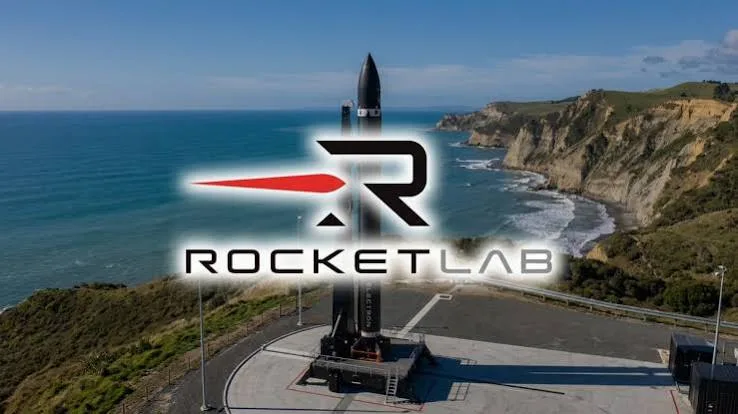
Every Rocket Lab (RKLB) price prediction hinges on the same event: the first launch of the Neutron rocket, penciled in for the fourth quarter of 2026. That framing is wrong. The man building the rocket says so himself. “Neutron is certainly mission enabling, but it’s not mission critical,” chief executive Peter Beck told investors this year. The company the market prices as a binary bet on one launch date is, on the numbers, a vertically integrated space-infrastructure business that happens to also launch rockets. RKLB closed 5 August 2026 at $74.82 — up 27.7% from its 29 July low of $58.60, and yet still sitting below the $76 bear case the Street set for it. Morgan Stanley’s $293 bull case still stands against a $105 base case from the same desk. That is not an argument about Neutron. It is an argument about what kind of company you think you are buying.
Updated 6 August 2026: refreshed for the August rebound, the still-unreclaimed $76 bear line, the reset Street average of $111.31, Morgan Stanley’s $105 base case, and the 17% move options are pricing into Q2 earnings on 10 August. All prices verified at the 5 August close.
July delivered the bear case without the bear thesis. The stock ran from $93.09 to $58.60 in four weeks — straight through the $76 Street-low target — and then rebounded hard: up roughly 16% over five sessions into August, closing at $74.82 on 5 August, per Nasdaq data. None of the bear’s stated conditions ever triggered. Neutron has not slipped and the core business has not wobbled. The pressure came from financing and dilution questions around the $8 billion Iridium acquisition announced 29 June, a rotation out of space names, insider selling and the broader tech washout — and even a new Space Force award failed to halt the selloff, per Benzinga. The Street never followed the price down: the average 12-month target across 18 analysts sits at $111.31, per StockAnalysis — 48.8% above spot — and the second-quarter report lands on Monday 10 August 2026.
The number nobody is framing correctly: $76 is now the ceiling
Here is the synthesis neither the bulls nor the bears have stated. The $76 Street-low target was supposed to be the floor — the worst case, the level that only broke if Neutron slipped and the core business cracked. Neither happened, and RKLB went through it anyway. It has now spent two weeks climbing back and has stalled 1.6% underneath it. A level built as a floor is functioning as resistance.
Now overlay the options market. Traders are pricing roughly a 17% move in either direction around the 10 August print — well above RKLB’s 10.4% average post-earnings move across the past four quarters, per TipRanks. Apply 17% to $74.82 and the implied band runs from about $62.10 to $87.54. That band brackets $76 almost symmetrically. The market is not pricing a directional view on Rocket Lab’s quarter; it is pricing a coin-flip on whether the company reclaims the level the Street had called its worst case. That is an unusually clean setup, and it is the single most useful frame for anyone reading this page before Monday.
Note what the band also says: its downside edge, $62.10, sits above the $58.60 July low. Even the bearish half of the options market is not pricing a retest of the panic. The disagreement is entirely about the ceiling.
Key Rocket Lab (RKLB) facts and figures
- Spot: $74.82 at the 5 August 2026 close, up $0.34 (+0.46%). Market capitalisation $44.76 billion — StockAnalysis
- 52-week range: $37.57 – $151.00. The stock is 50.4% below its high and 99.1% above its low — StockAnalysis
- The rebound: +27.7% from the $58.60 close on 29 July, but still 1.6% below the $76 Street-low target — Nasdaq price data
- Q2 2026 earnings: Monday 10 August 2026. Consensus: a loss of $0.06 per share (versus $0.13 a year ago) on revenue of about $231.62 million, up roughly 60% year over year — TipRanks
- Implied move: options price roughly ±17%, against a 10.4% average post-earnings move over the last four quarters — a band of about $62.10 to $87.54
- Q1 2026 actuals: record revenue $200.35 million, net loss narrowing to $45.02 million — Rocket Lab, May 2026
- Segment split: Space Systems $136.7M (68% of revenue) vs Launch $63.7M — CNBC
- Contracted backlog: more than $2.20 billion, with 70+ contracted missions — Rocket Lab Q1 2026
- Neutron debut: targeted for Q4 2026, “on track” per management — Spaceflight Now
- Analyst targets: Street average $111.31 across 18 analysts (Buy); Morgan Stanley base case $105 and bull case $293, raised from $185; Citizens $130; Piper Sandler $83 — 24/7 Wall St. and StockAnalysis
What Rocket Lab actually is, and why the stock is so volatile
Rocket Lab is best understood as two businesses stapled together. The first, and the one that made its name, is Launch: the small Electron rocket, with more than 50 successful flights, and the larger, reusable Neutron now in development. The second, and the larger by revenue, is Space Systems: satellites, spacecraft, solar panels, flight software, and components that Rocket Lab sells to other operators and increasingly uses to build and fly its own constellations. The $8 billion agreement to acquire satellite operator Iridium pushes the company further down the “own the whole stack” path — from launching other people’s payloads to owning the payloads, the satellites, and the recurring service revenue underneath them.
Think of it as the difference between a trucking company and a logistics empire. Anyone can run a truck; the durable margins sit in owning the network, the depots, and the contracts. Rocket Lab’s launch business is the truck — visible, dramatic, and cyclical. Space Systems and the Iridium deal are the network. That is why the record Q1 mattered more for the backlog line than the revenue line: contracted backlog above $2.2 billion is forward revenue the market can underwrite, and it grew because Rocket Lab closed what it called the largest launch contract in its history, a bulk purchase of Neutron and Electron flights from an undisclosed customer. Retail traders have noticed the shift too, which is why brokers are broadening access, as we covered when Fortrade added AI, space, and networking stocks to meet demand moving beyond the mega-caps.
Beck was characteristically blunt about where the constraint is not: “Demand is just not one of [the things I worry about],” he said on the earnings call. “The backlog is super healthy for a number of years.”
The SpaceX effect: RKLB is now trading on someone else’s disclosure
Something structural changed in the last fortnight, and it has nothing to do with Rocket Lab’s operations. SpaceX is now a public company, and it filed its first earnings report as one on 4 August. That report — not any Rocket Lab announcement — is the proximate cause of the 16% five-session rally that carried RKLB back toward $76.
The read-through is more interesting than the bounce. SpaceX’s space segment generated $619 million of revenue in the first quarter of 2026, per CNBC’s earnings coverage. Rocket Lab’s consensus for the June quarter is $231.62 million. Put those side by side and Rocket Lab is running at roughly 37% of the revenue of SpaceX’s space business — a far smaller gap than the “SpaceX versus everyone” narrative implies, and the arithmetic behind Morgan Stanley’s decision to label Rocket Lab an emerging “mini-SpaceX” when it lifted its bull case to $293 from $185.
But the same filing carries a warning. SpaceX’s growth is no longer really coming from space: its AI revenue climbed 213% quarter over quarter to $2.6 billion, dwarfing the space segment entirely. The listed comparable that just re-rated the whole sector is increasingly an AI infrastructure company. Investors buying RKLB as a SpaceX proxy are buying the part of SpaceX that is growing slowest. We unpack the other side of that trade in our SpaceX SPCX stock prediction.
The bull case: a $293 target built on backlog, not hope
The bullish argument for RKLB is not a moon-shot on Neutron; it is a compounding-backlog story with a launch-cadence kicker. Start with the demand signal. Selling more launches in a single quarter than in an entire prior year, and lifting backlog past $2.2 billion, tells you the order book is filling faster than the company can fly. Add the Space Systems mix — roughly two-thirds of revenue from higher-visibility, less binary work — and you have a business whose valuation does not live or die on one launch window.
Layer Neutron on top as optionality. Neutron is a reusable medium-lift rocket aimed squarely at the market SpaceX’s Falcon 9 dominates. If it flies and proves reusable, Rocket Lab graduates from the small-satellite niche into the constellation-deployment big leagues — the highest-volume, highest-value segment of the launch market. That is the leg that justifies Morgan Stanley’s $293 bull case: not the base outcome, but the scenario where Neutron converts backlog into a recurring, high-margin cadence. It is worth being precise about what that number is — Morgan Stanley’s base case is $105, barely above the Street average, and it reiterated an Overweight rating alongside both. The $293 is the tail, not the forecast. The same “picks-and-shovels plus optionality” logic underpins the AI-infrastructure names we mapped in our Nebius (NBIS) price prediction, where the market pays up for owning the rails of a structural buildout.
There is also a defense pillar the momentum crowd underweights. Rocket Lab flagged growing national-security and defense demand alongside the commercial backlog in Q1, with Beck describing overall demand as “super healthy” as defense and Neutron orders build, per Yahoo Finance. Government work tends to be stickier and higher-margin than commercial launch, and it leans on Rocket Lab’s proven Electron vehicle — now past 50 successful flights — rather than on the unproven Neutron. That diversification is precisely what a launch-only framing of the stock misses: the backlog is not one bet, it is several.
Beck framed the reusability challenge — the crux of the bull case — with an engineer’s candor: “If we just had to go up, it’s super easy, we’d be in orbit by now. But the reality is, it’s just as important to go up as it is to come back down and be reusable again.” Reusability is what turns a rocket from a cost center into a margin machine, and it is the single technical hurdle that gates the upside. Investors comfortable with that framing tend to view RKLB the way they view other high-beta buildout stories, such as the one in our Nvidia price prediction.
The market data: mapping $293 against $76
Stitch the numbers together and a cleaner picture emerges than either camp offers alone. With RKLB at $74.82, the $111.31 average target implies 48.8% upside — a spread that opened because the price collapsed while the targets held, after analysts had already ridden the stock to a $151.00 all-time high in May 2026. Note that the dispersion is enormous even excluding Morgan Stanley’s tail: Piper Sandler’s Alexander Potter carries $83, Citizens’ Trevor Walsh carries $130. Those two are not disagreeing about a discount rate; they are modelling different companies.
| Factor | Bull case (toward $293) | Bear case (toward $76 and below) |
|---|---|---|
| Business mix | Space Systems 68% of revenue = recurring, less binary | Market still prices it as a launch stock |
| Backlog | $2.2B contracted, growing fast | Backlog is not yet cash; execution risk remains |
| Neutron | Reusable medium-lift unlocks the Falcon 9 market | Q4 2026 debut could slip; engine tests unproven |
| Iridium deal | $8B acquisition adds recurring service revenue | Large deal adds integration and balance-sheet risk |
| Profitability | Operating leverage as cadence scales | Still loss-making: −$45M net in Q1 2026 |
| The $76 line | Reclaiming it confirms July was sentiment, not thesis | Failing at it twice turns a floor into a ceiling |
The synthesis neither side states: RKLB’s near-term price is anchored by Space Systems and backlog, while its tail outcomes are set by Neutron. That means the stock can rebuild from the low $70s on fundamentals even if Neutron slips — and only re-rates toward $293 once reusability is proven. The bear’s $76 was supposed to require both a Neutron delay and a wobble in the core business; July proved sentiment alone could do it, which is exactly why the fundamentals-driven targets did not follow the price down.
The bear case and the risks the momentum crowd ignores
The case for $76 and below is not frivolous. Start with profitability: Rocket Lab is still loss-making, posting a $45.02 million net loss in Q1 2026 even at record revenue, and consensus expects another loss — $0.06 a share — for the June quarter. A company burning cash while pouring capital into Neutron development and an $8 billion acquisition is, by definition, dependent on capital markets staying friendly. Any tightening of financing conditions raises the cost of that ambition.
Then there is the Neutron timeline itself. Beck says Q4 2026 is “on track,” but that hinges on the Archimedes engine surviving what he described as a battery of “nasty” qualification tests, per Stocktwits. Rocket development slips; it is the base rate of the industry, not the exception. A push into 2027 would not break the thesis, but it would deflate the momentum premium that carried RKLB to $151. Add the volatility already seen around the Iridium announcement, the integration risk of absorbing a satellite operator, and rising competition — SpaceX’s Falcon 9 incumbency, plus a field of new launch entrants — and the bear’s downside math is coherent. The stock is priced for execution; any stumble compresses the multiple fast.
Crucially, Beck’s own framing is a double-edged sword. Telling investors Neutron is “not mission critical” reassures long-term holders — but it also concedes that the catalyst the momentum crowd is trading is not, by the CEO’s own account, the thing that matters most. That gap between the narrative price and the operational reality is exactly where sharp corrections live. For a comparable high-multiple name that just beat expectations and fell anyway, see our Nvidia bull and bear cases.
What happens next: three scenarios for RKLB
First, 10 August is a referendum on $76, not on Neutron. The quarter will not tell you whether the Archimedes engine works. It will tell you whether Space Systems is still compounding and whether backlog is still climbing — and the options market has already declared that a coin-flip, with an implied band of roughly $62.10 to $87.54 straddling the contested line. Watch the backlog figure and the Space Systems revenue line above everything else on the release.
Second, Neutron remains the re-rating switch, and it is binary. A successful, on-time Q4 2026 debut — especially a clean demonstration of reusability — is the event that opens the path toward the triple-digit bull targets, because it converts Rocket Lab from a small-launch specialist into a Falcon 9 challenger. A slip into 2027 does the opposite: it does not break the company, but it drains the premium and likely marks time in the $60s and $70s.
Third, the twelve-month base case clusters near the $111.31 average, with the tails doing the real work. Reaching Morgan Stanley’s $293 still requires Neutron to fly and reusability to prove out on schedule — and it is worth repeating that the same desk’s base case is $105, which is where the honest centre of gravity sits. Between those poles, RKLB remains what it has quietly become: a space-infrastructure compounder wearing a rocket company’s volatility. Investors should size it as the high-beta position it is, watch the backlog more closely than the launch calendar, and remember that this is analysis, not investment advice.
Frequently asked questions
What is the Rocket Lab (RKLB) price target for 2026?
Analyst 12-month targets on Rocket Lab average $111.31 across 18 analysts with a consensus Buy rating, per StockAnalysis — implying 48.8% upside from the 5 August close of $74.82. Morgan Stanley carries a $105 base case and a $293 bull-case scenario. The published range runs from Piper Sandler’s $83 to Citizens’ $130, excluding Morgan Stanley’s tail scenario.
Can Rocket Lab stock reach $293?
Morgan Stanley’s $293 is a bull-case scenario, not a base target — the same desk’s base case is $105. Reaching $293 would likely require Rocket Lab’s Neutron rocket to launch on schedule in Q4 2026 and prove reusable, the Iridium acquisition to prove accretive, and major defense awards to convert into signed contracts. Without those, the stock is more likely to trade near the $105–$111 consensus zone.
What happened to Rocket Lab’s $76 bear case?
RKLB fell straight through it in July, hitting $58.60 on 29 July without any of the bear’s stated conditions being met — Neutron did not slip and the core business did not wobble. The selloff was driven by dilution concerns around the $8 billion Iridium deal, sector rotation and insider selling. The stock has since rebounded 27.7% but closed 5 August at $74.82, still 1.6% below that $76 line, which now functions as resistance rather than support.
When does Rocket Lab report Q2 2026 earnings?
Monday 10 August 2026. Consensus expects a loss of $0.06 per share, narrowed from a $0.13 loss a year earlier, on revenue of roughly $231.62 million — about 60% growth year over year. Options are pricing a move of approximately 17% in either direction, against RKLB’s 10.4% average post-earnings move over the past four quarters.
Why is Rocket Lab stock so volatile?
RKLB behaves like a high-beta bet on a single catalyst — the Neutron debut — layered on a still-loss-making balance sheet. It hit an all-time high of $151.00 in May 2026 before selling off around the $8 billion Iridium acquisition, then fell 61% to $58.60 by late July. Because the price embeds execution expectations, any news on Neutron timing, engine testing, or the acquisition moves the stock sharply.
Is Rocket Lab profitable?
Not yet. Rocket Lab reported a net loss of $45.02 million in Q1 2026, even as revenue hit a record $200.35 million, and analysts expect a further loss in Q2. The company is investing heavily in Neutron development and the Iridium acquisition. Management points to expanding backlog and Space Systems growth as the path to profitability, but free cash flow remains negative during the buildout.
How does Rocket Lab compare to SpaceX now that SpaceX is public?
SpaceX’s space segment generated $619 million in Q1 2026 revenue against Rocket Lab’s $231.62 million consensus for Q2 — putting Rocket Lab at roughly 37% of its larger rival’s space-segment scale. That comparison is what led Morgan Stanley to describe Rocket Lab as an emerging “mini-SpaceX.” The caveat is that SpaceX’s growth is now driven by AI and connectivity revenue, not launch, so the proxy is an imperfect one.
What is more important for Rocket Lab: Neutron or Space Systems?
By revenue, Space Systems is larger — $136.7 million versus $63.7 million for Launch in Q1 2026 — and CEO Peter Beck has called Neutron “mission enabling, but not mission critical.” Space Systems and the Iridium deal drive near-term fundamentals, while Neutron represents the upside optionality that could re-rate the stock toward bull-case targets.
Sources: price, market-cap and 52-week range data from StockAnalysis and Nasdaq (5 August 2026 close); analyst targets from StockAnalysis, S&P Global and 24/7 Wall St.; earnings date, consensus estimates and implied move from TipRanks; Q1 2026 actuals from Rocket Lab Investor Relations; SpaceX segment data from CNBC.
This article is for information purposes only and is not financial advice. FinanceFeeds does not recommend buying or selling any security. Options-implied moves describe market pricing, not predictions, and space-sector equities are highly volatile around earnings. Always do your own research and consider consulting a licensed financial adviser.