Nebius is not being valued on the quarter it reports on Wednesday. It is being valued on a promise it has to keep by December, and the arithmetic of that promise is the most under-discussed number in the AI-infrastructure complex. Nebius exited the first quarter of 2026 with annualised run-rate revenue of roughly $1.92bn. Management guides to $7bn–$9bn of ARR by the end of this year. That is not a growth rate; it is a bridge with a $5.1bn–$7.1bn gap in the middle and three quarters to cross it. Shares traded at $190.28 on the morning of 10 August, and the options market is pricing a move of nearly 16% around the print. Everything that matters on Wednesday is whether the second quarter put a credible first span across that bridge.
Work the bridge per quarter and it stops being an abstraction. To reach the $7bn low end from $1.92bn, Nebius must add roughly $1.69bn of ARR in each of the second, third and fourth quarters. To reach the $9bn top end it needs about $2.36bn a quarter. Read that against the base: the company must add close to 90% of its entire existing run-rate, every quarter, three quarters running, just to hit the bottom of its own guidance. Meanwhile consensus has second-quarter revenue near $575m, which annualises to about $2.3bn. A perfectly respectable quarter still leaves almost the entire bridge to be built in the second half. This is the single clearest reason the stock has round-tripped from $286.69 in June to $190.28 today while the sell-side average target sits above $240 — the market is not disputing the demand, it is discounting the schedule.
Key facts before the print
- $190.28 — NBIS share price, 10 August 2026, 05:27 ET (Nasdaq)
- ±15.9% — options-implied move, from the $30.23 at-the-money straddle on the 14 August expiry (Nasdaq option chain, 10 August 2026)
- $1.92bn → $7bn–$9bn — Q1 2026 ARR against year-end 2026 ARR guidance (Nebius Q1 2026 results, 13 May 2026)
- $20bn–$25bn — 2026 capital expenditure guidance, raised from a prior $16bn–$20bn range, against full-year revenue guidance of just $3bn–$3.4bn
- 684% — year-on-year revenue growth in Q1 2026, to $399m
- $258.13 — average price target across 17 analysts polled by S&P Global, with a consensus Buy rating
- 11 September 2026 — expiry of the lock-up on Nvidia’s 9.3% stake, 30 days after this earnings print (Schedule 13G, filed 13 July 2026)
Where the $220 and $160 come from
Both headline numbers are derived from live option quotes rather than borrowed from a note. On the 14 August expiry — the first that captures Wednesday’s pre-market release — the $190 call was quoted $14.00 bid against $14.30 offered, a $14.15 mid. The $190 put was $15.75 bid against $16.40 offered, a $16.08 mid. The at-the-money straddle therefore costs $30.23 against a $190.28 share price, an implied move of 15.9% by Friday’s close.
Applied symmetrically, the bull case resolves near $220 and the bear case near $160. Those are the boundaries the market is charging to cross, not price targets in the analyst sense, and realised moves land outside the straddle a meaningful minority of the time.
The skew inside it is again the tell. Same strike, same expiry, and the puts cost $1.93 more than the calls — a 13.6% premium for downside. Barchart put NBIS implied volatility at 120.50% with an implied-volatility percentile of 89%, meaning options are more expensive than they have been on roughly nine days in ten over the past year. Traders are not merely expecting a large move; they are paying disproportionately to be protected against a move down.
There is a specific, datable reason that skew is rational, and it is not the earnings print at all. It is 11 September.
The overhang sitting 30 days after the print
Nvidia’s stake in Nebius is not a simple block of shares. The Schedule 13G filed on 13 July 2026 shows 22,256,412 shares in total, of which only 1,190,476 are directly owned. The remaining 21,065,936 sit underneath a pre-funded warrant acquired on 11 March. Nvidia cannot sell any of it before 11 September 2026.
That single date does more to explain the option skew than any earnings expectation. The market is being asked to absorb two distinct events inside a month: a print on 12 August, and the release of a potential supply overhang on 11 September. A trader hedging into Wednesday is also, implicitly, hedging the four weeks that follow. FinanceFeeds examined the mechanics of that stake and its expiry in detail in Nvidia owns 9.3% of Nebius and cannot sell until 11 September.
The bull reading is that Nvidia has every strategic reason not to sell. Nebius is a customer, a partner and a showcase for Nvidia silicon; dumping the position would be self-defeating and would signal a lack of confidence in exactly the demand Nvidia is selling into. The bear reading is that a 21m-share warrant is a liquidity event waiting for a window, and that the mere possibility caps the stock into September regardless of what Wednesday brings. Both are true simultaneously, which is why the options are expensive.
What Nebius has actually built
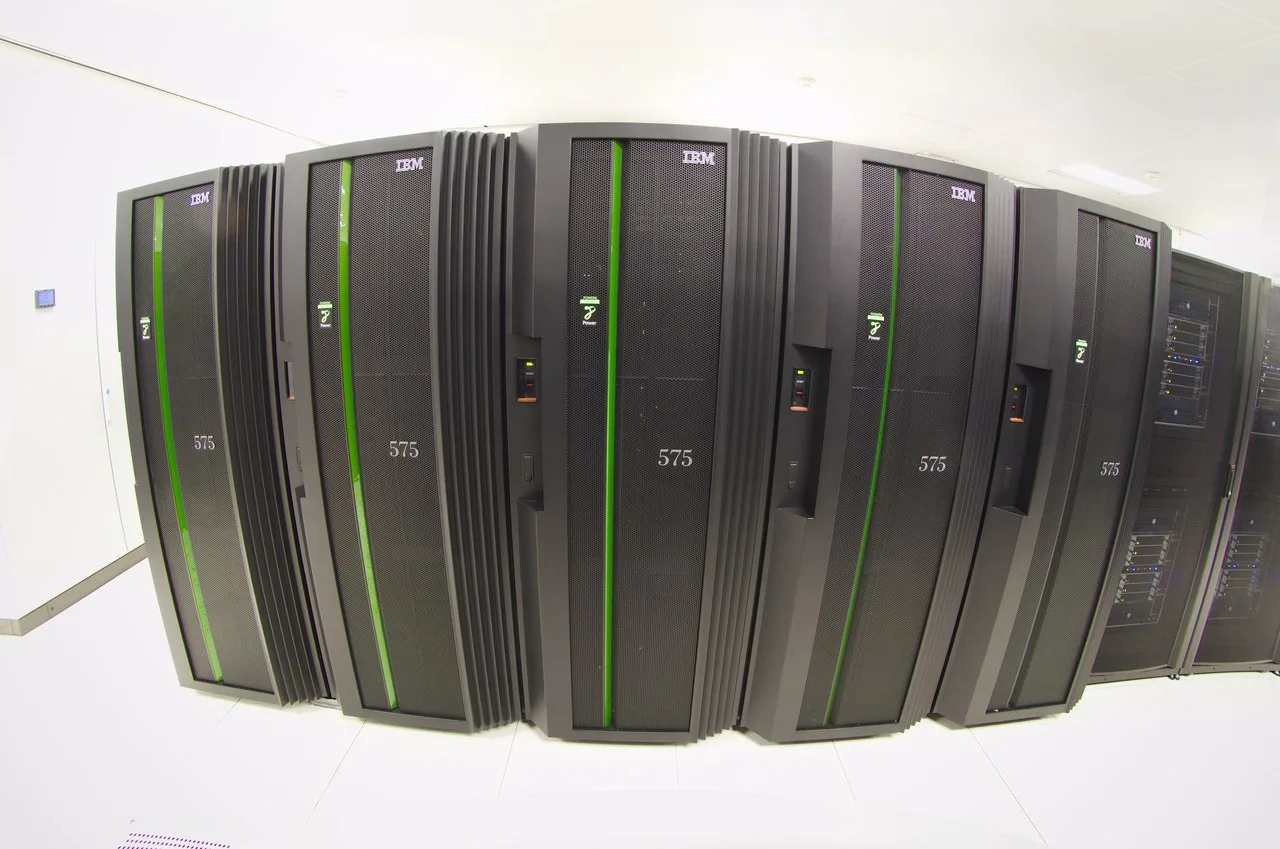
Nebius rents AI compute, but its strategic distinction from most of the neocloud cohort is ownership. The company is not primarily leasing capacity inside somebody else’s facility; it is building and owning the sites.
Chief executive Arkady Volozh laid out the position on the Q1 call: “Today, we announced a new site in Pennsylvania to support 1.2 GW of power once fully lit live. This is our second owned gigawatt scale site in the United States. Our platform is most efficient when we own the full stack, and we are building towards that. Our owned contracted capacity now accounts for more than 75% of our total power.”
On demand, Volozh has been unambiguous: “Everything we build, we sell, and we are still in the very early days.” His framing for the business is “We’re building an AI-native hyperscaler.” It was that demand signal that drove the capital-expenditure guidance up to $20bn–$25bn from a prior $16bn–$20bn.
Put the capital plan beside the revenue plan and the shape of the risk becomes obvious. Nebius intends to spend $20bn–$25bn in a year in which it expects to book $3bn–$3.4bn of revenue. It is spending something close to seven times its revenue to build the capacity that is supposed to generate the ARR. Owning the stack is genuinely the higher-margin end state, and it is also the version that consumes the most cash before it pays. That is a financing story as much as a technology story, and it is why the equity trades with the beta of a leveraged builder rather than a software company.
Bull case versus bear case
| Bull case — resolves toward $220 | Bear case — resolves toward $160 | |
|---|---|---|
| ARR bridge | Exit-Q2 ARR shows a step large enough to make $7bn by December arithmetically plausible | ARR grows respectably but leaves a gap that implies an implausible H2 ramp |
| Revenue | Delivery above the ~$575m consensus, with full-year $3bn–$3.4bn reaffirmed | A miss, or any softening of the full-year range, breaks the guidance credibility that supports the multiple |
| Capacity | Pennsylvania and the owned-site programme energising on or ahead of schedule | Slippage in energisation, which pushes ARR right and lengthens the cash-burn window |
| Capital | Funding secured on terms that do not materially dilute; capex held at $20bn–$25bn | A fresh raise on poor terms, or a capex increase without a matching ARR step |
| Nvidia stake | Signals of intent to hold beyond 11 September remove the overhang | Silence on the warrant leaves a 21m-share supply question open into September |
The financing and disclosure tension
The regulatory pressure on a company like Nebius is not a licensing regime. It is disclosure quality and capital-markets access, and both are unusually consequential when the equity story rests on a forward number.
ARR is the pressure point. Unlike revenue, annualised run-rate is not a defined measure under IFRS or US GAAP. It is a management-constructed metric, and its usefulness depends entirely on the definition attached to it: what is contracted versus merely committed, whether it is measured at a point in time or an exit rate, and how much rests on capacity that is signed but not yet energised. When a company guides to a number of this magnitude, the composition of that number carries as much information as the number itself. Investors are entitled to ask for the bridge, and the market has historically paid a premium to management teams that volunteer it before being asked.
Capital access is the second constraint, and it is where the macro backdrop intrudes. A builder spending seven times revenue is refinancing continuously, so the front end of the yield curve is an operating input rather than background noise. The July payrolls print came in negative, which reopened the argument about how fast the Federal Reserve cuts in September. A faster path lowers the cost of the buildout and lifts the present value of ARR that arrives in 2027 and beyond. A slower path does the reverse to a company with very little near-term cash flow to discount.
Export controls sit underneath the whole structure. Nebius is a European-domiciled operator building substantial capacity in the United States, running Nvidia accelerators. The rules governing where advanced chips may be sold and deployed shape its supply schedule and its geographic strategy at once. FinanceFeeds has tracked how this dependency runs through the entire semiconductor chain, including in Micron’s own price-prediction setup.
The physical constraint is the last one, and the most stubborn. Contracted gigawatts are not delivered gigawatts, and communities increasingly get a vote: FinanceFeeds reported on Nashville choosing to pay $37m rather than permit a data centre. For a company whose thesis is owned power at gigawatt scale, planning risk is thesis risk.
What happens next
First, the ARR figure will move the stock more than revenue or EPS. Consensus has revenue near $575m and a loss around $0.70 a share, and neither resolves the question the equity is priced on. Exit-Q2 ARR is the number that either validates the bridge to $7bn–$9bn or exposes it. Expect the market to trade the ARR line and the full-year reaffirmation within seconds of the release, and to treat the income statement as secondary.
Second, a reaffirmed $7bn–$9bn with a weak Q2 ARR step is the most dangerous combination. Cutting the target would be painful but honest and would reset expectations at a lower, defensible level. Holding the target while the quarterly step implies an impossible second half is the outcome that erodes credibility, because it forces investors to discount not just the number but the management team’s willingness to mark it. That is the scenario the put skew is most plausibly hedging.
Third, the 11 September lock-up expiry will cap enthusiasm even on a good print. Any rally into the $220 upper boundary runs into a known potential supply event four weeks later. Unless management or Nvidia signals intent around the warrant, expect strength to be sold into September, and expect the options market to keep charging a premium for downside until that date passes.
Nebius reports the day after a complex still recovering from the Situational Awareness unwind, and one day after CoreWeave. Two prints from two AI-infrastructure builders inside 24 hours is the cleanest read available this quarter on whether the capital cycle is decelerating or simply digesting. If both guide cautiously, the market will conclude the constraint is structural. If both reaffirm, the de-rating in these names starts to look like an overshoot.
Frequently asked questions
When does Nebius report second-quarter results?
Nebius is scheduled to report on Wednesday 12 August 2026, before the US market opens. The first options expiry capturing the release is Friday 14 August, which is the contract used to derive the implied move in this article.
What is the options-implied move for NBIS?
Approximately 15.9% in either direction. The at-the-money $190 straddle on the 14 August expiry cost about $30.23 against a $190.28 share price on the morning of 10 August, framing a bull resolution near $220 and a bear resolution near $160 by Friday’s close.
Why is the ARR guidance considered the key number?
Because it is the gap the valuation rests on. Nebius exited Q1 2026 at roughly $1.92bn of ARR and guides to $7bn–$9bn by year end. That requires adding about $1.69bn–$2.36bn of ARR in each of three consecutive quarters — close to the company’s entire existing run-rate, every quarter.
What happens to Nvidia’s stake on 11 September 2026?
The lock-up expires. Nvidia’s 9.3% position comprises 22,256,412 shares, of which 21,065,936 sit under a pre-funded warrant acquired on 11 March 2026. None can be sold before 11 September, after which the position becomes a potential source of supply. Nvidia has strategic reasons to hold, but the date itself is a known overhang.
How much is Nebius spending relative to what it earns?
2026 capital expenditure guidance is $20bn–$25bn against full-year revenue guidance of $3bn–$3.4bn, so roughly seven times revenue. Owning its sites rather than leasing them is the higher-margin end state, but it consumes far more cash before it pays.
What do analysts think the stock is worth?
The consensus is bullish and well above the market. Seventeen analysts polled by S&P Global carry a consensus Buy with an average target of $258.13. Individual moves after Q1 included DA Davidson’s Alex Platt raising his target to $250 from $200, and Citizens’ Greg P. Miller raising his to $270 from $175.
This article is informational analysis and is not investment advice. Prices, option quotes and implied moves were captured on 10 August 2026 and move continuously. Consensus estimates are third-party figures and are not company guidance. Always verify current market data before making any investment decision.