
THE BANKING SECTOR in Southeast Asia, including the Philippines, may face asset quality risks amid rising household debt, Moody’s Ratings said.
“High household debt amid elevated interest rates have increased asset risks to several Association of Southeast Asian Nations (ASEAN) banking systems and weakened their credit profiles,” it said in a report.
“Most ASEAN economies saw a sizable increase in household debt over the past decade, supported by strong consumption spending and improving financial inclusion.”
In its report, Moody’s Ratings looked at six ASEAN economies including the Philippines and assessed the overall risk of the household sector to each country’s banking systems. It studied risk factors such as interest rate environment, retail lending growth, and capital and loan loss buffers, among others.
Using this assessment, the Philippines faces a “moderate” risk, same as Malaysia and Indonesia. Thailand and Vietnam had a “high” overall risk, while Singapore obtained a “low” assessment.
“In Indonesia and the Philippines, banks face a moderate level of risk given that households are not highly leveraged and the stable operating environment of these banking systems will support overall asset quality,” Moody’s Ratings said.
“Household debt has risen steadily over the past decade, with banks as the primary lender to the household sector across ASEAN.”
Moody’s said that the increase in household lending was driven by strong private consumption in the past decade. It noted household debt was expanding faster than economic growth in several countries.
“This is inextricably linked to the region’s robust economic growth, which is among the highest globally, and in Indonesia, the Philippines and Vietnam, growth is in tandem with efforts to improve financial access,” it said.
Bank lending rose by 10.7% year on year to P12.25 trillion in August, its fastest growth rate in nearly two years, the latest data from the Bangko Sentral ng Pilipinas (BSP) showed.
However, the growth in consumer loans to residents eased to 23.7% in August from 24.3% a month prior. Slower loan growth was recorded in credit cards (27.4% in August from 28.2% in July), motor vehicles (19.3% from 19.9%), and salary-based general purpose consumption loans (16.4% from 16.5%).
“While household debt in Indonesia, the Philippines and Vietnam has grown at a faster pace, this is from a low base and overall household leverage remains below regional peers,” it said.
“We expect household debt growth will continue to outpace gross domestic product (GDP) growth over the medium term across most ASEAN economies, as credit demand improves in tandem with the normalization of interest rates and stronger economic growth across the region,” it added.
Moody’s Ratings attributed the rise in household debt to improving financial inclusion, particularly in the Philippines, Indonesia and Vietnam, citing the continued digitalization of banking services.
“As financial access improves over time, we expect the most populous economies will be the main driver of growth in household debt in the region.”
The share of Filipinos with bank accounts reached 65% of the adult population in 2022. The BSP wants at least 70% of adult Filipinos to be part of the formal financial system.
Moody’s Ratings also noted that household finances in the region have been “under strain” amid elevated inflation and high borrowing costs.
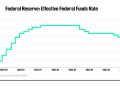
It noted that monetary tightening was the “steepest” in the Philippines. The Philippine central bank raised borrowing costs by a cumulative 450 basis points (bps) from May 2022 to October 2023 to tame inflation, bringing the policy rate to a 17-year high of 6.5%.
“Looking ahead, we expect the debt repayment capacity of retail borrowers to remain under strain over the medium term from the region’s high interest rate environment and modest income growth,” it said.
“While declining interest rates and stable economic conditions will alleviate asset quality pressures, the overall risk to each banking system will vary based on risk factors such as the extent of household indebtedness and buffers maintained by banks.”
The pandemic also weakened households’ financial buffers against future shocks, which would then increase the asset risks of ASEAN banks, Moody’s Ratings said.
“Consequently, the regional average of NPLs in the retail segment, as a percentage of gross loans, has increased from 1.9% to 2.3% from 2019 to 2023 with most of the deterioration in Vietnam and the Philippines,” it added.
The latest BSP data showed that the Philippine banking industry’s gross nonperforming loan (NPL) ratio rose to 3.59% in August, hitting a fresh two-year high.
Moody’s Ratings also noted that underperforming loans in the retail segment have also increased in Thailand, the Philippines and Vietnam.
“Overall loans at risk… are higher in the Philippines, Thailand and Malaysia, economies which have either higher levels of household leverage or below average household income,” it said.
If NPLs continue to remain elevated, this could weigh on the asset quality of banks in the region, Moody’s Ratings said.
“Banks in Vietnam and the Philippines have shifted their growth focus towards retail loans, to optimize profits and capture growing credit demand in the segment.”
“In these economies, asset risks from the rapid growth in retail loans will increase as the nominal income of individual borrowers is not keeping pace with increases in their debt burdens, while high inflation has eroded real income,” it added.
The report also cited the risk of a higher proportion of unsecured retail lending of banks in the Philippines and Thailand.
“According to the Bank of Thailand, personal loans and credit cards accounted for around 20%-30% of total household debt in 2023 while in the Philippines, credit cards alone formed around 28% of total retail loans.”
“As a result, banks in these economies will need to maintain more capital given the higher risk weights for these products relative to mortgages. They would also need to create more provisions for delinquencies given the exposures to these portfolios are typically not collateralized.” — Luisa Maria Jacinta C. Jocson