Nike’s turnaround is showing signs of progress, but not enough for Wall Street to call it a clean comeback.
And this is a problem for investors.
The athletic giant is still one of the strongest brands in the world, with a major global sports presence and powerful franchises across running, basketball, football, and lifestyle sneakers.
But shoppers have become harder to win back.
Customers have more choices in performance footwear and athletic apparel, including brands such as Adidas, On, Hoka, New Balance, Anta, and Li-Ning.
At the same time, Nike is trying to fix problems tied to slower innovation, weaker lifestyle demand, pressure from China, and a direct-to-consumer strategy that has lost momentum.
That made Nike’s latest earnings report an important test.
TheStreet previously covered Nike’s earnings preview, where Bank of America said investors would focus less on the quarter itself and more on guidance, China, and sell-through trends.
Nike has now reported, and Bank of America remains cautious.
Bank of America lowers Nike stock price target
In a research note shared with TheStreet, BofA Securities analyst Lorraine Hutchinson summed up Nike’s latest earnings as “Choppy recovery.”
BofA said Nike’s fourth quarter 2026 results were in line with expectations, but the bigger change was the company’s weaker sales outlook.
Nike’s outlook for the second quarter of fiscal 2027 now assumes revenue will be down in the low to mid-single digits.
More Bank of America:
- Bank of America gives stock market investors a summer reality check
- Bank of America revamps interest-rate forecast for rest of 2026
- Bank of America takes firm position on inflation, economy
Still, BofA said earnings expectations remain largely intact because gross-margin expansion is expected to begin in the first quarter, earlier than previously expected, and because Nike is using cost controls to protect profit.
That is why the recovery is complicated.
Nike is not simply getting worse. It is improving in some important areas, especially margins and cost discipline.
But sales are still under pressure, making it harder for investors to assign a higher valuation to the stock.
BofA kept its fiscal 2027 earnings estimate at $1.60 a share, saying lower sales should be offset by cost control and stronger gross margin.
The firm also raised its fiscal 2028 earnings estimate to $2.13 from $2.00, reflecting lower selling, general, and administrative expenses.
But Hutchinson lowered the price target because Nike’s sales recovery is taking longer than expected.
The firm lowered its price target on Nike to $47 from $55 and maintained a Neutral rating on the shares after the company’s fourth-quarter 2026 earnings report.
BofA’s new $47 price target is based on 22 times fiscal 2028 earnings, down from the prior 27 times multiple. The firm said that the discount reflects persistent negative sales growth and margin challenges.
Shutterstock
Nike earnings show why the recovery is uneven
Nike reported fiscal Q4 revenue of $11.0 billion, down 1% on a reported basis and down 4% on a currency-neutral basis.
- Nike Brand revenue was $10.7 billion, down 3% on a currency-neutral basis
- Wholesale revenue rose 4% on a reported basis to $6.6 billion
- Nike Direct revenue fell 7% to $4.1 billion
- Nike Digital revenue fell 12%
- Nike-owned stores fell 7%
This split shows where Nike’s turnaround is helping and where the business remains weak.
Wholesale is improving as Nike rebuilds relationships with retail partners and tries to show up better where shoppers already buy sneakers and apparel.
But Nike Direct remains under pressure.
Nike has spent years pushing customers toward its own stores, website, and apps. Direct sales can give Nike more control and better margins, but the channel is not driving enough momentum right now.
And Nike’s earnings looked stronger because of a one-time tariff benefit.
The company reported diluted earnings of 72 cents a share in the fourth quarter, but that included a 52-cent benefit tied to the expected recovery of tariffs paid under the International Emergency Economic Powers Act.
Excluding that tariff recovery benefit, Nike said earnings were 20 cents a share.
That still helped the quarter look better than feared, but it does not remove the bigger sales questions.
Nike wholesale growth still has concerns
BofA said wholesale sell-in looks solid, but sell-through pressure remains an important issue.
Sell-in measures the product moving from Nike into retailers, and sell-through measures whether those products are actually selling to customers after they reach stores.
Nike’s North America wholesale revenue rose 10%, but BofA said that growth benefited from lower returns, reserves, discounts, and cancellations, not just higher sell-in.
That means if products are not selling through quickly enough, Nike may have to tighten shipments, reduce future orders, or rely more on discounts.
But this can hurt the company’s effort to rebuild full-price demand.
Nike management acknowledged the issue on the earnings call.
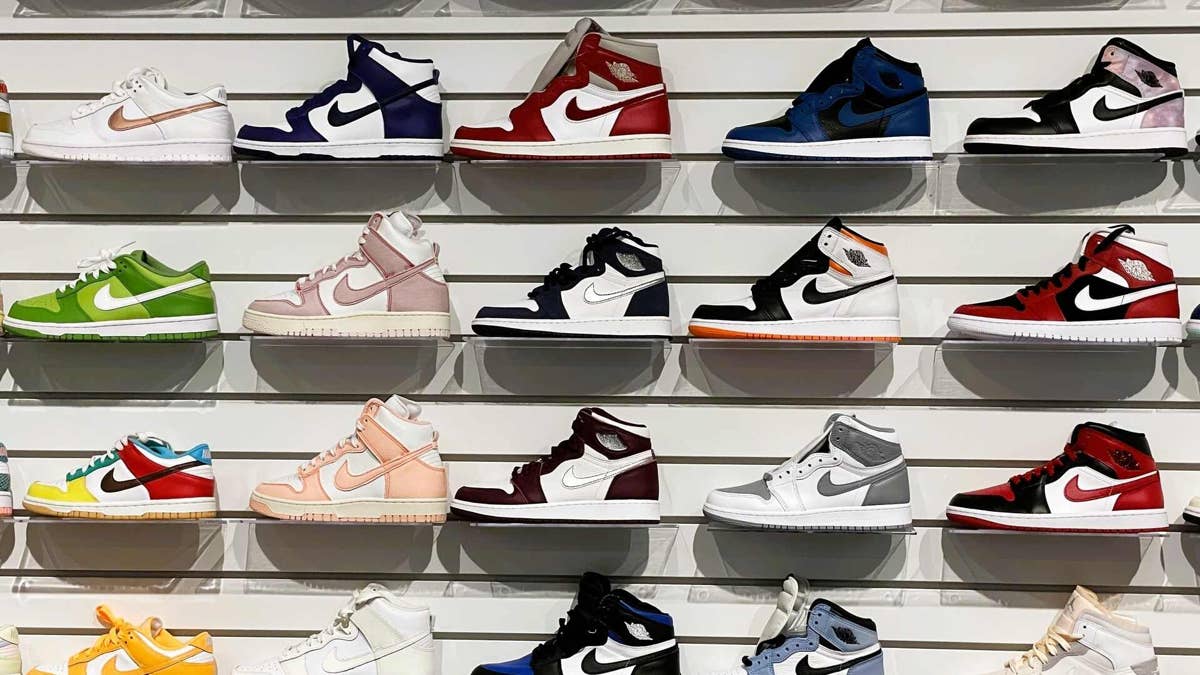
CEO Elliott Hill said results are not where they need to be, especially in Nike Sportswear and Jordan Streetwear, where sell-through remains challenged, affecting both current discounting and future order books.
Those two categories matter because they are a large part of Nike’s business and a major part of its consumer image.
Nike’s performance business is doing better. Running, training, and global football have shown stronger momentum, helped by sport-led marketing and product launches.
But Nike needs more than performance wins. It also needs lifestyle and streetwear products that can bring everyday shoppers back.
China remains Nike’s biggest reset story
China remains one of Nike’s toughest problems.
BofA said China is still a reset story, with profitability expected to improve before sales recover.
Nike’s Greater China revenue fell 17% on a currency-neutral basis in Q4. Nike Direct fell 14%, Nike Digital dropped 25%, and wholesale declined 19%.
That was slightly better than the 20% decline BofA had modeled before earnings, but it still shows how much work remains.
Nike is trying to make the China business healthier by restoring premium positioning, improving local relevance, reducing promotions, and cleaning up inventory.
That strategy may help margins, but it can also pressure sales in the near term.
That is especially risky because China’s sportswear market has become more competitive. Domestic brands such as Anta and Li-Ning have gained more credibility with Chinese consumers, while Adidas and other global competitors remain active.
Nike has said it is taking a more local approach in China, including local product creation and a stronger focus on key doors.
Management pointed to early signs of progress, including better in-season sell-through, lower average retail discounts, and improved full-price realization on digital after recent actions to reduce promotions.
Still, Nike expects near-term revenue trends in Greater China to remain in line with recent performance.
Nike stock debate divides Wall Street
The post-earnings reaction shows how split analysts remain on Nike. While the stock recovered slightly and is up 8% over the past week, it still remains down more than 40% over the year.
BTIG maintained a Buy rating and a $55 price target, noting that sentiment on Nike appears overly depressed following the stock’s steep year-to-date decline of 30%.
The firm argued that Nike made meaningful progress across the business in fiscal 2026 and remains confident in actions to improve EBIT margins and increase cash flow.
Telsey Advisory was more cautious, lowering its price target to $47 from $55 and keeping a Market Perform rating. The firm said Nike’s turnaround is progressing slowly and sales trends remain weak, with meaningful improvement unlikely until fiscal 2028.
UBS analyst Jay Sole lowered his price target to $48 from $50 and kept a Neutral rating. UBS said Nike delivered a weak fourth-quarter report that was roughly in line with market expectations.
Jefferies remained more positive but lowered its price target to $75 from $90, while keeping a Buy rating.
The firm said the quarter came in ahead of expectations and showed “kernels of progress” in the base business, but added that Sportswear and Jordan Streetwear remain overhangs that will take time to resolve.
President and CEO Elliot Hill said that the company has “elevated more than 150 stores with sport-led experiences.”
Also noting that the NIKE Sportswear will “introduce more than a dozen new footwear styles, each with distinct consumer journeys.”
However, these new offerings will take time to “translate into consistent results.”
That is the central Nike debate.
Bulls see a battered stock, improving margins, better cost control, and signs that performance categories are working.
Cautious analysts see lower sales guidance, China weakness, sluggish lifestyle demand, and a recovery that may not become clear until fiscal 2028.
Nike’s recovery still carries major risks
BofA’s downside risks are the same problems investors are now watching closely.
Those include worse-than-expected sales and margin recovery in China, innovation that is too slow or does not resonate with customers, and a continued promotional retail environment that hurts margin improvement.
Those risks go directly to Nike’s biggest challenge.
The company is trying to rebuild demand without relying too much on discounts. It is also trying to make its product pipeline more exciting while cleaning up weak categories and protecting margins.
Nike also faces a new legal distraction.
7-Eleven has sued Nike in federal court in Dallas over a planned Air Max 95 release, alleging the sneaker copies its orange, green, and red color branding and could confuse customers because it is set to launch on July 11, or 7-Eleven Day.
The case adds another complication around product execution and brand control at a time when investors are already watching whether new launches can help revive growth.
However, Nike’s latest earnings report shows that the company is making progress in some areas.
Gross margins are expected to improve sooner, with costs being managed more tightly. Running, football, and other performance categories are gaining traction, and the World Cup is giving Nike a major global marketing moment.
But the recovery is still uneven.
Nike said it does not expect the macro environment to improve meaningfully over the next six months.
The company is tightening buys, reducing future sell-in, and managing inventory more carefully, which can help margins but also weigh on revenue.
So, Nike may be building a more profitable business, but it is doing so while sales remain weak.
Related: JPMorgan names 2 Strong Buy picks for the rest of 2026