The United States government does not own five per cent of Lithium Americas Corp. (NYSE: LAC). It owns something more interesting, and almost every write-up of the trade has blurred the distinction by filing this under the general heading of “the government took a stake.” When the Department of Energy restructured its Thacker Pass loan, it did not buy shares and it did not write an equity cheque. On 30 January 2026 it took delivery of warrants: an option to acquire 18,268,687 LAC common shares at an exercise price of one cent, equal to 5% of shares outstanding on the issuance date, per the company’s Form 10-Q filed 13 August 2026. With LAC closing at $3.43 on 13 August 2026 (StockAnalysis.com), Washington holds a claim on the upside of a pre-revenue mining developer for which it has agreed to pay, in total, roughly $183,000.
Here is the part nobody is writing, and it is the reason this page exists. There are two warrants, not one. Alongside the parent-company warrant, the joint venture that owns Thacker Pass issued the DOE a second warrant over 8,656,509,695 non-voting JV units — a 5% economic interest in the project itself, struck at $0.0001 per unit. The 10-Q puts the combined fair value of both instruments at inception at $394.1 million, booked as a deferred financing cost. Of that, only $88.8 million was the LAC-level warrant. The JV-level warrant was worth roughly $305.3 million — about 3.4 times more. And under a Put, Call and Exchange Agreement signed at the same time, the DOE may require General Motors to buy the JV warrant, or, failing agreement on price, exchange it for Lithium Americas common shares. The federal claim on the equity is therefore not capped at 5% of the share count. It has a second, larger tranche sitting one contract away from the same register.
That single structural fact reframes both sides of this trade. It is why the bull case here is genuinely asymmetric, and it is why the dilution risk is larger than the headline number implies. This analysis sets a bull case of $7.20, which is 109.9% above the $3.43 spot, and a bear case of $2.20, which is 35.9% below it. Both are stated against the same verified close, and neither is a recommendation.
Key facts, verified
- Spot $3.43, +5.21% (+$0.17) on 13 August 2026; prior close $3.26; day range $3.31–$3.49 on 12.15m shares — StockAnalysis.com, 14 Aug 2026
- 52-week range $2.66–$10.52. Spot sits 67.4% below the 52-week high, yet is up 16.3% over one year (from $2.95) — StockAnalysis.com
- 363,042,943 shares outstanding as of 12 August 2026 → market capitalisation of roughly $1.25 billion at spot — LAC 10-Q, 13 Aug 2026
- $1.279 billion in cash and restricted cash at 30 June 2026 ($822.8m cash, $456.4m restricted), of which $530.3 million sits at the JV and is unavailable for general corporate purposes — LAC 10-Q
- DOE loan: $2.26 billion at signing ($1.97bn principal plus up to $289.6m capitalised interest), later trimmed to $2.23bn total. $1.209 billion drawn across three advances — LAC Q2 2026 release, 13 Aug 2026
- GM owns 38% of the Thacker Pass JV; Lithium Americas owns 62% and operates it — LAC 10-Q
- Mechanical completion targeted late 2027, production ramp during 2028. Phase 1 nameplate 40,000 t/y of battery-quality lithium carbonate against a 44.5 Mt LCE measured-and-indicated resource — LAC 10-Q; Lithium Americas
What the price chart is actually saying
Spot of $3.43 is a 67.4% drawdown from the $10.52 52-week high and only 29% above the $2.66 low. But the twelve-month change is positive 16.3%. That combination — a violent round trip that ends slightly up — is the signature of a stock that repriced on a financing event and then gave it all back. The October 2025 loan restructuring and the equity kicker that came with it drove the melt-up; the equity issuance that followed drove the unwind.
You can watch that unwind in the company’s own selling. Under its at-the-market programmes, LAC sold 32.5 million shares at an average of $5.92 in Q1 2026, then 13.0 million at $5.36 in Q2, then 1.1 million at $3.87 after quarter-end. The company’s own realised issuance price fell 34.6% in two quarters. That is not a chart pattern; it is a funding cost, and it compounds.
The sell-side is not enthusiastic. The consensus one-year target across 12 analysts polled by S&P Global is $5.66 — 65.0% above spot — on a Hold rating, with a low of $3.30 (3.8% below spot) and a high of $10.00 (191.5% above), last updated 2 July 2026 (StockAnalysis.com). Note where our levels sit relative to that: the $7.20 bull case is above consensus but well inside the street high, and below the 52-week high of $10.52, which makes it a recovery case rather than a new-high case. The $2.20 bear case is below the street’s lowest published target and below the 52-week low — it is explicitly a scenario, not an extrapolation.
The warrant, decoded — and why it is the whole story
A warrant is not ownership. It is a right to acquire ownership, and on a conventional at-the-money warrant the distinction matters enormously: the holder only converts if the stock rises, so existing holders are diluted only in the good scenario. That is the framing most coverage has reached for, and on LAC it is wrong in an important way.
The DOE’s LAC warrant is struck at $0.01. At a penny, it is not really an option on the outcome; it is equity wearing an option’s clothing. Exercisable for ten years from issuance, it will be converted in any state of the world in which Lithium Americas is still a going concern. The accountants have already noticed. The 10-Q states that basic earnings per share is computed on a share count “which includes shares issuable for little to no consideration upon the exercise of the LAC Warrant” — the dilution is already inside the reported per-share numbers. That is why Q2’s weighted-average basic share count of 371.8 million exceeds the 363.0 million shares actually issued and outstanding in August.
So what did the government really pay for it? Nothing in cash — but the company paid, and the filing quantifies it. The $394.1 million combined fair value of the two warrants was recognised as deferred financing cost against a $1.97 billion loan principal. That is an equity kicker equal to 20% of the principal. Its effect shows up in the interest line: the 10-Q reports an effective interest rate of approximately 6.36% on the first advance against a contractual coupon of 4.38% — the warrants add roughly 200 basis points to the true cost of what is nominally cheap federal money. A 4.38% construction loan for a lithium developer is exceptional. A 6.36% one is merely good.
This is the honest synthesis, and it cuts both ways. Bulls get a project financed at a rate no private lender would offer a pre-revenue miner. Bears get a capital structure in which the largest creditor is also a shareholder-in-waiting with a second, bigger claim held at the project level and a contractual path to convert it into parent-company stock. It is worth being precise about how unusual this is, because “the government took a stake” has become a catch-all for arrangements whose terms differ enormously. Our Intel bull and bear analysis records 158.74 million shares placed in escrow — roughly 10% of the company — under an agreement dated 22 August 2025. That is a different instrument, a different size and a different trigger, attached to a business with tens of billions of dollars of revenue. Beyond the headline percentages, the terms of these arrangements are frequently not documented in a form that permits clean comparison, which is exactly why the specific mechanics of the LAC warrants — filed, dated and fair-valued in a 10-Q — deserve more attention than the label attached to them.
The build: what $1.8 billion has actually bought
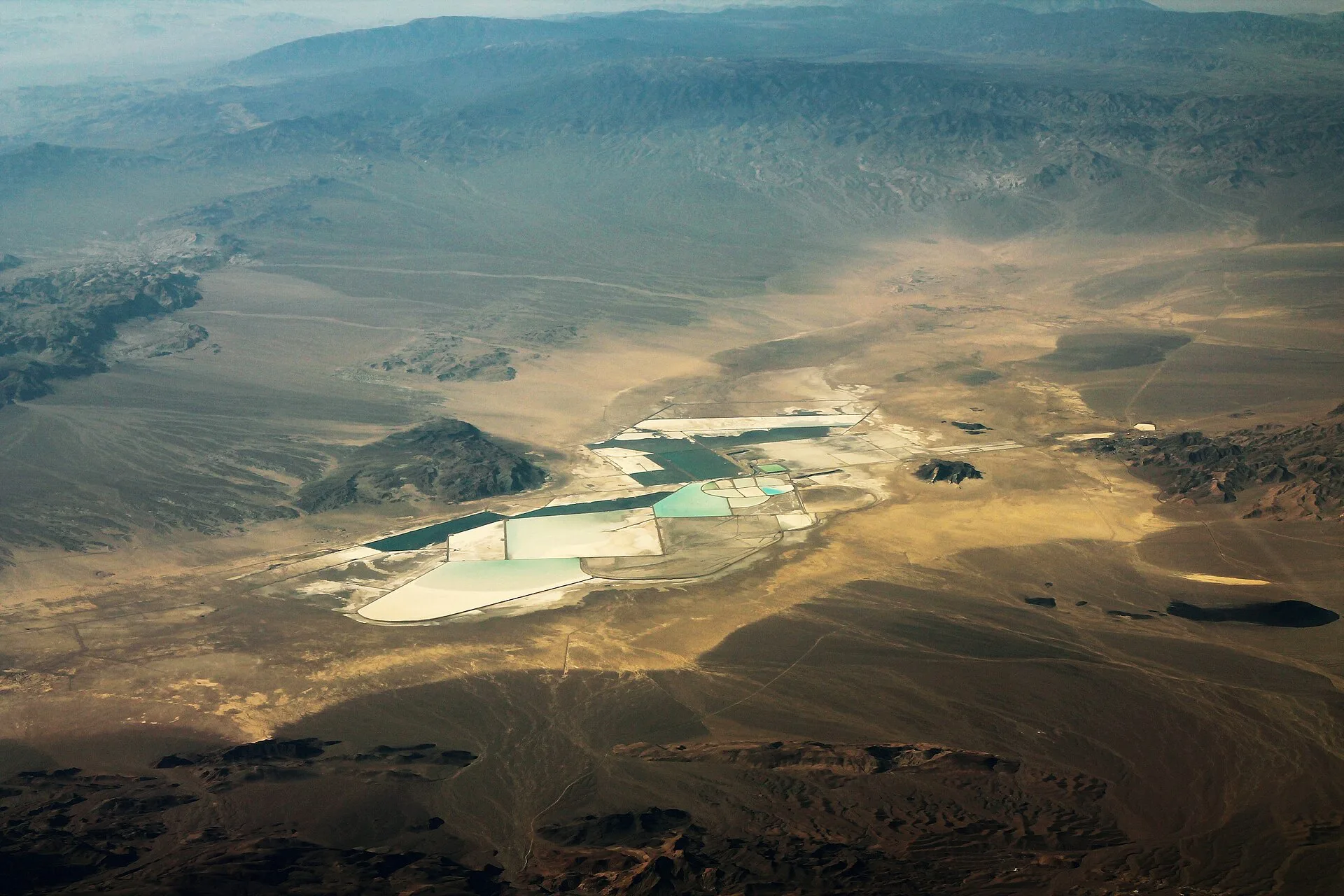
Thacker Pass is real and it is being built. As of 30 June 2026, $1.8 billion of construction capital and project costs had been capitalised, of which $1.6 billion counts against the $2.93 billion capex estimate in the December 2024 NI 43-101 technical report. Detailed engineering surpassed 95% and procurement exceeded 80%. Over 1,600 people were on site, with more than 2,000 expected by year-end, and 1,500-plus housed at the company’s Winnemucca workforce hub. Safety metrics are strong: 3.42 million work-hours with no serious injury or lost-time incident.
Jonathan Evans, President and Chief Executive Officer of Lithium Americas, said in the Q2 2026 results release on 13 August 2026: “We are safely accelerating construction toward peak activity and peak labor later this year, with mechanical completion still targeted for late 2027. Thacker Pass is reaching new vertical heights as structural steel and concrete work at the processing plant advances through second-floor installations. Across the site, we are transitioning into piping and electrical trades and are receiving more than 60 truckloads of equipment and materials each day. All off-site power modifications are complete, and we remain on track for energization in Q4 2026.”
One detail in that supply chain deserves attention from anyone who has been following the macro tape. More than 85% of Thacker Pass’s structural steel is sourced from the United Arab Emirates, and the 10-Q states that the company and Bechtel have worked with the supplier to minimise the impact of the Middle East conflict — including the closure of the Strait of Hormuz — on fabrication and shipping. A Nevada lithium mine’s schedule now has a Gulf shipping-lane dependency, a theme running through our 10 August FX and commodities wrap.
The commodity backdrop, meanwhile, is not what most LAC commentary assumes. The lazy line is that lithium has collapsed and stayed collapsed. Lithium carbonate traded at 151,500 CNY/t on 14 August 2026, up 84.77% year-on-year though down 1.62% over the past month, per Trading Economics. The price remains far below its late-2022 peak, but it has been rising hard for a year while LAC shares fell 67% from their own high. That divergence is the bull case in one line: the equity de-rated on financing, not on the commodity.
The bull case: $7.20, or 109.9% above spot
Start with the floor. At $3.43 and 363.0 million shares, the market capitalisation is roughly $1.25 billion against $1.279 billion of cash and restricted cash. The stock trades at approximately its gross cash balance. That is not a net-cash story — the DOE loan carried a $1.23 billion balance at 30 June and Orion’s convertible notes add $116.0 million, so net debt is roughly flat, not negative — but it does mean the market is currently ascribing close to nothing for 44.5 million tonnes of LCE resource, an 85-year mine life, a 95%-engineered plant, and a permitted site. Readers who have followed how a cash balance can anchor a speculative equity will recognise the mechanic from our QUBT cash-floor analysis.
The bull path to $7.20 needs three things, in order. First, mechanical completion holds at late 2027 — no slip announced through 2027 guidance. Second, the remaining DOE capacity funds the build: with $1.209 billion drawn of $1.97 billion principal, roughly $761 million remains available, which against a 2026 capex guide of $1.3–1.6 billion and $1.33 billion of remaining spend on the $2.93 billion estimate means the loan plus existing cash can plausibly carry the project without a large equity raise. Third, lithium carbonate holds above roughly current levels into first production, so that a 40,000 t/y Phase 1 has an economic market to sell into.
Get all three and the re-rate mechanism is straightforward: as a developer moves from “will it be built” to “it is commissioning”, the market stops discounting for construction risk and starts discounting cash flows. At $7.20, LAC would carry a market capitalisation of roughly $2.6 billion — still 31.6% below its own 52-week high, and a modest figure against $2.93 billion of capex on a single phase of a five-phase, 160,000 t/y resource. That is what makes this a recovery case rather than a fantasy. The comparable dynamic in other pre-revenue energy developers is visible in our NuScale SMR bull and bear analysis and in our coverage of Oklo’s first revenue quarter, where the first dollar of commercial output mattered far more than its size.
The policy layer is the accelerant. Evans framed it directly in the same release: “Lithium is central to America’s economic and national security, sustaining resilient military operations, powering essential civilian infrastructure, and underpinning the technologies driving modern economic growth, from consumer electronics to grid-scale energy storage. Securing a reliable domestic supply is essential to meeting rising electricity demand, strengthening our energy independence and ensuring the United States wins the global technology race.” A government that holds penny warrants over 5% of a company and 5% of its flagship project has, whatever one thinks of the policy, given itself a direct financial incentive to see that project finished.
The bear case: $2.20, or 35.9% below spot
The bear case is not a lithium-price case. It is a share-count case, and it acquired a name on 5 August 2026.
On that date Lithium Americas signed a securities purchase agreement with YA II PN, Ltd., an affiliate of Yorkville Advisors, for up to $175 million of subordinated convertible debentures, with $150 million agreed at the initial closing. Read the conversion terms carefully, because they are the crux. The debentures convert at the holder’s option at the lower of (i) a fixed price — the higher of 140% of the prior day’s NYSE close and $3.79 — or (ii) 95% of the lowest daily VWAP over the five trading days immediately preceding conversion, subject to a floor at 50% of the issuance-date close, reducible in certain circumstances to no less than 20%. Interest starts at 5% but steps to 7.50% and then 15% if specified events occur, including the stock trading below the floor price for a specified period or the exchange cap being substantially exhausted.
That is a floating-conversion structure, and its arithmetic is unsentimental: the lower the share price goes, the more shares each dollar of principal converts into. As an illustration rather than a forecast, $150 million converting near a 95%-of-VWAP price around today’s $3.43 implies roughly 46 million new shares — about 12.7% of the current count. Convert at $2.50 and it is closer to 63 million shares. The instrument mechanically issues more paper precisely when the equity is weakest.
Stack that on the rest of the overhang and the bear path becomes legible. The March 2026 ATM programme has sold 14.1 million shares for about $72.7 million net of a $250 million authorisation, leaving substantial capacity — and management has demonstrated it will use it at $3.87. Orion’s $116.0 million of notes convert at $3.78. The DOE’s 18.3 million penny-warrant shares are already in the basic count. And the JV warrant, fair-valued at roughly $305.3 million at inception, sits behind an agreement that can push it onto the common register if GM and the DOE cannot agree a price.
Add an execution stumble to that structure and $2.20 arrives without needing a thesis change. A schedule slip past late 2027 does two things at once: it extends the period during which a company with zero revenue must fund overhead and cost inflation, and it pushes out the moment when the market is willing to pay for cash flows rather than discount for risk. The 10-Q is explicit that the company “will not generate revenues from operations until after Thacker Pass begins production” and expects to keep operating at a loss for the foreseeable future. Tariff exposure on equipment sourced from Canada, China, India, the UAE, Turkey and the EU is disclosed as a live variable, mitigated only by the roughly 75% of the cost base that is labour and services.
At $2.20 the market capitalisation would be about $800 million pre-dilution, or below its own restricted-cash balance — a level that implies the market has stopped believing Phase 1 gets commissioned on the current plan. It is 17.3% below the 52-week low and below the lowest published street target of $3.30, which is precisely why it belongs in a bear column and not a base case. Investors who want the same commodity exposure without single-asset execution risk have historically reached for diversified producers of the kind covered in our energy stocks review or the London-listed mining route explored in our piece on Baron Securities and Canadian mining listings.
What would change the call
Three signposts do most of the work between now and first production.
Energization in Q4 2026. Evans has committed to it publicly and it is the nearest binary. Off-site power modifications are complete; if energization lands on schedule, the late-2027 mechanical completion date gains real credibility. If it slips, every subsequent milestone inherits the delay and the bear case moves from possible to probable.
How the Yorkville debentures actually convert. Watch the share count in the Q3 and Q4 10-Qs, not the press releases. If conversions land near the $3.79 fixed floor rather than the floating VWAP price, the dilution is manageable. If the variable leg dominates, the structure is doing what floating-conversion paper does.
The remaining $761 million of DOE capacity. Each advance is conditional. Three have landed — $435 million in October 2025, $432 million in February 2026, $342 million in June 2026. A missed or delayed draw would be the single most damaging headline available to this equity, because it would simultaneously signal a covenant or milestone problem and force the company toward the dilutive instruments it already has in place.
Our prediction, with the causal chain stated: the warrant structure means Washington’s incentives are now aligned with completion rather than repayment alone, which materially lowers the probability of the loan being pulled — but it does nothing to lower the probability of equity dilution, because the DOE’s claim is on shares, not cash. Expect the next twelve months to be decided by the share count rather than by the lithium price. That is an unusual thing to say about a mining stock, and it is exactly why LAC does not trade like one.
Frequently asked questions
Does the US government own 5% of Lithium Americas?
Not yet. It holds a warrant to purchase 18,268,687 common shares at $0.01 each, equal to 5% of shares outstanding on the 30 January 2026 issuance date, exercisable for ten years. It also holds a separate warrant over a 5% economic interest in the Thacker Pass joint venture. Because the LAC warrant is struck at a penny, the company already includes those shares in its basic earnings-per-share calculation.
What is the Lithium Americas bull case price target?
This analysis sets a bull case of $7.20, which is 109.9% above the verified spot price of $3.43 as of the 13 August 2026 close. It sits above the $5.66 analyst consensus but below both the $10.00 street high and the $10.52 52-week high, making it a recovery target rather than a new-high target.
What is the bear case for LAC stock?
A bear case of $2.20, which is 35.9% below the $3.43 spot and 17.3% below the 52-week low of $2.66. It assumes heavy conversion of the floating-price Yorkville debentures alongside continued at-the-market issuance and a slip in the late-2027 mechanical completion target.
When will Thacker Pass start producing lithium?
Lithium Americas targets mechanical completion of Phase 1 in late 2027, with production ramp-up during 2028. Phase 1 nameplate capacity is 40,000 tonnes per year of battery-quality lithium carbonate, against a measured-and-indicated resource of 44.5 million tonnes LCE and a stated 85-year mine life.
Does Lithium Americas have enough cash to finish the project?
The company held $1.279 billion in cash and restricted cash at 30 June 2026 and says it has sufficient liquidity for at least the next 12 months, counting undrawn DOE loan capacity. Roughly $761 million of the $1.97 billion loan principal remains undrawn. Beyond 12 months, further financing is contemplated.
How much of Thacker Pass does GM own?
General Motors holds a 38% interest in the joint venture; Lithium Americas holds 62% and operates the project. GM also has an offtake agreement for Phase 1 lithium and a call right over the DOE’s JV warrant following substantial completion.
Analysis, not investment advice. Lithium Americas is a pre-revenue development-stage company with no operating income, a single flagship asset, an explicit going-concern dependency on further financing, and multiple dilutive instruments outstanding. Price targets in this article are scenario analysis derived from publicly filed data, not forecasts, and speculative developers can lose the majority of their value. All prices are as of the close on 13 August 2026 and will change. Do your own research and consider your risk tolerance before acting.