Sam Altman is probably the tech honcho you’ve heard the most about over the past three years.
The OpenAI CEO has helped revolutionize artificial intelligence by putting ChatGPT into the hands of millions.
Yet surprisingly, his personal fortune wasn’t built through an ownership stake in the company that now defines the AI boom.
Instead, Altman says, arguably one of Silicon Valley’s most influential investors helped shape the way he hunts for opportunities.
That investor is Peter Thiel, the venture-capital mogul who cofounded PayPal (PYPL) and Palantir (PLTR), among a laundry list of other popular tech bets.
Then there is Warren Buffett, the Oracle of Omaha, whose market wisdom has effectively guided generations of investors through booms and crashes.
Though their styles might seem contrasting, Altman’s latest comments underscore a common thread connecting all three.
What investing rule unites Sam Altman, Buffett, and Thiel?
OpenAI CEO Sam Altman’s core investing principle isn’t rocket science:
“The biggest opportunities rarely look popular when the best returns are still available.”
Altman said on the Invest Like the Best podcast that venture capitalists Peter Thiel and Paul Graham taught him that the biggest companies and investment opportunities are “almost never” the ones attracting the most attention.
Investors can earn healthy returns by spotting trends slightly earlier than others, but achieving exceptional outcomes usually requires something the crowd hasn’t embraced.
That investing idea strongly resembles Palantir co-founder Thiel’s philosophy.
Case in point was Thiel’s early investment in Facebook, now Meta Platforms (META).
According to The Guardian, in 2004, when Facebook was still a small college network, Thiel was one of its first outside backers, putting $500,000 for a 10.2% stake.
Social networking was still in its infancy, and Facebook wasn’t nearly as close to being the multi-billion-dollar business it is today.
Related: Sam Altman makes stunning admission about AI
It’s important, though, to understand contrarianism through Thiel’s lens.
According to him, genuine contrarianism involved thinking independently, not simply opposing the crowd merely to appear different.
The Oracle of Omaha, Warren Buffett, has an investing strategy that echoes much of what Thiel is looking at.
However, his emphasis is less on unconventional startups and more on controlling emotions that sweep through markets. Investors who become frightened just because everyone else is are unlikely to build substantial long-term wealth, Buffett has warned.
His 2008 Goldman Sachs investment puts that principle into practice.
With the financial market still panicking after the Lehman Brothers’ collapse, Berkshire invested $5 billion in Goldman preferred shares, securing a 10% annual dividend along with valuable stock warrants.
That investment eventually generated billions in gains, showing how Buffett used independent analysis to buy even though fear overwhelmed the market.
So even though the approaches may appear different, the shared rule is pretty clear: important investment decisions should come from independent judgment rather than popularity, fear, or momentum.
How did Altman build billions without OpenAI equity?
Interestingly, despite leading a business valued at an eye-popping $852 billion, Altman reportedly owns no OpenAI equity and receives a salary of nearly $76,000.
However, Forbes estimates his net worth at $3.3 billion, largely generated over two decades in Silicon Valley.
His tremendous portfolio started taking shape before OpenAI.
After selling his location-sharing startup Loopt in 2012, Altman used the proceeds to launch Hydrazine Capital, with Peter Thiel becoming its largest outside investor.
His subsequent role as Y Combinator president gave him early access to startups, including Airbnb, Stripe, and Reddit, before they became globally recognized companies.
The early results were unusually strong.
According to The Wall Street Journal, Altman said in 2014 that he had invested in 40 companies, five of which had already increased in value by at least 100-fold. His portfolio has reportedly since expanded to stakes in more than 400 companies.
More Warren Buffett:
- Warren Buffett reveals he broke his own investing pattern
- Warren Buffett has a blunt take on today’s market
- Warren Buffett pulls no punches on stock market for 2026
Moreover, Altman’s wealth hasn’t spread evenly across these investments.
According to a US News Money report, detailing his holdings as of Dec. 31, 2025, he held a $1.7 billion stake in fusion-energy company Helion, a $633 million position in Stripe, and $258 million invested in longevity startup Retro Biosciences, according to Reuters.
Moreover, his Reddit holdings were worth over $600 million when the social media giant went public in 2024, though he exited the position by the end of 2025.
We can see that only a handful of extraordinary winners account for most of his wealth.
Helion is perhaps the clearest example of that concentrated conviction.
Altman first invested in the business around 2015, following with $375 million in 2021, the largest startup check he had ever written.
The company was a nuclear fusion startup with a tremendously massive capital-intensive technology with no proven business model or operating sales.
That said, that risky bet has gained immensely in paper value.
Reuters reports that Helion raised $465 million in June 2026 at a $15.5 billion valuation, nearly triple its valuation from early 2025.
Altman’s approach is different from conventional diversification.
It resembles more of a venture-capital barbell approach, where he invests across hundreds of companies, then places much larger sums behind the few ideas with the potential to reshape entire sectors.
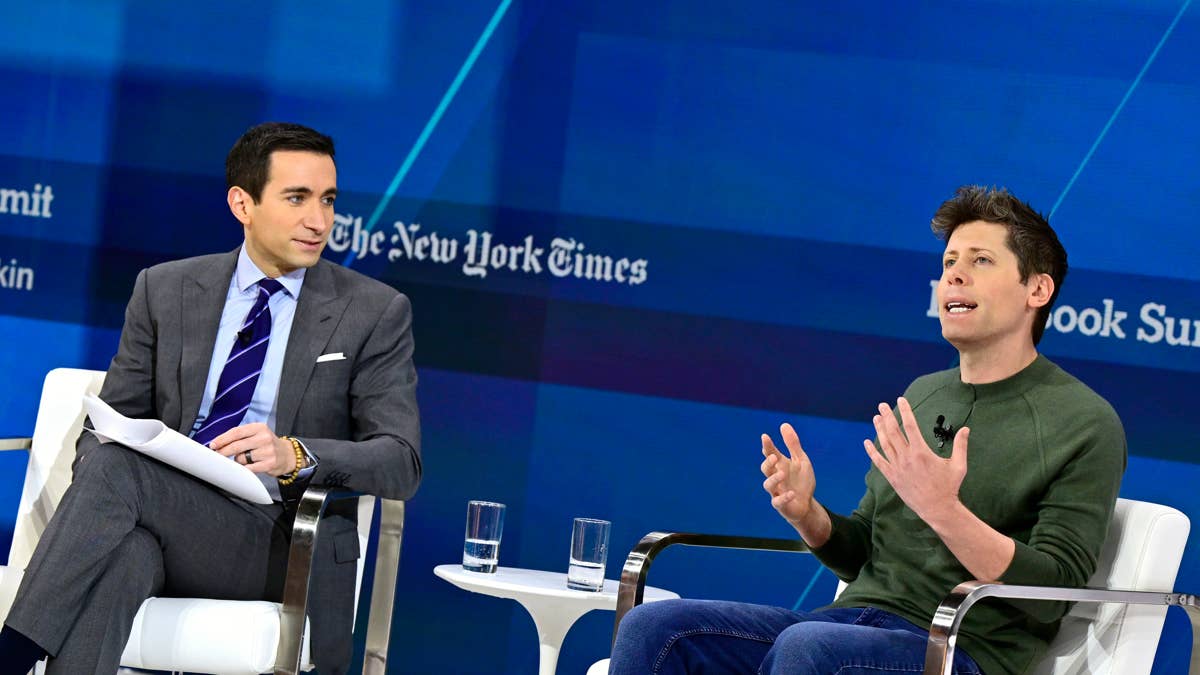
Eugene Gologursky/Getty Images for The New York Times
Why contrarian investing is harder than it sounds
It’s important to understand that Altman, Thiel, and Buffett aren’t advocating contrarianism for the sake of it.
Unpopular investments are often unpopular for legitimate reasons.
A company might have weak finances, poor management, or technology that never becomes commercially viable. In this situation, it’s wise to go against the grain when the crowd has misunderstood the underlying business or underestimated its long-term outlook.
Moreover, Altman also benefited from advantages ordinary investors might not possess.
He spent decades inside Silicon Valley, led Y Combinator, and developed direct access to founders, technologies, and private companies long before they reached public markets. Paul Graham offered hands-on guidance, while Peter Thiel was the largest outside investor in Altman’s first venture fund, Hydrazine.
Hence, the practical takeaway for investors is not just to seek obscure investments.
It is imperative to develop sufficient knowledge to recognize when the market consensus is wrong, and then have the patience and resilience to wait for that thesis to play out.
Altman’s track record shows that tremendous wealth can come from identifying major shifts before they become obvious. However, Buffet and Thiel add an essential safeguard.
According to them, independent thinking needs to be backed by discipline, evidence, and temperament, or contrarian investing becomes little more than expensive guesswork.
Related: Warren Buffett keeps pointing at the same ETF for a reason