
The market did not punish Honeywell Aerospace for missing a quarter. It punished the company for admitting that the bottleneck is not going away, and that distinction is what separates a $250 bull case from a $118 bear case. HONA closed 6 August at $156.47, down 23.16% on the day and 36.7% below its 2 July close of $247.15, on 20.6 million shares against a roughly 2.8 million average. The headline explanation everywhere was “supply chain.” The more useful reading is a margin-mix inversion: sales grew 5% to $4.52 billion while adjusted EBIT fell 7% to $995 million and adjusted EPS collapsed 32% to $1.87. Revenue up, profit down. That gap is the whole story, and it is not a volume problem.
Here is the piece most coverage skipped. Honeywell Aerospace is short precision castings, and it is routing the castings it does get toward Boeing and Airbus production lines, because OEM delivery commitments are contractual and aftermarket demand is not. OEM is the low-margin channel. Aftermarket is the high-margin channel. So the casting shortage is not simply throttling output, it is forcing the company to sell its scarcest, most valuable parts into its worst-paying business while starving its best one. Commercial aftermarket still grew 8% to $2.03 billion, which tells you demand was never the constraint. Having tracked spin-off first quarters across a few cycles, this is the failure mode that takes longest to unwind, because once you fall behind on OEM schedules you keep prioritising OEM. Volume shortfalls fix themselves in a quarter or two. Mix damage compounds.
Key facts
- Share price: $156.47 close on 6 August 2026, down $47.17 or 23.16%; intraday low $150.03, high $167.31 – Nasdaq, 6 Aug 2026
- Volume: 20,631,050 shares versus a post-listing average near 2.8 million, roughly 7x normal – Nasdaq historical data, Aug 2026
- Q2 revenue: $4.52 billion, up 5% year over year, missing the $4.67 billion consensus by 3.1% – Zacks via Yahoo Finance, 6 Aug 2026
- Q2 adjusted EPS: $1.87 versus $2.75 a year earlier, down 32% – Honeywell Aerospace Q2 release, 5 Aug 2026
- Guidance cut: FY26 organic sales growth lowered to 4-5% from 7-9%; adjusted EBIT to $4.35-4.45 billion from $4.65-4.75 billion – Honeywell Aerospace, 5 Aug 2026
- Commercial aftermarket: up 8% to $2.03 billion on business aviation flight hours – Quartz, 6 Aug 2026
- Street consensus: average price target $253.17 across 15 analysts; 5 Buy, 10 Hold, 0 Sell – S&P Global via MarketBeat, Aug 2026
- Market capitalisation: $50.55 billion, implying roughly 323 million shares outstanding at the 6 August close – Nasdaq, 7 Aug 2026
What actually happened, and why the number was so violent
Honeywell Aerospace began trading on Nasdaq under HONA in late June 2026 after separating from Honeywell Technologies. It went straight into the Nasdaq-100. The 5 August report was its first full quarter as a standalone public company, which matters more than it sounds: a spin-off has no track record, so its guidance is the only thing investors can anchor to. When that anchor moves by a third of its range in the first outing, the market does not re-price the quarter. It re-prices management credibility.
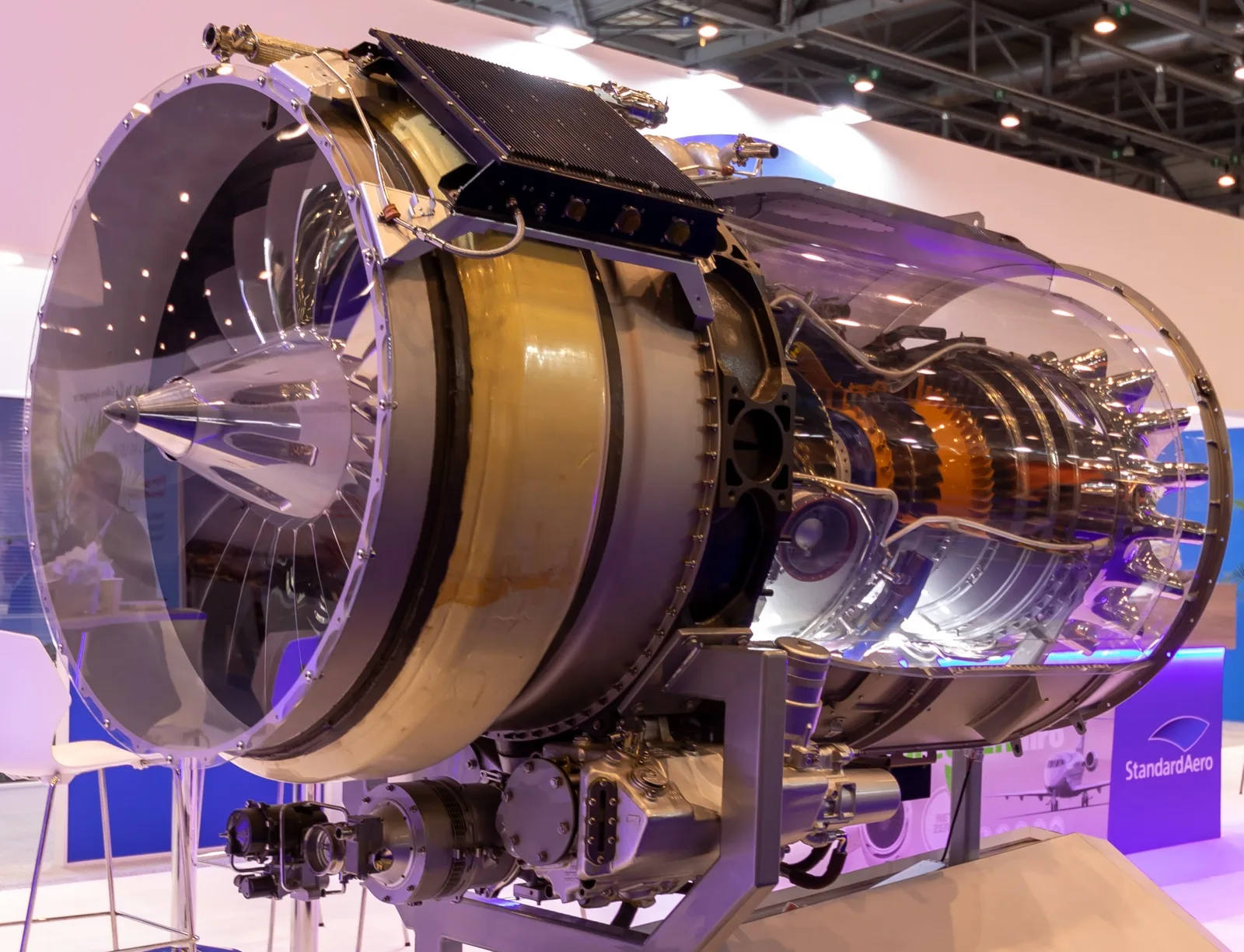
The mechanism is a precision-casting shortage. Castings are the forged and cast metal cores of turbine and engine components, and they cannot be substituted, machined around, or sourced at short notice, because every casting is qualified to a specific airframe programme. What makes HONA’s version acute is how narrow the choke point is. Just 2% of the company’s suppliers are responsible for the constraint, but those vendors produce components essential across multiple product lines, so a handful of foundries gates a multi-billion-dollar revenue base. Think of it as a single-lane bridge in front of a ten-lane motorway: widening the motorway does nothing.
Management is not pretending otherwise. HONA has embedded its own personnel directly inside supplier facilities, an intervention that produced a 20% quarter-over-quarter output increase at one key vendor. That is a real operational win, and it is also an admission that the fix requires HONA staff standing on someone else’s factory floor. The company chose to reset guidance to what its suppliers have actually demonstrated rather than to what they have promised.
“For the second half of 2026, we believe it is prudent to align our guidance to our supply chain’s demonstrated capabilities at the end of the second quarter,” said Jim Currier, Chief Executive Officer at Honeywell Aerospace. Read that sentence carefully. “Demonstrated capabilities” is the language of a company that has stopped believing supplier forecasts, and investors priced it accordingly.
The tape knew before the sell side did
This is the part of the story that changes how you weigh the two cases. HONA did not fall 23% out of a clear sky. It fell 23% at the end of a five-week de-rating that almost nobody flagged.
Run the closes. HONA peaked on 2 July at $247.15. By 5 August, the day before earnings, it closed at $203.64. That is a 17.6% decline over five weeks with no company-specific news, no guidance revision and no downgrade cycle. Layer the 6 August crash on top and the total drawdown from the July high reaches 36.7%. The market was steadily marking down a supply-chain thesis for more than a month before management confirmed it.
Now set that against the sell side. Fifteen analysts cover HONA. Five rate it Buy, ten rate it Hold, and zero rate it Sell, with an average target of $253.17 – roughly 62% above the 6 August close. Even the post-crash revisions stayed structurally bullish: RBC Capital’s Ken Herbert cut his target to $250 from $300 while keeping an Outperform rating, Morgan Stanley went to $235 from $255, and Evercore ISI cut hardest to $210 from $250. The single most bearish published target on Wall Street still sits 34% above where the stock actually trades.
That is the central tension in HONA right now, and it is unusually clean. Either the street is correct and this is one of the best risk-reward setups in large-cap aerospace, or the street has not finished marking to market and the ratings distribution is a lagging indicator. There is very little middle ground between a $253 consensus and a $156 tape. Investors weighing similar dislocations may recognise the pattern from our Rocket Lab RKLB stock prediction, where the gap between analyst targets and traded price told you more than either number alone.
Peer response and the competitive read-across
The read-across matters because the casting shortage is an industry condition, not a HONA-specific accident, yet the market is not treating it that way. GE Aerospace carries a $390.3 billion market capitalisation against a $400 one-year target and a $374.55 close, and RTX sits at $301.8 billion against a $240 target and a $223.25 close. Neither has been re-rated the way HONA has. At $50.55 billion, HONA is roughly an eighth of GE Aerospace’s size, and that scale difference is exactly the problem: a smaller buyer has less leverage over a constrained foundry base than the largest engine maker in the world.
That asymmetry cuts both ways, and it is the crux of the disagreement. Bears argue that when castings are scarce, foundries allocate to their biggest, most strategic customers first, which structurally disadvantages the smallest of the three. Bulls argue the reverse: HONA’s business-aviation exposure is the fastest-growing pocket of aftermarket demand, its aftermarket grew 8% while supply was actively rationed, and a company embedding engineers in supplier plants is buying allocation the hard way rather than waiting in a queue.
The aftermarket number is the single most important disclosure in the release. Aftermarket revenue rose 8% to $2.03 billion during a quarter when the company was diverting parts away from it. Latent demand is therefore higher than reported growth, which means the constraint is genuinely on the supply side rather than in the end market. That is a meaningfully better problem to own than a demand shortfall, and it is the strongest single argument the bulls have. It is also the argument that took five weeks to show up in the price, in the same way the sector-wide repricing traced in our coverage of how SpaceX dragged every space stock down ran ahead of the fundamentals.
The bull case: $250
The bull target is $250, which is RBC’s post-cut price target and sits just below the $253.17 consensus. It implies roughly 60% upside from $156.47. Three things have to be true.
First, the casting constraint has to be a 2026 problem rather than a structural one. The evidence for this is the 20% quarter-over-quarter output gain at the supplier where HONA embedded staff – proof the intervention model works and can be replicated across the 2% of vendors causing the bottleneck. Second, mix has to normalise. Once OEM delivery schedules are caught up, castings flow back to the aftermarket and margin recovers faster than revenue, because aftermarket revenue drops through at a much higher incremental rate. Third, the guidance reset has to hold. Currier explicitly benchmarked the new range to demonstrated rather than promised supplier capability, which is how a management team builds in room to beat.
Value that outcome. FY26 adjusted EBIT guidance of $4.35-4.45 billion across roughly 323 million shares is $13.47 to $13.78 of EBIT per share. At the 6 August close the stock trades on about 11.5x that figure. The $250 bull case is roughly 18x – not an expansion to a heroic multiple, simply a return to what a premium aerospace aftermarket franchise commanded before the derating. The bull case does not require a great year. It requires the second cut not to happen.
The bear case: $118
The bear target is $118, roughly 25% below the 6 August close and 21% below that day’s $150.03 intraday low. It is derived two ways, and they converge, which is why we favour it over the street’s $210 floor.
The first derivation is behavioural and blunt. The market removed 23% from HONA on the first guidance cut. A second cut of comparable severity – the outcome if castings remain constrained into 2027 and organic growth stalls nearer 2% than 4-5% – takes roughly the same bite out of the post-crash base and lands you near $118. Companies that reset guidance once because of a supplier they do not control frequently reset twice.
The second derivation is the multiple. If FY27 EBIT slips to around $4.2 billion on continued rationing, EBIT per share falls to roughly $13.00. At 9x, a multiple appropriate to a supply-capped industrial rather than a premium aftermarket franchise, you get about $117. The bear case is fundamentally a re-rating argument: HONA stops being valued as an aerospace compounder and starts being valued as a company whose output is set by somebody else’s foundry.
Two further risks belong here. HONA has no operating history as a standalone company, so there is no precedent for how this management team behaves under sustained pressure, and no dividend to support the shares. And the 0-Sell ratings distribution is itself a risk: when ten of fifteen analysts sit at Hold with targets far above the traded price, the downgrade cycle has not started. Forced target revisions tend to arrive in clusters. Readers who follow our semiconductor bull/bear work will recognise the dynamic from the Texas Instruments TXN price prediction, where the analyst floor lagged the tape for months.
Bull versus bear at a glance
| Factor | Bull case ($250) | Bear case ($118) |
|---|---|---|
| Casting supply | Resolves through 2027 via embedded-engineer model | Structural; HONA is the smallest of three buyers |
| Margin mix | Aftermarket share recovers, margin snaps back | OEM priority persists, mix stays inverted |
| Aftermarket demand | +8% while rationed proves latent demand | Demand is irrelevant if you cannot ship |
| Guidance credibility | Reset to demonstrated capability, room to beat | First cut in the first standalone quarter |
| Implied EBIT multiple | ~18x, a return to the pre-crash rating | ~9x, a supply-capped industrial rating |
| Analyst positioning | 15 analysts, 0 Sells, $253.17 average target | 0 Sells means the downgrade cycle has not begun |
What happens next
Three concrete calls, with the reasoning attached.
The Q3 report is the entire trade. Currier benchmarked guidance to demonstrated second-quarter supplier capability, so Q3 is a direct test of whether that benchmark was conservative or optimistic. Hold the 4-5% organic range and the $250 case regains credibility quickly, because the market is currently pricing a second cut that would not have happened. Trim it again and $118 becomes the reference point rather than the tail.
Watch the mix line, not the revenue line. Aftermarket as a share of total sales is the cleanest single tell in this story. If aftermarket grows faster than group revenue in Q3, castings are flowing back to the profitable channel and margin recovery is underway before it shows in EBIT. If group revenue grows faster than aftermarket, HONA is still feeding OEM lines and the earnings compression continues regardless of the top line.
Expect the ratings distribution to break before the price does. Zero Sell ratings against a 36.7% drawdown from the July high is not a stable configuration. The most likely near-term catalyst is not company news but the first genuine downgrade, which typically triggers a cluster. That is a risk for anyone buying the consensus target rather than the business.
Our own read: the aftermarket growing 8% while being actively starved of parts is the most bullish fact in the release, and it is the reason we do not treat $118 as the base case. But the burden of proof now sits with management, and it will not be discharged until Q3. Traders tracking how post-earnings dislocations resolve across the wider tech and industrial complex can compare the setup with our AMD stock forecast, and with the volatility around the SpaceX SPCX share unlock.
Frequently asked questions
Why did Honeywell Aerospace stock fall 23%?
HONA fell 23.16% on 6 August 2026 after its first standalone quarter missed on both lines and management cut full-year guidance. Q2 revenue of $4.52 billion missed the $4.67 billion consensus, adjusted EPS fell 32% to $1.87, and FY26 organic growth guidance was lowered to 4-5% from 7-9% because of a precision-casting supply shortage.
What is the HONA price target for 2026?
The consensus target is $253.17 across 15 analysts, with 5 Buy and 10 Hold ratings and no Sell ratings. Post-earnings revisions include RBC Capital at $250, Morgan Stanley at $235 and Evercore ISI at $210. Our bull case is $250 and our bear case is $118, against a 6 August close of $156.47.
What is the casting shortage affecting Honeywell Aerospace?
Precision castings are the cast metal cores of turbine and engine parts, qualified to specific airframe programmes and impossible to substitute quickly. Roughly 2% of HONA’s suppliers produce castings used across multiple product lines, so a small number of foundries constrains a large share of output. HONA is prioritising Boeing and Airbus production lines, which diverts parts away from its higher-margin aftermarket.
When did Honeywell Aerospace start trading as HONA?
Honeywell Aerospace began trading on Nasdaq under the ticker HONA in late June 2026 following its separation from Honeywell Technologies, and is a member of the Nasdaq-100. Regular-way trading began around 26 June 2026. The 5 August 2026 report covered its first full quarter as a standalone public company.
Is HONA cheap after the crash?
At $156.47 the stock trades on roughly 11.5x the midpoint of FY26 adjusted EBIT per share of about $13.62, derived from $4.35-4.45 billion of guided EBIT across approximately 323 million shares. That is inexpensive against aerospace peers, but the multiple is only meaningful if the guidance holds. A further cut would lower the denominator and the multiple simultaneously.
What is the biggest risk to the HONA bull case?
A second guidance cut. Management set the new range against demonstrated rather than promised supplier capability, so a further reduction would signal the constraint is structural rather than temporary. A secondary risk is the analyst distribution: with zero Sell ratings and an average target 62% above the traded price, the downgrade cycle has not started and revisions tend to arrive in clusters.
This article is for information purposes only and does not constitute investment advice. Price data is as of the 6 August 2026 close and pre-market trading on 7 August 2026.