
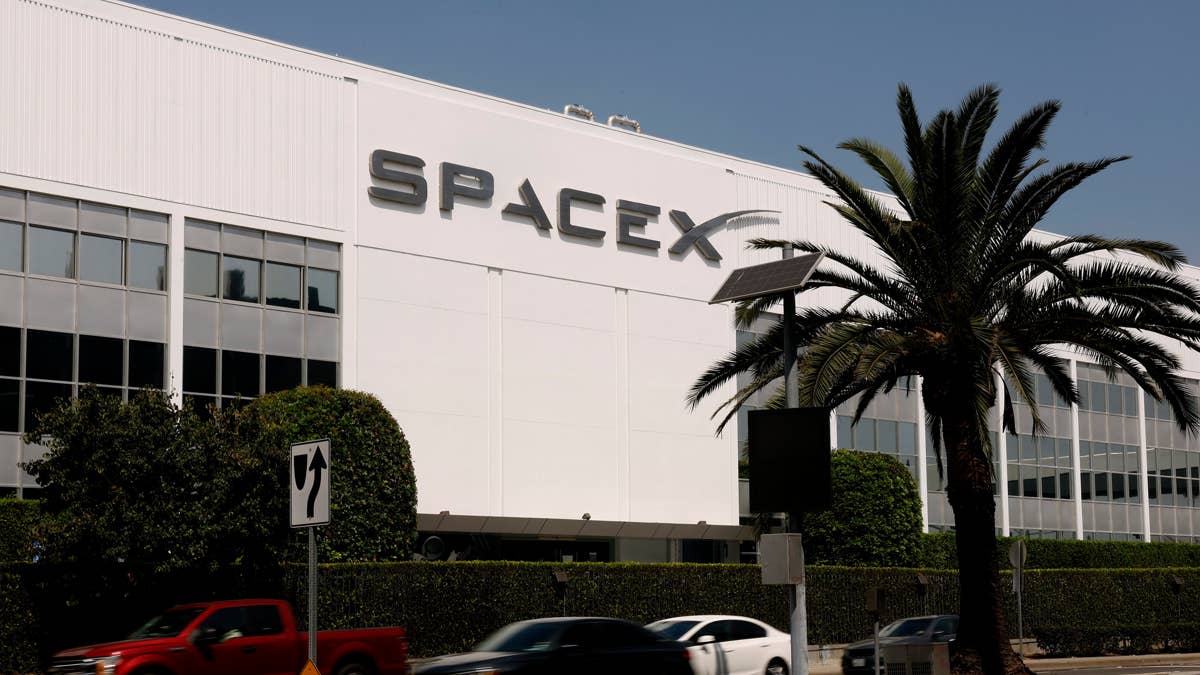
SpaceX‘s first earnings call put the wireless industry on notice. SpaceX CEO Elon Musk and COO Gwynne Shotwell said Starlink was coming for Verizon, AT&T, and T-Mobile.
They cited a $600 billion U.S. wireless market and said they expected to take customers from all three. Wall Street took it seriously enough to sell telecom stocks the same day.
The CEO of the company they named most often just pushed back. Srini Gopalan, CEO of T-Mobile, told the Financial Times he thinks the threat from Starlink has been exaggerated. He questioned the basic premise of the SpaceX pitch, Investing.com reported.
What T-Mobile’s CEO actually said about Starlink
“You’ve got to ask the question of ‘What is the gap in the market that they’re looking to serve?'” Gopalan told the FT. “Why would a customer buy a new cellular service? Where do they go? What’s their differentiation? It’s clearly not having a broad network.”
Gopalan’s argument is that satellite technology serves a specific, narrow purpose. It fills dead zones where towers do not exist. It does not compete with what T-Mobile, Verizon, and AT&T offer in cities, suburbs, and most places where Americans spend most of their time.
More SpaceX and SpaceX:
- Morgan Stanley says SpaceX investors miss the bigger story
- T-Mobile customers face new restriction when paying bills
- SpaceX stock defies latest Wall Street forecasts
Gopalan said satellite connectivity will stay complementary to terrestrial networks. It will not replace them.
He pointed to T-Mobile’s T-Satellite service, which runs on Starlink. The service reaches rural areas and national parks where T-Mobile does not have towers. Gopalan said it has been useful, but usage came in lower than T-Mobile originally expected.
Why the capacity argument works against Starlink today
Gopalan focused his pushback on capacity. One satellite covers a large area, and every user in that area shares the same bandwidth.
A satellite over a rural county might serve a few hundred people. Put that same satellite over a major city, and millions of people are competing for the same signal.
Cities need dense wireless infrastructure for this reason. Thousands of towers and small cells, each serving a small area, stack up to handle millions of simultaneous connections.
SpaceX does not have that in cities. It is building next-generation satellites to add more capacity, but they launch in 2027. Until then, the physics of shared satellite bandwidth limits what Starlink can offer in dense markets.
Carriers handle this by adding towers, small cells, and spectrum wherever demand is highest. Cities are dense with wireless infrastructure for exactly that reason. SpaceX does not yet have that infrastructure in urban markets. Building it takes decades and enormous capital.
New Street Research analyst David Barden made the math explicit, telling Reuters it “makes no sense” for SpaceX to replicate networks built over three decades with roughly 1,000 MHz of spectrum using only 65 MHz, according to Benzinga.
SpaceX acquired that 65 MHz from EchoStar for approximately $19.6 billion, and the incumbents hold far more.
Justin/Getty Images
Where Starlink has a real advantage and what SpaceX is building
Gopalan’s argument is strongest when applied to today’s satellite service. SpaceX’s stated timeline runs through 2027 and beyond, and the company is not limiting itself to what it can do with existing hardware and spectrum.
SpaceX’s planned Starlink Mobile buildout includes:
- Next-generation direct-to-device satellites beginning to launch in 2027, with full service expected by end of 2027
- 65 MHz of EchoStar spectrum with terrestrial rights, expanding potential bandwidth from roughly 5 MHz through existing carrier partnerships
- Small cells mounted on Starlink dishes already installed on homes and businesses across the country
- Direct consumer mobile plans targeting customers in rural areas and dead zones first
- Machine connectivity for autonomous vehicles, drones, and industrial equipment across large geographic areas
Source: Benzinga
Shotwell said on the earnings call that once next-generation satellites and EchoStar spectrum are deployed, the service will be “100 times better” than the current direct-to-device offering.
Musk added that the network would likely offer better connectivity and higher bandwidth than existing cellular providers.
What this means for T-Mobile, Verizon, and AT&T customers
For T-Mobile customers, the T-Satellite service already fills coverage gaps in places where towers do not reach. That is the current reality of satellite connectivity. It is useful in national parks and remote highways, but not a replacement for what a cell tower does in a city or suburb.
For Verizon and AT&T customers, the Starlink pressure could eventually work in their favor. If SpaceX gains traction in rural dead zones, the established carriers will face pressure to improve coverage and pricing in those areas. Competition from a new direction, even a limited one, tends to benefit consumers over time.
For consumers thinking about switching to Starlink Mobile, the honest answer is that the product does not fully exist yet.
SpaceX plans to launch its next-generation satellites in 2027 and start full mobile service by the end of that year. The pricing, coverage maps, and device compatibility are not public yet.
Gopalan is right that today’s satellite service does not replace a carrier plan. Whether 2027 changes that picture is the question consumers and carriers are both waiting to answer, as TheStreet reported.
Related: SpaceX to challenge Verizon, AT&T and T-Mobile with new plans