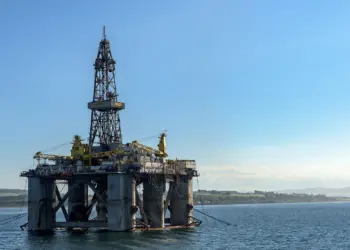

Brent crude climbed to $95.68 a barrel on 2 September as renewed US-Iran strikes raised the risk of another deterioration in traffic through the Strait of Hormuz, according to Reuters. A separate Wall Street Journal market snapshot put Brent at $95.62, leaving the two live readings six cents apart. The important move is no longer confined to oil: the higher energy price is feeding inflation expectations, rate-hike bets and a global government-bond selloff.
That is the change since FinanceFeeds’ 31 August market review of the Larak Island strike and Brent’s break above $90. The first move repriced disrupted supply. Two days later, sovereign debt markets are repricing what a prolonged energy shock could do to inflation and central-bank policy.
Brent Has Added More Than $7 Since Friday
Brent settled at $88.10 on 28 August, the starting point used in FinanceFeeds’ $120 bull and $60 bear oil-price framework. It settled at $94.65 on 1 September before extending above $95 the following morning. The benchmark has therefore gained more than $7 from Friday’s settlement, with most of the move arriving after fresh attacks around the Gulf.
Reuters said Brent’s rise of more than $4 on Tuesday was its largest daily gain since 24 July and put the contract at a five-week high. The latest US inventory number was not yet official when this article was filed: the Energy Information Administration scheduled its report for 10:30 a.m. ET on 2 September, while the reported 2.6 million-barrel draw came from industry data.
The Gulf Is Disrupted, Not at Zero Exports
The phrase “Gulf export halt” needs narrowing. Iran’s own crude exports have effectively stalled under the US blockade since mid-July. Kpler and Vortexa data cited by Reuters put Iranian loadings at about 220,000 to 255,000 barrels a day in August, down from roughly 2 million in March.
Broader regional exports have not stopped completely. US Energy Secretary Chris Wright said 17 million barrels passed through Hormuz on Monday, the highest volume since the war reduced flows. Preliminary Kpler data then showed only four commodity vessels transiting on Tuesday, against a 10-day average near 13. Transponders are sometimes disabled, but the sequence captures the instability.
The disruption extends beyond crude. Reuters reported that Qatari and Emirati liquefied-natural-gas cargoes were transferred between ships outside Hormuz, with Asian spot LNG at more than twice its pre-conflict level.
Oil Is Raising the Price of Long-Term Money
The transmission works through expected inflation and the compensation demanded for long-duration debt. Persistent expensive crude lifts fuel, freight and production costs, encouraging investors to demand higher nominal yields and reducing the scope for central banks to ease.
Reuters directly linked Wednesday’s bond selloff to energy prices and inflation risk. The US 10-year Treasury yield reached 4.8122%; Bloomberg had described its 31 August break above 4.75% as the highest since January 2025. Japan’s 10-year yield moved above 3% after crossing that threshold for the first time in 30 years on Tuesday. In Britain, the 10-year gilt reached 5.2501%, its highest since June 2008, while the 30-year reached 5.8909%, its highest since March 1998, according to Bloomberg’s 2 September markets wrap.
Oil is the immediate catalyst, but Reuters also identified government deficits, sovereign issuance and technology-company borrowing as pressure points. A ceasefire could remove part of the inflation premium without solving the supply or fiscal problem. That also limits what larger US Treasury buybacks can achieve, as FinanceFeeds’ review of the doubled buyback ceiling explains.
September’s Central-Bank Calendar Has Repriced
The European Central Bank meets on 9 and 10 September after Eurostat put euro-area inflation at 3.3% in August and energy inflation at 14.3%, up from 10.3% in July. Markets expect a quarter-point increase on 10 September, according to Euronews. The Federal Reserve follows on 15 and 16 September. CME pricing cited by Reuters put the probability of a quarter-point Fed hike at about 68.2% on Tuesday. FinanceFeeds has tracked the same shift to a live September hike debate.
The Bank of Japan meets on 17 and 18 September. Higher oil raises Japan’s import bill while the weak yen amplifies the cost. Rising Japanese yields can also reduce domestic demand for foreign bonds. FinanceFeeds set out that risk when the yen moved through 160 and the 10-year JGB reached 2.95%.
The Reversal Case Starts With Ships, Not Statements
The clean reversal would be sustained transit volumes, fewer attacks and lower insurance costs. Monday’s reported 17 million barrels show that physical flows can recover. Tuesday’s vessel count shows why one day is not enough.
Prediction traders remain sceptical. FinanceFeeds’ 31 August snapshot put the Polymarket probability of normal Hormuz traffic by 30 September at 2.75%, with the live contract near 2.8% on 2 September. Its threshold is a seven-day average of at least 60 transit calls, compared with the recent 10-day average near 13 and only four vessels on Tuesday.
If traffic normalises, Brent can surrender part of its Gulf premium and rate-hike expectations can ease. The move in bonds may nevertheless prove less reversible than the move in oil because fiscal deficits and debt supply remain. That is why Brent above $95 is now a bond story: the barrel is the trigger, but the market is repricing the cost of money.