Updated 3 October 2026. SpaceX (SPCX) closed at $158.96 on Friday 2 October, up $10.89 or 7.35 percent, on 119.1 million shares – the heaviest volume of the past two weeks (StockAnalysis). Verdict: Friday’s buying followed three launches in under 13 hours and a week that began with Starship’s first orbital flight, on top of new Buy coverage from TD Cowen. The stock is still about 27 percent below the $218.68 average analyst target, but the targets lean almost entirely on SpaceX’s AI compute business rather than on rockets.
Key facts
- Friday close: $158.96, +7.35 percent, on 119.1 million shares, against 54 – 84 million in the previous nine sessions (StockAnalysis, 2 October 2026).
- Week: up about 6.9 percent from the $148.68 close on 25 September (our arithmetic from StockAnalysis closes).
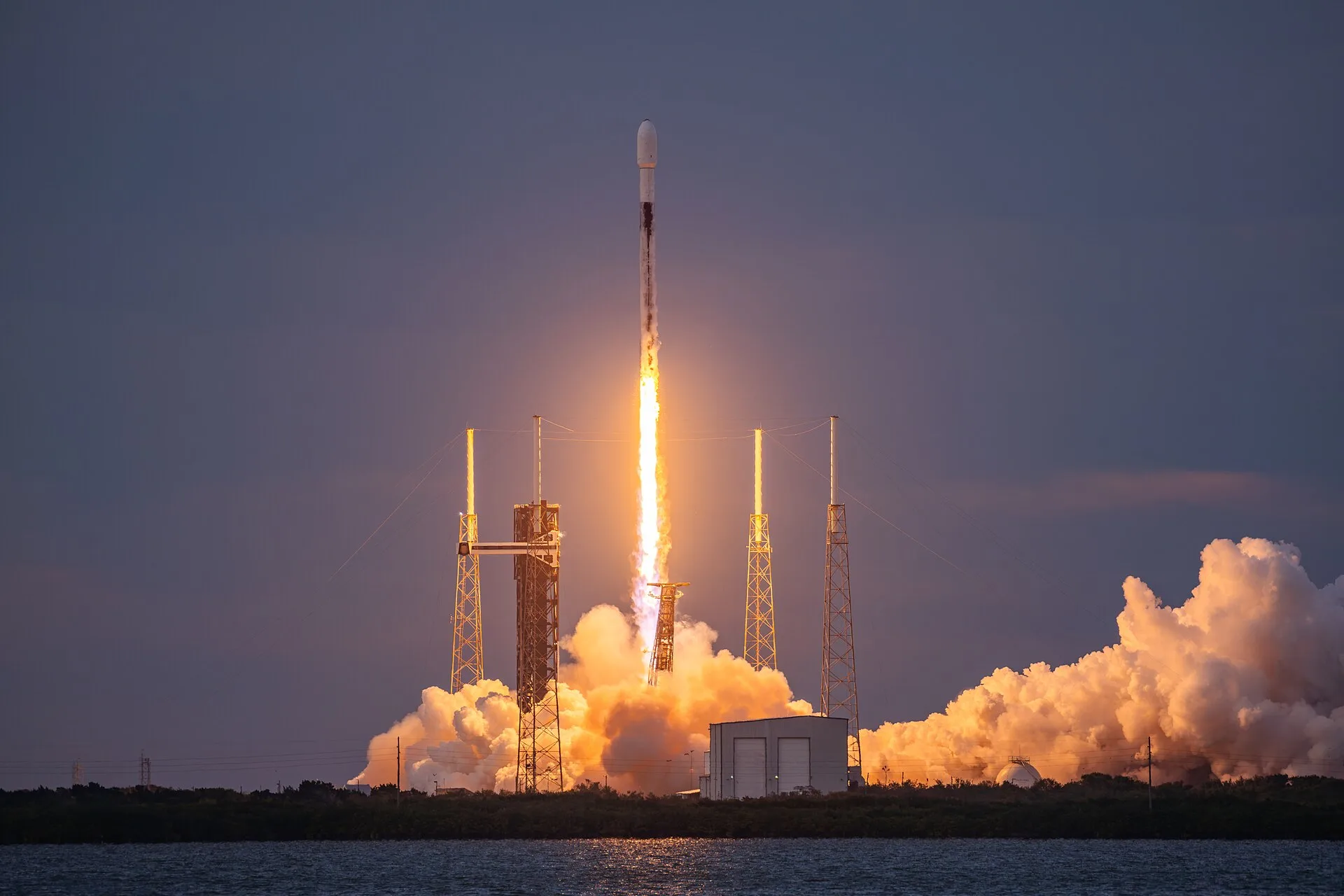
- Three launches in under 13 hours: Crew-13 carrying four astronauts to the International Space Station, the 18th Transporter rideshare with 130 payloads, and the NROL-97 mission for the National Reconnaissance Office (The Motley Fool).
- Starship Flight 14 (28 September): first orbital flight, deployed 26 Starlink V3 satellites despite one upper-stage engine shutting down early (CNN; New Atlas).
- TD Cowen: John Blackledge started coverage at Buy with a $200 target this week, forecasting $14.4 billion of AI compute leasing revenue in 2026 (TIKR; Investing.com).
- Consensus: Moderate Buy; average target $218.68 from 44 analysts per MarketBeat, $235.10 from 33 per TipRanks.
Why SpaceX stock rose on Friday
The Motley Fool reported the stock up 6.1 percent by 11 a.m. Eastern on Friday after SpaceX completed three missions in less than 13 hours: the Crew-13 Dragon flight to the ISS, Transporter-18 with 130 separate payloads, and NROL-97, with the booster recovered. Google’s Project Suncatcher test satellites, which carry its TPU chips into orbit to test radiation and thermal performance, flew on Thursday’s rideshare according to TipRanks. FinanceFeeds covered that payload in Google’s Project Suncatcher puts four TPUs in orbit.
The launches capped a week that started with Starship. On 28 September Flight 14 reached Earth orbit for the first time and deployed 26 Starlink V3 satellites. One of the three vacuum-optimised Raptor engines on the upper stage shut down early; SpaceX had built the orbital insertion burn around a check that enough engines remained for the deorbit burn, and the mission continued (New Atlas; Teslarati). The stock rose 2.6 percent the next session, as FinanceFeeds reported in Starship reached orbit and deployed 26 Starlink V3 satellites.
TipRanks noted the rally was concentrated in pure-play space names; the broader market rose only slightly on Friday.
The AI compute story behind the targets
Most of the new analyst coverage is not about launch cadence. TD Cowen’s John Blackledge, initiating at Buy with a $200 target, expects SpaceX’s AI compute leasing business to bring in $14.4 billion in 2026 – about 35 percent of total revenue – and $66 billion in 2027, about 58 percent, making it the majority of revenue from the first quarter of 2027 (TIKR; Investing.com).
The Motley Fool’s Friday report cited two contracts behind that view: a deal with Alphabet under which SpaceX is paid $920 million a month for 32 months, running from October through June 2029 (about $29.4 billion in total), and a separate Anthropic contract worth $1.25 billion a month. On those figures, SpaceX takes in close to $2.2 billion a month from AI services – more than it earns from launches. FinanceFeeds has not independently seen the contract terms; the amounts are as reported by The Motley Fool.
Where analysts stand
MarketBeat lists 44 analysts with a Moderate Buy consensus: 3 Strong Buy, 27 Buy, 7 Hold and 7 Sell. The average target is $218.68, with a range from $75 to $800. TipRanks, counting ratings from the past three months only, shows 27 Buys, 4 Holds and 2 Sells and a $235.10 average.
The week’s initiations and reiterations, per MarketBeat: TD Cowen Buy ($200), Deutsche Bank Buy ($235), CLSA Outperform ($250) and Royal Bank of Canada Outperform, followed by Goldman Sachs, UBS and Morgan Stanley reiterating positive ratings on 29 September and Needham on 30 September.
SpaceX stock scenarios: bull, base and bear
| Scenario | SPCX level | What has to happen | Anchor |
|---|---|---|---|
| Bear | ~$145 | Friday’s volume spike proves a one-day event, the Flight 14 engine-out takes longer to resolve, and the stock gives back the week. | The $145.47 close on 28 September, the lowest of the last ten sessions (StockAnalysis). MarketBeat’s lowest target is far lower, at $75. |
| Base | $159 – $200 | Launch cadence holds, the Alphabet contract ramps from October as reported, and the stock grinds toward the first of the new targets. | Friday’s $158.96 close; TD Cowen’s $200 target (John Blackledge). |
| Bull | ~$235 | AI compute revenue tracks TD Cowen’s $14.4 billion 2026 estimate and Starship moves to repeatable orbital Starlink deployments. | Deutsche Bank’s $235 target and the $235.10 TipRanks average; CLSA’s $250 sits just above. |
The bear case is about 8.5 percent below Friday’s close and the bull case about 48 percent above it. The earlier FinanceFeeds scenario page, SpaceX stock prediction: $203 bull, $103 bear, set wider bands on 28 September.
What to watch next
- Monday’s session. Friday’s 119 million shares were roughly double a typical day. A close back below $150 would put the stock back inside its late-September range.
- Starship Flight 15. SpaceX needs to explain the early engine shutdown on Flight 14 before the next orbital attempt.
- AI compute disclosures. The Alphabet contract reportedly starts in October; the first quarter it appears in revenue tests TD Cowen’s model.
- Target changes. Several banks reiterated without new targets this week; updated numbers would move the consensus.
Quick take: SpaceX had one of its busiest operational weeks as a public company – Starship in orbit, then three launches in 13 hours – and the stock answered with a 7 percent day on twice-normal volume. But the price targets that put the stock at $200 – $250 are built on AI compute leasing contracts, not launches. The rockets explain Friday; the Alphabet and Anthropic revenue has to explain the next leg.
FAQ
Why did SpaceX stock go up on Friday?
SpaceX completed three launches in under 13 hours – Crew-13, Transporter-18 and NROL-97 – following Starship’s first orbital flight earlier in the week, according to The Motley Fool and TipRanks. The stock closed up 7.35 percent at $158.96.
What did SPCX close at on 2 October 2026?
$158.96, up $10.89, on volume of 119.1 million shares, according to StockAnalysis.
What is TD Cowen’s price target on SpaceX?
$200, with a Buy rating from analyst John Blackledge. TD Cowen expects AI compute leasing revenue of $14.4 billion in 2026 and $66 billion in 2027.
What is the average analyst price target for SpaceX?
MarketBeat shows $218.68 across 44 analysts; TipRanks shows $235.10 across 33 analysts rating in the past three months. Both list the consensus as Moderate Buy.
Did Starship reach orbit?
Yes. Starship Flight 14 reached orbit on 28 September 2026 and deployed 26 Starlink V3 satellites, despite one upper-stage Raptor engine shutting down early.
How much does SpaceX earn from AI compute?
The Motley Fool reported an Alphabet contract paying $920 million a month for 32 months and an Anthropic contract paying $1.25 billion a month, about $2.2 billion a month combined. FinanceFeeds has not independently verified the contract terms.
Related coverage
- SpaceX (SPCX) stock prediction: $203 bull, $103 bear
- Starship reached orbit and deployed 26 Starlink V3 satellites
- Google’s Project Suncatcher puts four TPUs in orbit
Sources: StockAnalysis (daily closes and volumes, 21 September – 2 October 2026); The Motley Fool (Friday intraday move, the three launches, Alphabet and Anthropic contract figures, 2 October 2026); TipRanks (drivers, Project Suncatcher, consensus and average target, 2 October 2026); MarketBeat (consensus, target range and rating actions); TIKR and Investing.com (TD Cowen initiation and AI compute forecasts); CNN, New Atlas and Teslarati (Starship Flight 14).
This article is for information only and is not investment advice. Share prices move continuously and the figures above were accurate at the time of writing. Nothing here is a recommendation to buy or sell any security. Do your own research and consider your own circumstances before investing.