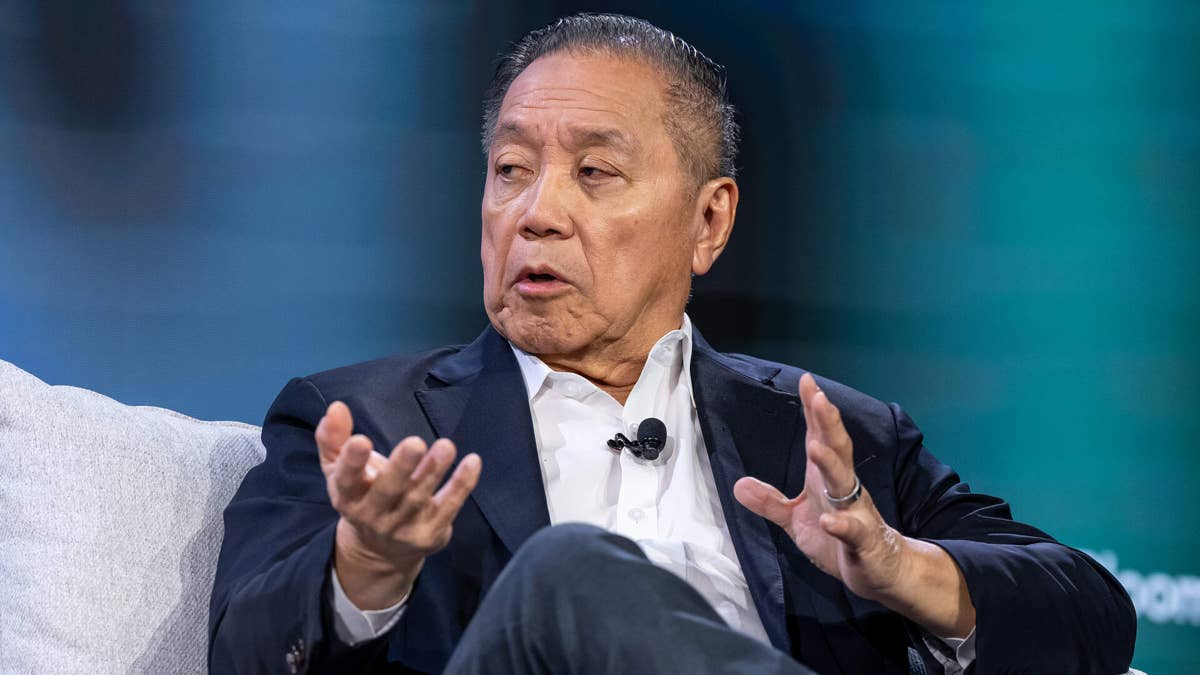
Yes, Jim Cramer has said a lot of things about a lot of stocks over the years. But when the “Mad Money” host identifies a single name as the market’s directional signal, that is a different kind of call entirely.
Cramer posted about it on X (formerly Twitter) on July 8.
If there is going to be a turn, the stock of Broadcom will let you know.
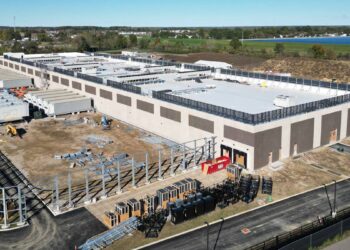
Let’s look at the timing, too. On the same day, Apple confirmed a new multiyear commitment with Broadcom worth more than $30 billion to design and produce custom silicon and wireless connectivity components for Apple products. The deal includes a $1.5 billion capital expenditure expansion at Broadcom’s Fort Collins, Colorado, facility.
More than 15 billion U.S.-made chips will be produced under the agreement, according to Apple.
On the day of the deal, 65-year-old Broadcom (AVGO) closed at $388.69, up 4.83% on the session, Yahoo Finance reported. At last check, AVGO is up 12.72% year to date and 44.05% over the past year.
Also Read: Broadcom Inc. Latest News and Stories
Why Cramer made Broadcom his market bellwether
Cramer’s logic is rooted in what Broadcom actually does and who its customers are. Broadcom designs custom artificial intelligence (AI) accelerators for Google, Meta, and, most recently, OpenAI.
It produces the networking chips that connect GPU clusters inside hyperscale data centers. Its components are hard to source, in persistent supply constraint, and embedded so deeply in customer roadmaps that switching costs are prohibitive.
My point of view is this. A combination of structural demand and low substitutability is exactly the profile Cramer has consistently identified as the most durable position in the AI infrastructure trade.
More Broadcom:
- Broadcom gets $30 billion Apple boost as valuation debate grows
- Broadcom extends Apple chip deal through 2031
- JPMorgan’s latest Broadcom outlook sends key signal
His view is that Wall Street is rewarding the “picks and shovels” suppliers of the AI boom rather than the mega-cap tech companies spending billions on the infrastructure. Broadcom captures the revenue from that spending without bearing the deployment risk.
And CEO Hock Tan, whom Cramer has praised repeatedly, has built a track record of securing long-term contracts that insulate revenue visibility years into the future.
The Apple deal unveiled July 8 is a direct example of that contract-locking strategy. The agreement spans multiple years, entails meaningful capital investment, and binds Apple’s wireless component supply chain to Broadcom’s Fort Collins facility for the foreseeable future.
The Q2 fiscal 2026 results show why Cramer’s thesis has numbers behind it
Broadcom’s Q2 fiscal 2026 results, reported June 3, delivered exactly the kind of print that supports Cramer’s bellwether framing.
- Revenue came in at $22.19 billion, up 48% year over year.
- AI semiconductor revenue was $10.8 billion, up 143% year over year, above Broadcom’s own forecast.
- Free cash flow reached $10.26 billion, or 46% of revenue.
- Adjusted EBITDA was $15.24 billion, representing 69% of revenue.
- Non-GAAP diluted EPS was $2.44.
Source: Broadcom Second Quarter Fiscal Year 2026 Results
“Q2 semiconductor revenue from AI of $10.8 billion grew 143% year-over-year,” said Tan in the earnings release.
The momentum continues, and in Q3 we expect semiconductor revenue from AI to grow over 200 percent year-over-year to $16.0 billion.
For Q3 fiscal 2026, Broadcom guided for total revenue of approximately $29.4 billion, up 84% year over year, with adjusted EBITDA of approximately 68% of projected revenue.
That guidance, if delivered, would represent one of the largest single-quarter revenue prints any semiconductor company has ever reported.
The Apple Broadcom deal and what it adds to an already loaded pipeline
Let’s talk about the Apple announcement for a moment.
The agreement, described by Apple as its largest commitment under its American Manufacturing Program, covers advanced radio-frequency components, including FBAR filters and advanced wireless connectivity technologies.
Related: Jim Cramer sends strong signal to Nvidia stock investors amid rumors
The Fort Collins facility will receive $1.5 billion in capital investment to support the production ramp, according to Apple. The company described the deal as helping “create an end-to-end silicon supply chain in America.”
For Broadcom, this adds to a partnership with Apple that already extends through 2031 for custom silicon components. The new agreement layering in another $30 billion-plus commitment is the kind of contract visibility that justifies premium valuation and long-term earnings predictability.
Where analysts stand on AVGO heading into Q3
As pointed out in my previous AVGO coverage, Wall Street’s analyst community is broadly bullish on Broadcom.
- Evercore ISI holds an outperform rating with a $582 target, raised from $490.
- JPMorgan sits at $580, raised from $365.
- Bernstein carries a $550 buy target, citing multi-year hyperscaler pipeline security past 2027.
- Bank of America at $530.
- Deutsche Bank at $515.
- Mizuho at $530.
- Goldman Sachs maintains a buy.
- D.A. Davidson holds a cautious view at $400.
Source: TheStreet
Looking at the recent FactSet earnings insight data dated July 2, 2026, the Semiconductors and Semiconductor Equipment industry is expected to report 131% year-over-year earnings growth in Q2, making it the largest single contributor to Information Technology sector earnings growth.
Broadcom, with Q3 AI revenue expected to grow over 200%, is at the epicenter of that dynamic.
My read of Cramer’s bellwether call is that it is less about Broadcom specifically and more about what Broadcom’s stock behavior reveals about institutional sentiment toward AI infrastructure as a category.
If AVGO is bid, the trade is alive. If AVGO rolls over, the broader infrastructure thesis is being questioned. The Apple deal, and the continued Hock Tan execution it represents, means that signal is not flashing anything bearish right now.