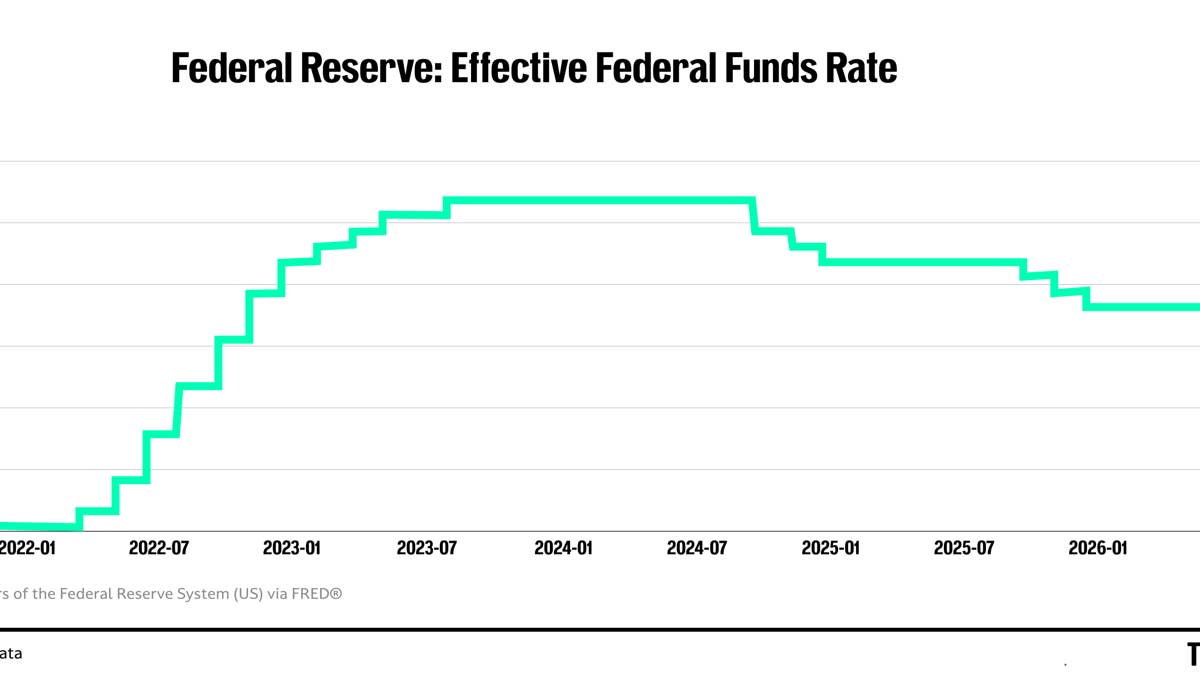
Goldman Sachs expects the Federal Reserve to raise short-term interest rates by 25 basis points this week, but the Wall Street bank says the economic case for the move is weak and sees no additional hikes as its baseline.
Goldman raised its September forecast from a Fed pause to a quarter-point increase, saying policymakers will be reluctant to surprise markets that are heavily pricing in a hike.
But the bank’s economists expect the move to have only a modest effect on the U.S. economy and say another hike in October or December is not their base case.
“Although we do not think that it is necessary to raise the funds rate, we would expect a single 25bp rate hike to have only a modest effect on the economy,’’ the Goldman note said. “We suspect that some FOMC participants will agree with this assessment, and for that reason we see the Fed’s decision as less clear-cut than market pricing of a nearly 90% chance of a hike implies.
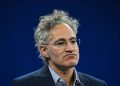
Goldman Sachs Chief Economist David Mericle said in the note obtained by TheStreet that there’s no “strong economic case” for raising the benchmark Federal Funds Rate after this week.
“Additional hikes at later meetings are possible but are not our baseline,’’ the note said, adding that by “December, we think that further evidence of improvement in the inflation trend and greater distance from some of the key drivers of higher inflation, especially tariffs and the Iran war, will make another hike seem unnecessary.’’
The CME Group FedWatch Tool jumped to an 94.5% probability Sept. 15 of a 25 basis-point hike when the Federal Open Market Committee releases its decision Sept. 16.
Traders raised expectations of a rate hike after the August CPI report showed headline CPI up 0.4% month over month, 3.4% year over year, and 0.3% month over month for core CPI.
The Fed’s annual target of 2% inflation has not been reached in 5.5 years.
Goldman’s sees case for rate hike as ‘weak’
Fed Chairman Kevin Warsh’s hawkish tilt in remarks late August at Jackson Hole also perked many ears especially after the new chairman dropped forward guidance from his initial FOMC meetings in June and July.
Warsh committed the central bank to the price stability side of its mandate and said if sticky inflation continued to show price pressures then “We have work to do.”
Goldman’s not convinced.
“We also see the case for a rate hike as weak because the economy is not overheated,inflation expectations are at most modestly elevated and not at immediate risk of unanchoring, and limited rate hikes are unlikely to appreciably offset the inflationary impact of supply shocks, so that whether it raises the funds rate somewhat or not, the FOMC will still mainly be waiting for the impact of past shocks to fade naturally with time,’’ the Goldman note said.
How a Fed rate hike impacts borrowing costs
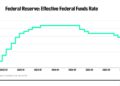
Consensus forecasts expect a 25-basis-point hike from the current 3.50% to 3.75% in September and at least one other in December,
A rate hike on Sept. 16 would be the Fed’s first increase since July 2023, but investors may care even more what the dot plot or quarterly Summary of Economic Projections indicates for additional hikes and how aggressively Warsh intends to push rates to bring inflation back to the central bank’s 2% goal.
The benchmark 10-year Treasury yield climbed to 5.04%, touching its level since July 2007 after briefly breaching the 5% mark on Sept. 15.
The 10-year yield reflects long-term economic growth and inflation forecasts which are directly influenced by the Fed’s short-term target rate.
A hike in the short-term benchmark funds rate typically puts pressure on the 10-year yield, making long-term borrowing more expensive.
TheStreet
Fed’s dual mandate requires a tricky dance
The Fed’s dual mandate from Congress requires maximum employment and stable prices.
- Lower interest rates support hiring but can fuel inflation. This risks fueling further inflation, potentially leading to an inflationary spiral.
- Higher rates cool prices but can weaken the job market. This increases the cost of borrowing and further stifles economic activity.
Related: Fed rate hike only half the story as Warsh faces dot-plot test
The rate-setting Federal Open Market Committee voted 9-3 last month to hold its benchmark Federal Funds Rate target in a range of 3.5% to 3.75%. Dissenters were in favor of a 25-basis-point-hike.
Policymakers had cut rates by 25 basis points at its last three meetings of 2025 to shore up the softening labor market.
Tariffs, Iran War supply shocks cloud price pressures
The ensuing supply shocks of tariffs and energy prices from the Iran War clouded the persistent inflation readings the FOMC members were cautiously observing.
Goldman, in the Sept. 11 note to clients, is sticking to the “one and done” theory.
“Recent increases in oil prices might also make FOMC voters who had previously been ambivalent a bit more open to hiking.
“And even some of those who share our inflation views have signaled fatigue with explaining why continued high inflation is not evidence of overheating and is likely to fade on its own, which might lead them to not oppose a hike even if they are skeptical of its purpose,’’ Goldman said.
Related: UBS doubles down on Fed rate-hike forecast for 2026